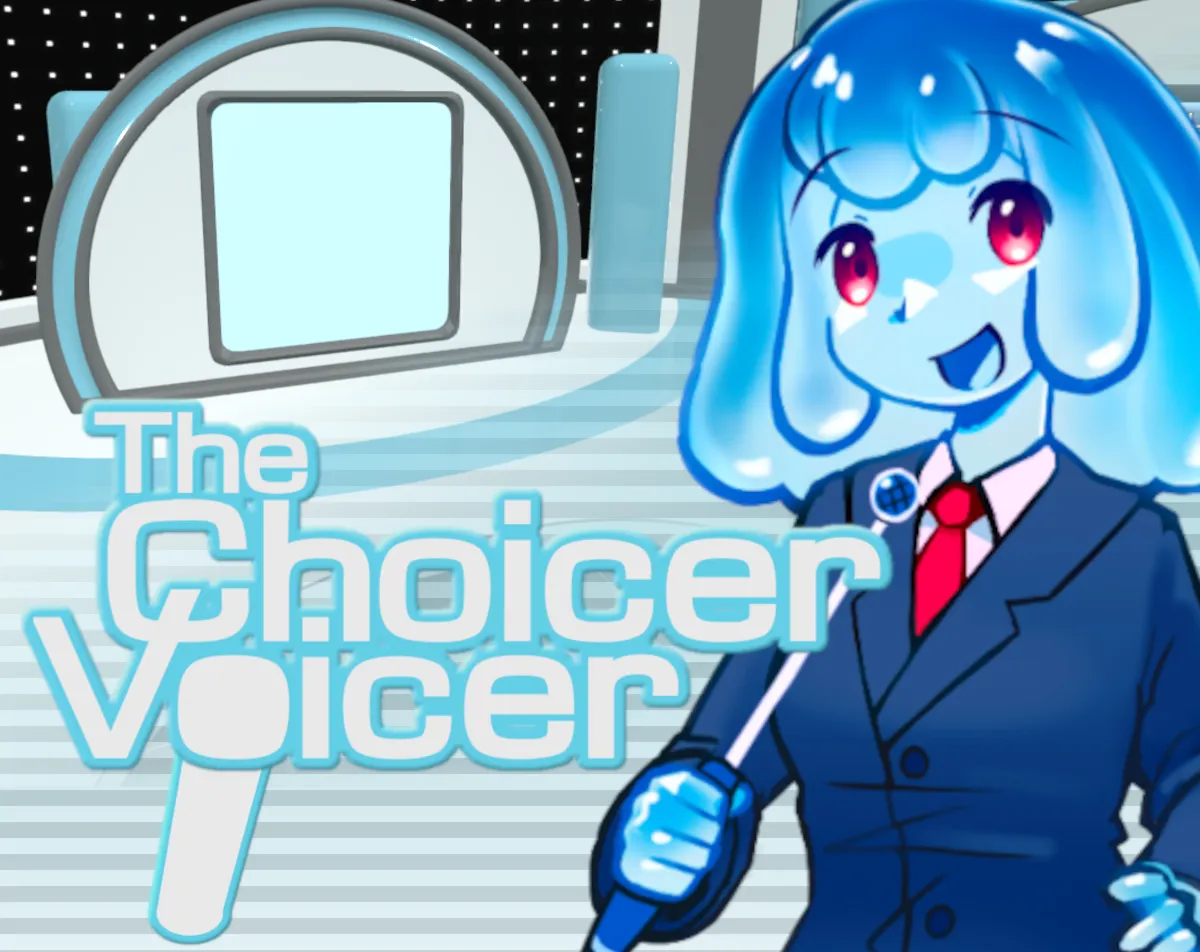

You sit down to play The Choicer Voicer, a reference clip fires from your speakers, and for about three seconds you feel completely prepared — then your own voice comes back through the monitor and you realize how different your take sounds from the original. That gap between what you thought you heard and what you actually produced is where the game lives. It isn't trivia. It isn't reflexes. It's the experience of discovering that listening to something hundreds of times does not mean you can replicate it on demand, and that discovery tends to be loudest in a room full of people watching the live waveform react to whatever you just attempted.

What the Studio Loop Actually Tests in The Choicer Voicer
https://thechoicervoicergames.com runs on a three-step sequence that repeats every round without exception: a reference clip plays, you record your attempt into the microphone, and the judge panel returns a score. That loop is fast enough to feel frictionless once a session gets going, but the scoring itself is layered in ways that only become visible after a few rounds. The panel isn't evaluating whether you did a "good" impression in any abstract sense — it's comparing your take against the source clip on pitch, timing, and commitment independently, and each dimension can cost or earn points on its own.
Pitch gets the most attention from new players because it's the most obvious thing to chase. If the original speaker has a particular accent or a specific vocal register, players tend to focus almost entirely on matching that quality and treat everything else as secondary. That instinct produces scores that plateau quickly. Timing is the dimension that separates early performances from later ones — the judge panel tracks pacing against the reference in parallel, and a take that nails the voice but smooths out deliberate pauses, rushes the back half, or front-loads the delivery will lose points that feel invisible until you understand what's being measured.
Commitment is harder to define but consistently separates scores in the middle range from scores at the top. Players who treat a clip as a line to read rather than a moment to inhabit produce technically accurate attempts that underperform. The panel responds to how far you lean into the energy of the original — which is why clips you know well tend to score better than unfamiliar material. You've already absorbed the performer's delivery through repetition, and that absorption shows in the take without conscious effort. Competitive players in the community talk about this as "earned familiarity" with a pack, and it's one of the reasons voice pack selection matters more than it appears to at first glance.
Voice Packs, Judge Packs, and the Blank Canvas Design
The game ships with almost nothing pre-loaded, and that's the part that trips up more first-time players than any scoring mechanic ever does. The studio framework exists from the moment you launch — the stage, the judge panel, the host position, the scoring overlay — but the content library that feeds all of it starts empty. Before a round can happen, someone needs to have built or downloaded a voice pack, which is a folder of audio clips the game pulls prompts from. The folder structure is straightforward and the file requirements aren't restrictive, but it's still a step that sits between a player and their first take.
Judge packs are the customization layer most players discover second, usually after they've run a few sessions on the default panel and noticed how quickly the standard judge reactions start to feel repetitive. A judge pack replaces the five judge images and their associated audio — each judge occupies a numbered slot from judge1 through judge5, with separate files for reaction sounds and score blips per judge. The difference a well-built judge pack makes to session energy is real: when the panel has distinct personalities, every verdict lands differently and the show starts to feel like it has its own cast rather than a generic scoring display.
Studio packs, host packs, and contestant packs extend that customization further, letting you replace the 3D environment, the host character, and the player podium identities independently. Each layer can be mixed and matched from different packs, which means a session can combine a judge panel from one creator, a studio from another, and a voice pack built by someone in the group entirely. That modular structure is what the community most consistently cites as the game's design achievement — the ability to run a show that reflects exactly the niche interests of the people in the room, assembled from pieces rather than chosen from a fixed menu.
The honest counterpoint is that this design creates a real barrier for groups who just want to play without setup. The blank canvas approach is intentional and transparent — the game doesn't hide that it ships with minimal content — but the practical experience of launching the game, finding the studio empty, and then needing to go build something before a round can happen is a frustration point that shows up consistently in player discussions. Whether that friction is worth the flexibility it enables depends almost entirely on whether your group has someone willing to assemble the pack before the session starts.
Dub Mode: The Other Version of The Choicer Voicer
Dub Mode is a separate format within the same studio, and it runs on a different premise than the scored impression rounds. Instead of isolated clips judged one by one, Dub Mode plays through a longer scene and lets players record their lines across multiple takes, with the finished piece playing back in full at the end. The scoring pressure that drives short rounds disappears almost entirely — the output is the point, and the point is the playback. Hearing a chaotic multi-take session assembled into a completed dub, with every retake and off-pitch delivery folded into the final result, produces the kind of moment that tends to be the one people describe when they're explaining the game to someone who hasn't tried it.
Freestyle Dub Mode is the variant that adds continuous video playback with on-screen captions as timing cues. The challenge there is sustaining delivery across a full scene rather than nailing a single prompt — a different skill, and one that catches players off guard when they discover that a sequence of good short takes doesn't automatically translate into a good long one. Sync issues between audio and video in Dub Mode are a known friction point worth testing before a group session: the community recommendation is to run a short fifteen-second clip first and confirm sync before committing to a longer scene.
Players who came to The Choicer Voicer primarily for Dub Mode tend to treat the short-round studio format as practice rather than the main event. Streamers in particular gravitate toward Dub Mode for the audience payoff — the completed playback creates a shareable moment that a string of individual judge verdicts rarely does with the same consistency.
Twitch Panelist and Chatter Packs
Twitch Panelist mode replaces the computer judge panel with a live streaming audience, turning chat into the scoring layer for each take. The format changes the dynamic of a session considerably — instead of consistent algorithmic scoring against pitch and timing metrics, outcomes depend on what chat decides in real time, which introduces a social variable the standard judge panel can't replicate. Players who run Twitch sessions consistently recommend warning chat about the voting commands before the first clip plays; a confused audience produces chaotic results that don't always read as intentional comedy.
Chatter Packs are the content type built specifically for the streaming setup. They allow viewers to trigger audio directly from chat messages, making the audience participants in the show rather than passive voters. Combined with Twitch Panelist, a session with an active Chatter Pack means the crowd is reacting to their own contributed audio as much as to the performer's take, which changes the texture of the show entirely. Streamers who've built sessions around both features tend to describe the result as the closest the game comes to feeling like a live broadcast production rather than a group sitting around a PC.
The practical setup for Twitch Panelist requires more pre-session preparation than local multiplayer does, and that investment shows in the quality difference between sessions where it was planned and ones where it was improvised. A session with a Twitch-specific voice pack, a configured Chatter Pack, and a chat briefed on voting commands runs noticeably differently from the same content loaded without that groundwork.
Microphone Issues and the Engine-Level Problem
The most consistently reported technical issue in The Choicer Voicer isn't a design complaint — it's that microphones sometimes stop recording mid-session or fail to register input at all. The root cause sits in how the underlying Godot engine handles certain audio configurations, particularly surround-sound setups, and because the problem is at the engine level rather than in the game's own code, it isn't something that can be patched away directly. Players with surround-sound systems are more likely to encounter it, and the workaround most commonly recommended by the community is routing audio through a virtual audio device.
The limitation of that workaround is that it doesn't cleanly support two simultaneous microphone inputs, which matters significantly for local multiplayer sessions where two players need to record separately in the same round. A group planning a four-player session with everyone on their own microphone should test the setup well before the session starts — the No Gameplay Demo available separately from the main release is specifically designed for this kind of compatibility check and is worth running through before purchasing.
FAQ
- Does The Choicer Voicer include content to play with immediately after installing? Almost none. The studio framework loads — the judge panel, the host position, the stage environment — but the content library that supplies reference clips starts empty. You'll need to build or download a voice pack before a scored round can happen. The community's shared packs cover a wide range of material, and loading clips from content your group already knows well tends to produce better scores because the delivery is already internalized before you pick up the mic.
- Is there a way to play The Choicer Voicer with friends who aren't in the same room? Not through dedicated online multiplayer. The game supports 1–4 local players and Twitch Panelist mode, where a streaming audience acts as the judge panel. Remote friends can participate through the Twitch voting setup if a stream is running, but there's no separate-client networked play in the current build. The Twitch route requires some setup — a configured voting command structure and ideally a Chatter Pack — but it's the only path to remote participation the game currently offers.
- What's the difference between Standard Dub Mode and Freestyle Dub Mode in The Choicer Voicer? Standard Dub Mode plays through a scene with individual line prompts and lets players record each take with retakes before the finished dub plays back. Freestyle Dub Mode runs continuous video playback with on-screen caption cues for timing, which removes the line-by-line structure and demands sustained delivery across the whole scene. Freestyle is harder to pace for players used to short impression rounds, and sync issues between audio and video are more likely to surface in a longer scene — the community recommendation is to test with a short clip before running a full Freestyle session.
The Choicer Voicer gives the most back to players who put something personal into the pack. Sessions built around voice packs assembled from material the group already loves — clips with established deliveries, familiar performers, or inside-joke audio — run differently than sessions on whatever content was easiest to load. The judge panel has more to react to, Dub Mode has more to assemble, and the completed playback at the end of a Freestyle scene lands harder when everyone in the room has a relationship with what they just tried to reproduce.
























Sign in to leave a comment.