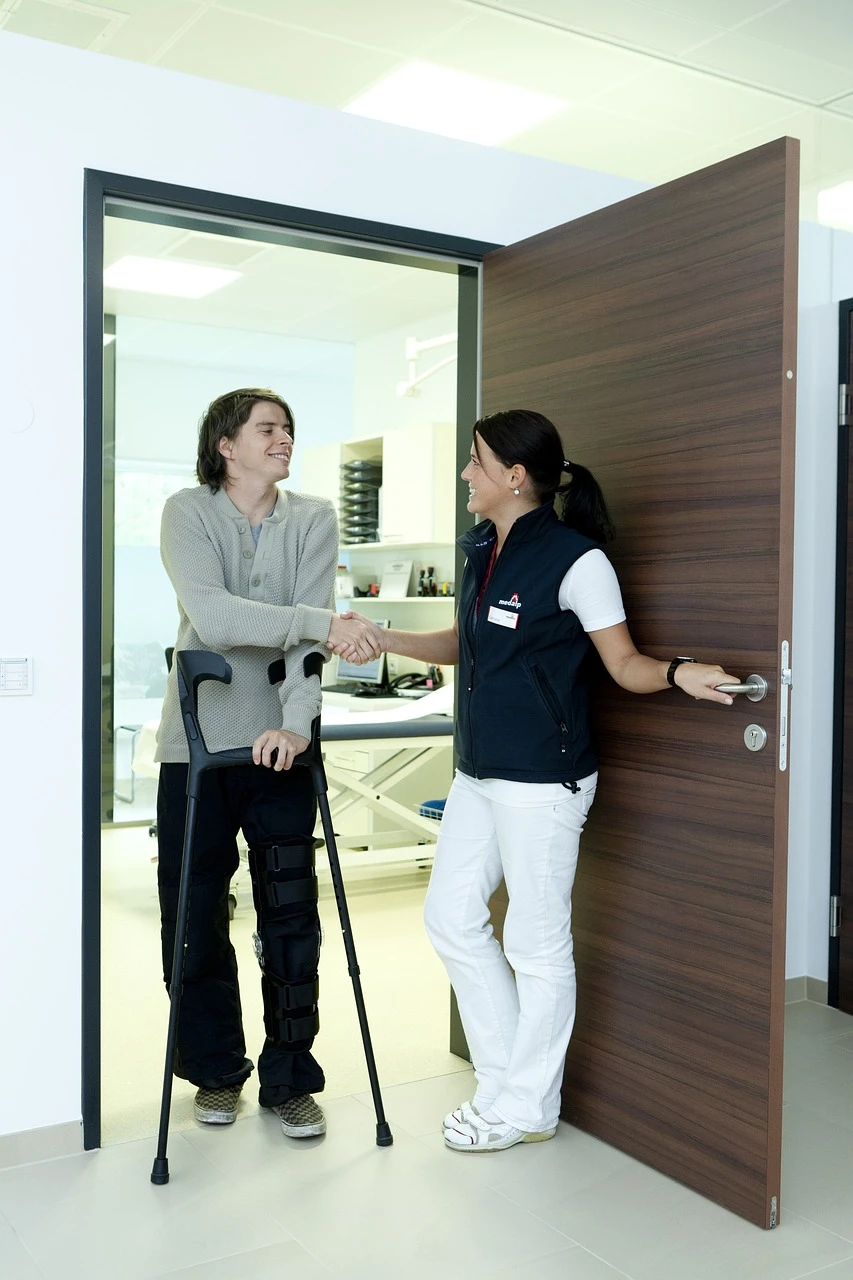
Stroke occurs when blood flow to the brain is interrupted (ischemic stroke) or when a blood vessel ruptures (hemorrhagic stroke), causing brain cell death. This damage impairs motor control, sensation, balance, coordination, and speech. Physiotherapy (PT) is a non-negotiable component of stroke rehabilitation by home nursing services for the following reasons:
1. Neurological Recovery Through Neuroplasticity
- Brain Rewiring: PT leverages the brain’s ability to reorganize neural pathways. Repetitive, task-specific exercises (e.g., grasping objects, step-taking) stimulate undamaged brain regions to assume lost functions.
- Constraint-Induced Movement Therapy (CIMT): Restricts the unaffected limb to force the brain to "relearn" using the weakened side.
- Mirror Therapy: Uses visual feedback to activate motor cortex pathways, improving limb movement.
2. Restoration of Mobility and Functional Independence
- Gait Training: Relearns walking using parallel bars, treadmills, or assistive devices (walkers/canes) to correct abnormal patterns like "foot drop."
- Balance Rehabilitation: Reduces fall risk (40% of survivors fall within a year) through weight-shifting drills and unstable-surface training.
- Upper Limb Function: Task-oriented drills (e.g., buttoning shirts, holding utensils) restore hand-arm coordination.
3. Prevention of Secondary Complications
- Muscle Contractures & Spasticity: Passive stretching, splinting, or Botox injections prevent permanent joint stiffness.
- Pressure Ulcers: Teaches repositioning techniques (every 2 hours) for bedbound patients.
- Pneumonia & Blood Clots: Breathing exercises and leg movements improve circulation and lung capacity.
4. Pain Management
- Shoulder Subluxation: Strengthening exercises stabilize joints dislocated due to muscle weakness.
- Neuropathic Pain: Modalities like TENS (Transcutaneous Electrical Nerve Stimulation) reduce nerve-related discomfort.
5. Psychological and Cognitive Benefits
- Depression Mitigation: Achieving functional milestones (e.g., standing unassisted) builds confidence.
- Cognitive-Motor Integration: Dual-task training (e.g., walking while counting) enhances attention and problem-solving.

























Sign in to leave a comment.