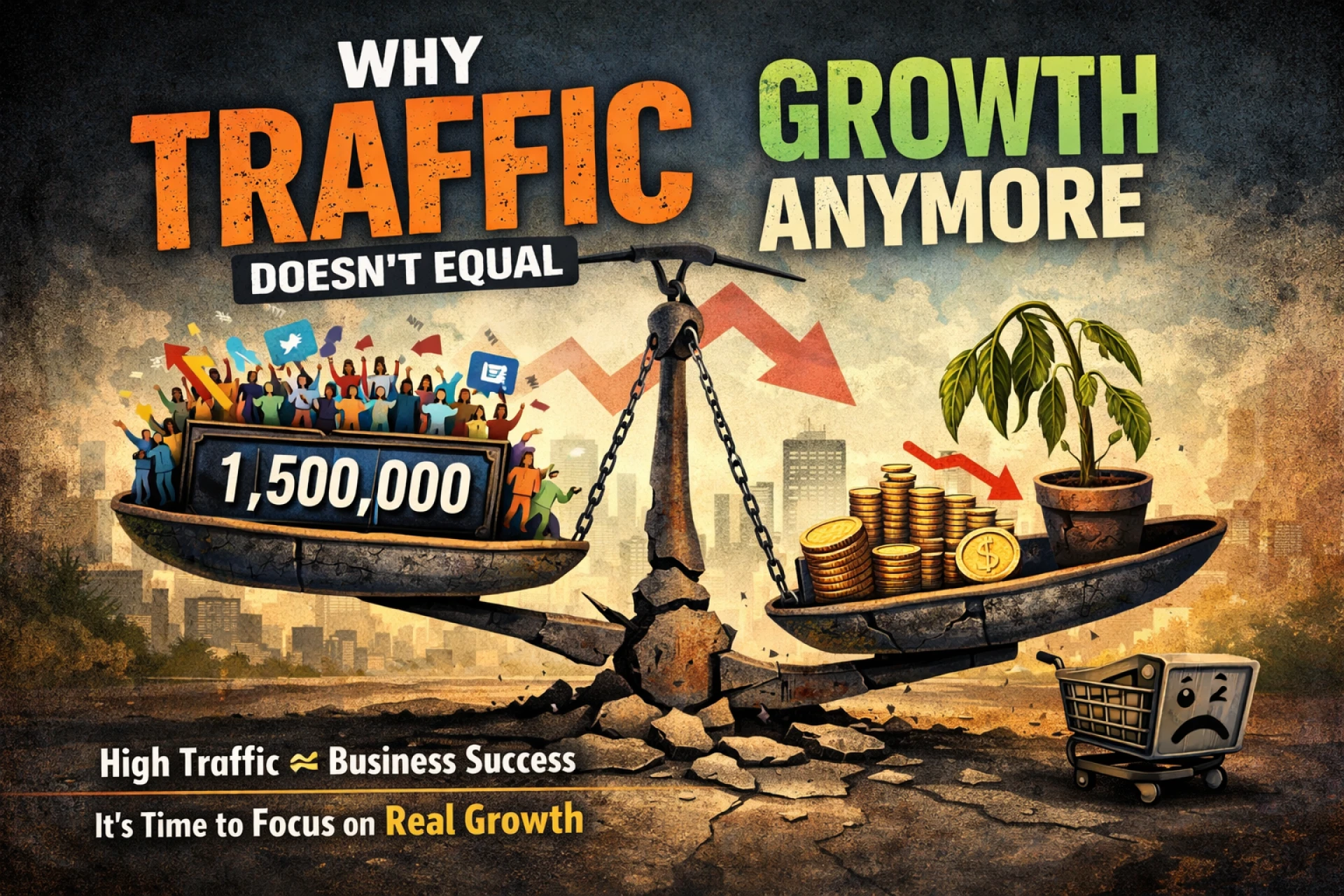
In the ever-evolving world of digital marketing, the metrics we once valued have shifted dramatically. For years, high website traffic was synonymous with success. More visitors meant more opportunities, more engagement, and ultimately, more growth. However, in 2026, the equation has changed. Traffic alone no longer guarantees growth.
The Evolution of Digital Marketing Metrics
In the early days of digital marketing, traffic was king. Marketers focused on driving as many visitors as possible to their websites, believing that more eyes on the page would naturally lead to higher conversions and revenue. This focus on volume led to strategies centered around SEO, content creation, and paid ads aimed at boosting visitor numbers.
However, as the digital landscape matured, marketers began to realize that not all traffic is created equal. The quality of traffic, user intent, and engagement became more critical than sheer volume. Today, the landscape is shaped by a deeper understanding of customer journeys and the value of meaningful interactions.
Quality Over Quantity
In 2026, the most successful brands understand that growth is about more than just numbers. It’s about attracting the right audience—those who are genuinely interested, engaged, and likely to convert. High traffic with low engagement or poor conversion rates can actually be counterproductive, leading to wasted resources and misguided strategies.
Quality traffic is defined by:
Relevance: Visitors who find your content meaningful and aligned with their needs.
Engagement: Users who interact with your content, spend time on your site, and explore multiple pages.
Conversion Potential: Traffic that leads to actions, whether that’s a purchase, sign-up, or another valuable metric.
This shift towards quality means that marketers must look beyond vanity metrics and focus on creating experiences that resonate deeply with their target audience.
The Role of Data and Personalization
As digital marketing advances, data-driven personalization has become a cornerstone of growth. Simply attracting large numbers of visitors is no longer enough. Instead, understanding user behavior and personalizing experiences is key.
Personalization involves tailoring content, recommendations, and user journeys based on individual preferences and behaviors. This approach ensures that each visitor finds value, which in turn drives higher conversion rates and more sustainable growth.
For instance, a freelance digital marketing analyst in Dubai might leverage advanced data analytics to segment audiences and create highly targeted campaigns. This level of personalization not only enhances user experience but also boosts loyalty and long-term growth.
The Importance of Customer Retention
Growth in 2026 is not just about acquiring new customers; it’s also about nurturing existing ones. Retention has become as important as acquisition. A loyal customer base often leads to repeat business, referrals, and increased lifetime value.
Strategies that focus on retention include:
Exceptional Customer Service: Ensuring that customers feel valued and heard.
Engagement Beyond Transactions: Building relationships through valuable content, community building, and consistent communication.
Feedback Loops: Continuously gathering and acting on customer feedback to improve products and services.
By prioritizing retention, brands create a stable foundation for sustained growth rather than relying solely on inflating traffic numbers.
Measuring True Growth
In the modern digital landscape, true growth is measured by a combination of metrics that reflect the entire customer journey. These include:
Conversion Rates: The percentage of visitors who take the desired action.
Customer Lifetime Value (CLV): The total revenue a business can expect from a single customer over the duration of their relationship.
Engagement Metrics: Time spent on site, pages per session, and interaction rates.
Churn Rate: The rate at which customers stop engaging or stop using a service.
These metrics provide a holistic view of growth, showing that success is about creating lasting value rather than just attracting traffic.
The Future of Digital Marketing
As we move forward, the focus will continue to shift from traffic to comprehensive growth strategies. Marketers must embrace a more nuanced understanding of their audiences, leverage data effectively, and build meaningful relationships.
The digital landscape in 2026 rewards those who look beyond the surface. While traffic is still important, it’s just one piece of the puzzle. The real growth comes from engaging the right audience, providing value, and fostering long-term loyalty.
Conclusion
In 2026, growth is about quality, engagement, and retention. Traffic alone is not a reliable indicator of success. Marketers must adapt to this new reality by focusing on meaningful interactions, personalized experiences, and customer retention. By doing so, they will drive sustainable growth and stay ahead in a competitive digital world.












Sign in to leave a comment.