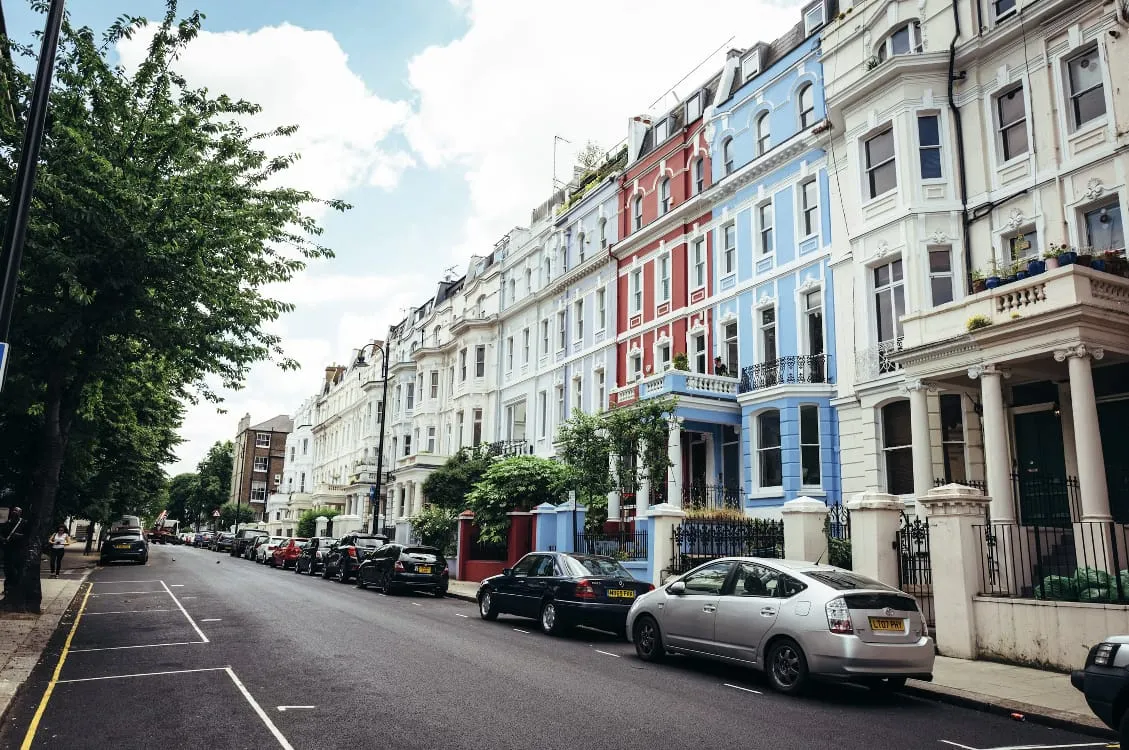

There is something slightly unhealthy about the British obsession with property values. I’m as guilty of it as anyone. Somebody down the road puts their house on the market and within about ten minutes half the street has been on Rightmove, worked out the price per square foot and quietly added another £25,000 to the imaginary value of their own home. We pretend we’re just being nosy, but we’re not. We’re checking how rich our walls have made us.
The odd thing is that most of the time the number is almost meaningless. If you aren’t selling, remortgaging, divorcing, settling an estate or doing something else that requires a proper valuation, what difference does it make whether your flat is supposedly worth £380,000 or £410,000 this month? You still live in exactly the same rooms. The boiler still makes that funny noise. The service charge still lands on the mat.
Yet property values have become a sort of national scoreboard.
A rising value is treated as winning. A falling value feels like losing.
The last few years ought to have cured us of that simplistic thinking because the UK property market has become much less predictable. Higher mortgage costs changed what buyers could afford almost overnight, flats have behaved differently to houses in many areas, and London itself has seen patches where sellers have had to become considerably more realistic about price. Meanwhile some regions outside the South East have been comparatively resilient. There really isn’t one “UK property market” moving neatly up and down together.
That matters because value is local, specific and heavily dependent on timing. The newspaper can announce that house prices are up nationally while your particular type of flat in your particular part of London is struggling to attract buyers. Equally, headlines about falling prices can sound alarming while genuinely desirable homes in a tight local market continue selling perfectly well.
This is where homeowners get themselves into trouble. We tend to remember the numbers we like.
If an estate agent valued the flat at £500,000 eighteen months ago, £500,000 becomes part of its identity. Never mind that mortgage rates changed, three similar flats have since sold around £460,000 and the estate agent originally gave you the most optimistic valuation because they wanted the instruction. In our heads it remains a £500,000 flat because giving up £40,000 of imaginary wealth is surprisingly painful.
Estate agents know this, of course. Sellers normally prefer the agent who tells them what they want to hear.
That doesn’t make estate agents dishonest. Most are simply operating in a business where winning the listing matters, and there is a considerable grey area between an achievable sale price and an ambitious asking price. The distinction is important, though. An asking price is an invitation to negotiate. A sold price is evidence.
And even sold prices need context.
Take two flats in the same Victorian conversion. One sells for £525,000 and immediately everyone assumes the other must be worth roughly the same. Then you discover the sold flat has a garden, a newly extended lease, two proper double bedrooms and a kitchen renovated last year. The other is on the top floor with no outside space, a tired interior and a lease that is getting uncomfortably short.
They share a front door. That doesn’t make them identical assets.
Lease length is particularly easy to overlook because you can’t see it during a viewing. A beautiful kitchen is obvious. A roof terrace is obvious. A lease with 68 years remaining sits invisibly inside a bundle of legal paperwork, yet it can have a very real effect on what buyers are prepared to pay.
That is where property value becomes especially interesting for leaseholders.
If you are thinking about extending a lease, the value of the property is not just something to boast about at dinner. It can become part of the calculation behind the premium. Suddenly the question of whether the flat is worth £450,000 or £500,000 has consequences beyond how pleased you feel about your investment.
There is an almost comic contradiction here. When people sell, they want somebody to value their property as highly as humanly possible. When they are discussing the cost of extending a lease, they may suddenly become considerably more conservative about its merits.
Yesterday: “This is one of the best flats in the building.”
Today: “Well, the bathroom is rather dated.”
Fair enough. Money has a way of sharpening the mind.
The important thing is not to confuse a convenient valuation with a defensible one. A specialist valuer is looking at evidence, not flattering the owner. Recent sales, location, condition, floor level, outside space, parking, lease terms and dozens of other smaller details can all influence the figure.
That is one reason online property estimates need to be treated carefully. They can be useful as a rough starting point, but an algorithm has never stood in your living room and listened to the traffic. It may know that the flat downstairs sold for £430,000. It may not fully appreciate that yours has a south-facing terrace, while theirs appears to receive direct sunlight for approximately eleven minutes every February.
Property valuation is part data and part judgement.
And frankly, that is probably never going to change.
Technology can improve the amount of information available, but homes are too individual to become completely interchangeable units. Two apparently similar properties can produce different reactions from buyers for reasons that are difficult to put into a spreadsheet. One feels bright. One feels cramped. One has a view. One overlooks an air-conditioning unit from Tesco.
What I think homeowners should stop doing is treating a valuation as a permanent fact. It is a snapshot. It is what somebody believes the property could reasonably achieve in a particular market, under particular conditions, at a particular time.
Six months later the answer may be different.
That doesn’t mean somebody got it wrong.
It means markets move.
For leaseholders, though, the valuation can have a more immediate significance because it can feed into something they may actually have to pay. If that is where you are heading, this explanation of how property value affects your lease extension premium is worth reading before you become too attached to whatever number Rightmove has currently put on your home.



























Sign in to leave a comment.