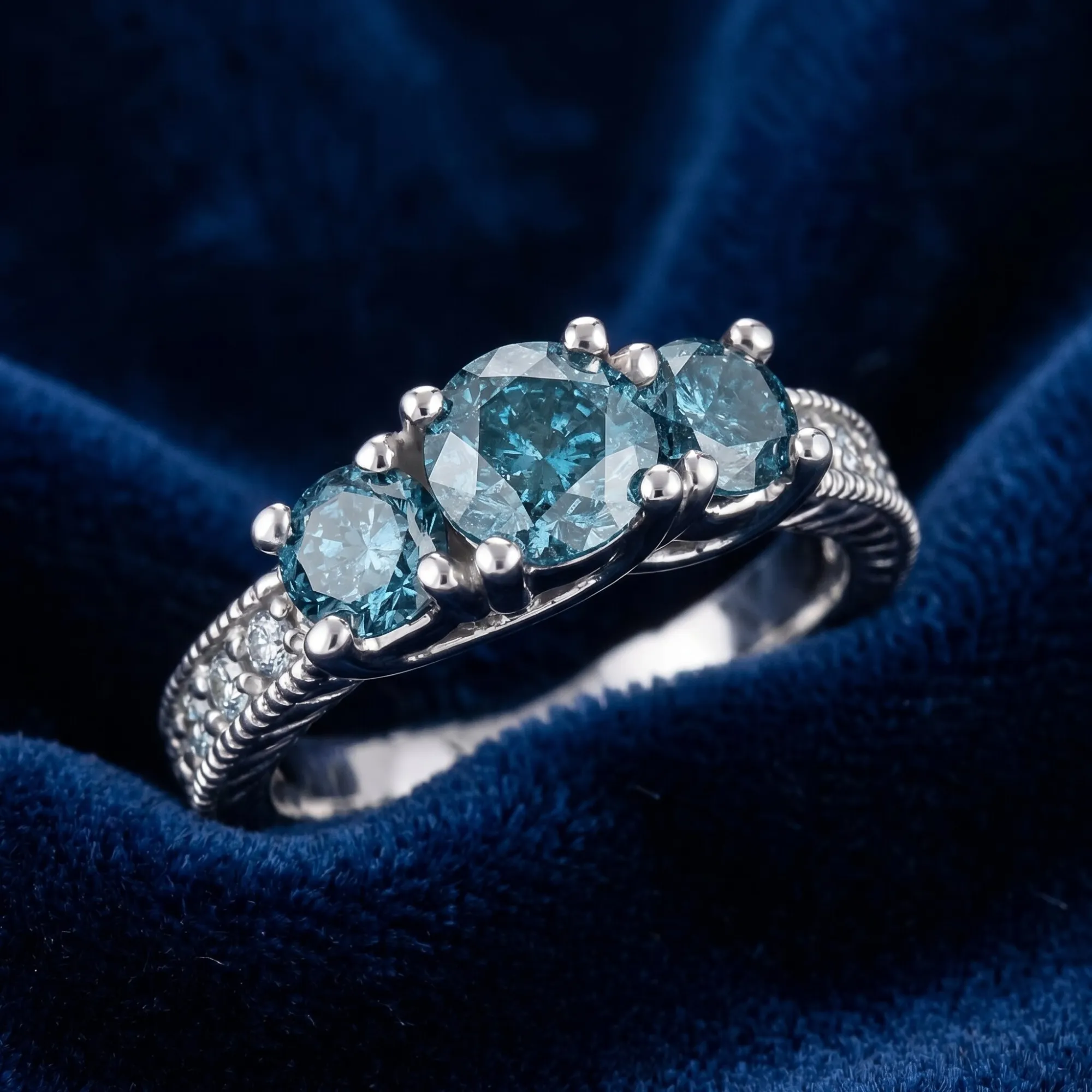

Ask a couple under 35 why they picked a lab-grown diamond and the answer rarely mentions sparkle. It's price, ethics, and a shift in what an engagement ring is supposed to prove.
The numbers back this up. The lab-grown diamond market is projected to hit $33.94 billion in 2026, up from $29.46 billion in 2025, growing at a compound rate of 13 to 14 percent a year. That is not a niche trend anymore. It is one of the fastest-growing categories in fine jewelry.
Price is the obvious draw. A one-carat lab-grown diamond averaged $564 in May 2026, a fraction of what an equivalent natural stone costs. For a generation getting engaged later, carrying student debt, and buying homes in a market that already feels out of reach, that gap changes the math on what an engagement ring can be.
But affordability only tells half the story. Natural diamond producers are also under real pressure right now. De Beers, the industry's largest player, reported that its production rose 46 percent in the first half of 2026 compared to the same period last year, yet its average realized price fell 32 percent to just $105 per carat. Part of that drop comes from tariff uncertainty on Indian-cut stones, but De Beers itself has pointed to lab-grown competition as a factor eating into demand for smaller, lower-quality natural diamonds.
That is the part younger buyers have picked up on. Lab-grown and natural diamonds are chemically identical. Both are carbon, both are graded on the same 4Cs, and both pass the same certification standards. The difference is origin, not composition. Once that fact spreads, a lot of the emotional weight attached to "natural equals real" starts to lose its grip, especially with a generation raised on transparency and skeptical of markup.
Sustainability plays into it too, but not always in the way marketing decks assume. Most younger buyers are not choosing lab-grown because they researched mining emissions. They are choosing it because it removes a layer of doubt. No questions about sourcing, no need to trust a supply chain they can't see. That peace of mind matters more than a spec sheet.
Retailers have adjusted accordingly. Where lab-grown was once tucked into a separate case as the budget option, more jewelers now display natural and lab-grown side by side, priced and marketed on their own terms. That shift in retail behavior mirrors what De Beers' own consumer research has found: younger shoppers don't see lab-grown as a downgrade. They see it as a different, equally legitimate choice.
None of this means natural diamonds are disappearing. Demand for larger, higher-quality natural stones is actually strengthening, which suggests the market is splitting rather than collapsing. But for the everyday engagement ring, the one bought by a couple in their late 20s trying to stretch a budget without stretching the truth about what they can afford, lab-grown has become the practical, and increasingly the expected, choice.
The ring still means the same thing. It just costs less to say it.
By Rahul Dutt | Freelance Writer
Rahul Dutt is a freelance writer covering the jewelry and diamond industry, with a focus on market trends, pricing, and how shifting consumer habits are reshaping the way people buy engagement rings.






















Sign in to leave a comment.