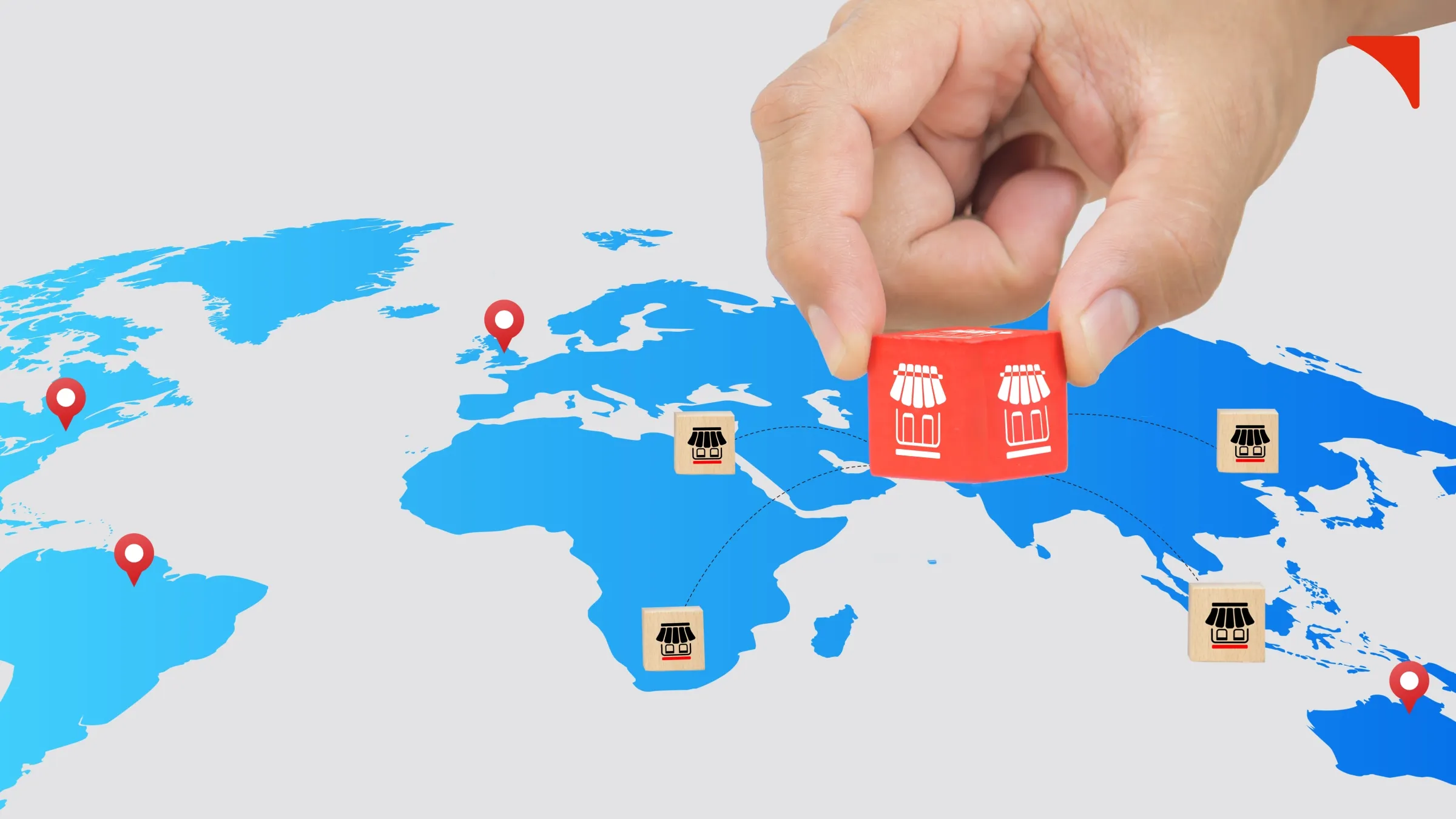

A customer enters into your store in a large metropolitan area and gets the same exact feel that your designers wanted. The lighting falls at the right angle providing the merchandise, the walking routes are intuitive and the materials used exude a high quality message. The same patron, a week later, in his third destination three hundred miles further on, finds a slightly changed world. The fixtures seem to be slightly darker oak, the lighting seems clinical instead of welcoming and the space flow itself seems cluttered. Although the logo on the door is the same, the overall experience has been changed radically. The leadership teams often find themselves posing the questions of how one, clear, and clear brand vision could turn out to three or four different experiences within one region.
Brand inconsistency hardly can be attributed to the creative department, or the original brand strategy. The issue is usually in the implementation part, namely in a complicated procedure of a Retail Rollout. The thoughts of most executives are that, once they design a store they can copy and paste it into other locations everywhere.
The Chasm Between the Documentation and Reality
Designers will sometimes come up with tedious manuals which dictate all Pantone hues, all heights of fixtures and all finishes of materials. These documents are ideal world in which all of the retail spaces are a clean box and have the same structural properties. It is assumed that these guidelines will determine the end result no matter where it is geographically or what contractor it is.
Divergence normally starts at the level of the vendor. Technical drawings are usually construed by different suppliers in different regions, and are understood in their own proprietary way of manufacturing. A local supply chain may force one vendor to replace a certain grade of metal due to the availability of local metal and another vendor to measure a joinery detail to their local machinery. These minor, solitary judgments may not have much impact in a vacuum but it would be the first cracks in the brand facade.
Constraints at the site level further make the journey towards uniformity more difficult. All physical shells are accompanied by structural problems, such as having columns in very awkward locations to having eccentric power systems. The local regulations may require the signage or emergency exit to be altered which would not conform to the master plan. The initial design intent is in many cases taken second best when the local contractors are required to make do on the ground to achieve a grand opening.
Compound Effect of Scale
Such slight difference in a five store chain can be easily tolerated and may even go unnoticed by an average viewer. You will have the opportunity to visit 5 shops and make the final touches with your own hands. With the portfolio being expanded to twenty locations, these small differences can be spotted when the portfolio is quarterly reviewed or during executive walkthroughs. The deviations have multiplied themselves and become complete brand fragmentation by the time a brand has made it to fifty stores.
Big data indicates that the achievable accuracy of executing big retail business settings is usually around thirty-six percent. This amount is colossal, taking into consideration the capital outlay of a big expansion. Scale is not particularly a source of inconsistency but more brutally it reveals the structural defect of the delivery model. When an individual heroics approach is used to structure your system of a Brand Rollout instead of a uniform one, then your system will collapse sooner or later because of its own growth.
Why Do Customers First Detect the Shift?
A brand is perceived as a whole system by the customer and not a set of constituent parts. They do not see a fix and consider whether the vendor interprets it in a certain way; It is just that something about the fix feels disunified and it is in the unconscious way that this lack of integrity undermines their belief. Brands which are consistent have much more retention as they offer a consistent emotional context.
When the physical environment changes, the promise that is made through the brand starts experiencing the feeling of unreliability.
Conventional forms of retail are usually ineffective in terms of sustaining uniformity as they are based on a discontinuous ecosystem of independent suppliers. Typically, there is no single layer of control that is in between the design intent and final installation. Guidelines are numerous and systems needed to enforce the guidelines are often not available. Leaders seldom have real time information of what is really occurring in the construction site, until the store is already operational and the errors are in-built in the structures.
Using Systems to Create Consistency in Engineering
The world retailers that are successful such as Apple or IKEA do not rely on chance to achieve such outcomes. They consider their expansion as a stiff engineering project as opposed to a collection of one off construction work. They use a format of store modularity and centralized execution systems as means to make sure that the tactile experience they provide to a customer will be the same, regardless of whether that customer is in Tokyo or New York. These organizations know that consistency is created via certain methods of control and unwilling to tolerate local deviations as a necessary evil.
The shift to a fragmented vendor model to Turnkey Project is a shift of the whole dynamics of a retail expansion. Outsourcing to a professional Retail Rollout Company will enable a brand to reposition the partner as a brand consistency controller, as opposed to just execution vendor. In this method, there must be a uniformed model that will incorporate the supply chain, quality control mechanism and real-time tracking into one workflow.
The Future of Scalable Experience
The design of a brand in a studio by a creative team is not the definition of the brand. It is determined by what the organization will be able to deliver at a thousand of various touchpoints. Brands that scale well to the next decade will not be necessarily the most creative or who are the most disruptive of their aesthetic. It is they who will have learnt the art of the Retail Rollout, as a repeatable, industrial process.
To attain consistency at scale, a transition to modular store systems and digital monitoring tools that give each location in the network a single source of truth would be a step toward achieving consistency at scale. Fifty stores are logistically challenging to open, but it is the operational excellence to make fifty of these stores look exactly like the same brand. The medium-term effect of the consistency will be gauged by customer loyalty and brand equity maintained in the process that you so hard earned.


























Sign in to leave a comment.