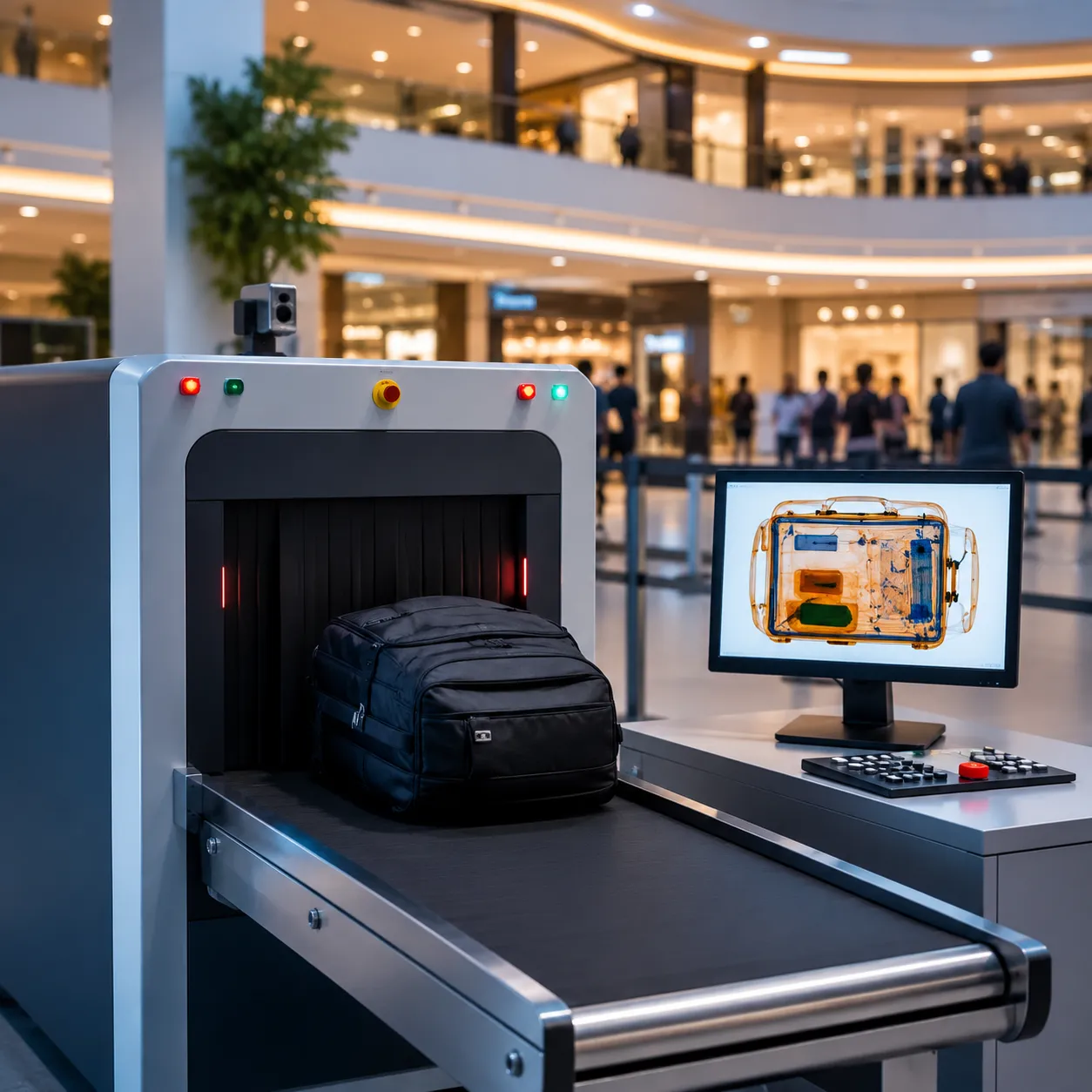

Weekend footfall at a large Indian shopping mall can easily cross 40,000 to 50,000 visitors a day, and every single one of them walks in carrying a bag, backpack, or parcel. That volume alone should worry any facility manager. Add in the reality of modern threats, from concealed weapons to unattended packages, and it becomes clear why a reliable X-Ray Baggage Scanner is no longer a nice-to-have security accessory for malls. It has become a baseline requirement.
Shopping malls are open, crowded, and unpredictable by design. People move freely between shops, food courts, cinemas, and parking areas, which makes them attractive soft targets compared to more restricted spaces like airports. A single security lapse can put hundreds of lives at risk and cause lasting reputational damage to the mall brand.
For this reason, progressive mall developers and facilities managers are investing in automated, image-based screening systems instead of manual bag checks. This essay will discuss the reasons for this change, how the technology functions, where it should be used, and what to consider when selecting a reliable manufacturer.
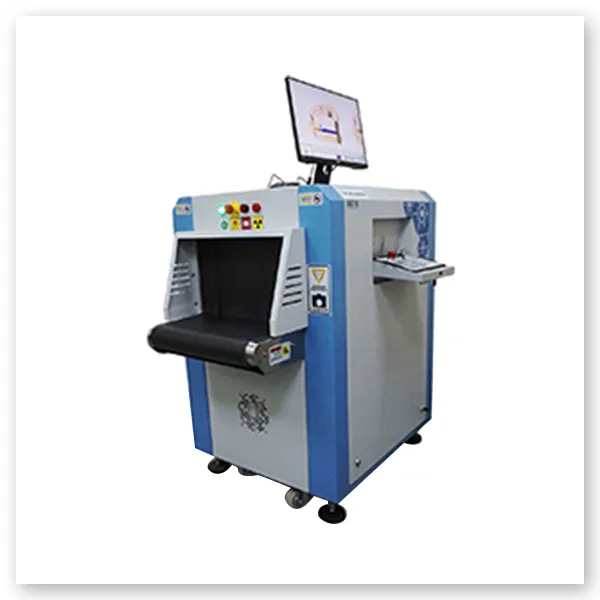
What Is an X-Ray Baggage Scanner?
An X-Ray Baggage Scanner is a security tool that creates a comprehensive inside image of bags, backpacks, and packages as they travel through a conveyor tunnel using low-dose X-ray radiation. Rather than having a security guard open each bag by hand, the operator may quickly identify questionable things by viewing a clear, color-coded image on a monitor.
The device measures the amount of radiation absorbed by various materials by sending X-rays through the contents of a bag. Whereas metallic and inorganic items like weapons, tools, or electronics appear in blue or green tones, organic materials like food, paper, and clothing usually appear in orange or brown tones. An operator can identify anything unusual much more easily because to this color distinction.
Without slowing down the flow of customers at the door, this technology assists security teams in capturing a variety of hazards in a mall setting, such as firearms, knives, improvised explosive devices, flammable liquids, and other forbidden things.
Why Security Is a Growing Concern for Shopping Malls
Malls in India and around the world have developed into all-day attractions that house dining, entertainment, and shopping. 10 years ago, there were no security issues brought about by this popularity.
- Growing number of visitors: Tens of thousands of people visit larger malls with multiplexes, food courts, and event spaces every day, particularly on weekends and during holiday seasons.
- Concerns about public safety and terrorism: Government warnings now advise screening at busy commercial locations, and crowded public places continue to be appealing targets.
- Theft and organized retail crime: Organized theft rings are discouraged by screening at entry and departure points, and bags are frequently used to hide shoplifted goods.
- Unattended or suspicious baggage: Any bags or packages left behind close to food courts, movie theaters, or escalators must be promptly located and evaluated.
- Emergency preparedness: Screening equipment is a crucial component of the documented evacuation and threat-response procedures that malls are required to have.
- Regulatory and insurance compliance: Formal security screening procedures are now required for commercial premises of a particular size by many local authorities and insurers.
Top Reasons Shopping Malls Need an X-Ray Baggage Scanner
Mall management teams are favoring baggage screening technologies over manual checks alone for pragmatic, everyday reasons.
- quicker visitor screening at gates, particularly on weekends, during sales, and during busy holidays.
- accurate identification of concealed weapons that a visual bag check could overlook.
- Hazardous items or explosives should be identified early on before they enter the building.
- decreased reliance on slower, more human error-prone manual bag inspections.
- more consumer confidence since buyers and families are reassured by visible, expert screening.
- improved assistance for security staff so they can concentrate on behavioral surveillance rather than physically searching through bags.
- more efficient management of crowds during peak hours without lengthy lines forming at access points.
- increased overall operational effectiveness for the property management and security teams at the mall.
How an X-Ray Baggage Scanner Improves Mall Security
An X-ray luggage scanner improves the quality of security judgments made at the door in addition to expediting entry.
- Advanced image processing: High-resolution imaging enables operators to study dense sections of a bag more closely, change contrast, and zoom in.
- Organic and inorganic material differentiation: Color-coded imaging separates food, textiles, and paper from metal, ceramics, and electronics.
- High-throughput screening: Without requiring guests to unpack their bags by hand, contemporary tunnels are able to screen a constant flow of bags.
- AI-assisted threat detection: In order to lower the possibility that an operator may overlook something during a hectic shift, more recent systems employ automatic threat recognition to highlight potential weapons or explosives.
- Decreased human error: The fatigue-related errors typical of strictly manual checks are lessened by automated flagging and picture improvement techniques.
- Faster reaction time: Instead of responding after an occurrence, security professionals can isolate and examine an item as soon as a scanner flags it.
Where Should X-Ray Baggage Scanners Be Installed in Shopping Malls?
Placement matters as much as the technology itself. For a large mall with numerous access points, a single scanner at the main entrance is rarely sufficient.
- The majority of the daily foot traffic accesses the site through the main visitor entrances.
- High-profile guests or club members use VIP or premium entrances.
- loading docks, where supplies and merchandise are delivered by distributors and suppliers.
- Service and staff entrances are equally vital but frequently disregarded.
- Banquet halls and event spaces that hold concerts, exhibitions, or sizable gatherings.
- The store levels are immediately connected to the basement parking entry points.
- Delivery checkpoints that manage vendor shipments, courier drop-offs, and online returns.
Manual Bag Checking vs. X-Ray Baggage Scanner
| Manual Bag Checking | X-Ray Baggage Scanner |
|---|---|
| Time-consuming | Fast and efficient |
| Limited detection | Multi-threat detection |
| Human-dependent | Advanced imaging technology |
| Inconsistent inspections | Consistent screening |
| Longer visitor queues | Faster entry management |
Benefits of Installing an X-Ray Baggage Scanner in Shopping Malls
When all is said and done, there is much more to investing in baggage screening infrastructure than just checking a compliance box. An X-ray baggage scanner that is implemented correctly provides quantifiable, daily value:
- improved public safety for customers, families, and employees on the property.
- Faster, more consistent screening compared to manual checks.
- decreased security threats from dangerous objects or concealed weapons.
- a more seamless and expert client experience at access points.
- Reduce labor-intensive manual checks to cut long-term operating costs.
- simpler adherence to insurance standards and local security laws.
- enhanced brand trust because both customers and retail tenants are reassured by obvious security measures.
- Strong long-term investment value, as the equipment normally functions reliably for many years with regular maintenance.
People Also Ask
Q: Why do shopping malls use X-Ray Baggage Scanners?
Answer: X-ray baggage scanners are used by shopping centers since manual bag checks are unable to keep up with the thousands of people that visit them every day while still consistently identifying hidden hazards. Without slowing down admission or depending solely on a guard's eye judgment, screening equipment enables security teams to regularly inspect each bag. It also helps malls meet the security demands established by municipal authorities, insurers, and increasingly security-conscious shoppers. Automated screening becomes the only workable solution to provide both safety and a seamless visitor experience at the same time as foot traffic increases during weekends, festivals, and sales events.
Q: Can an X-Ray Baggage Scanner detect weapons?
Answer: Indeed. Concealed weapons like knives, guns, and blades are easily apparent on the display thanks to X-ray luggage scanners, which are specifically made to show the contour and material composition of anything inside a bag. Because metallic and thick things display differently from organic elements like clothing or food, trained operators can instantly recognize a weapon-shaped object even if it has been wrapped or disguised behind other belongings. Compared to a cursory visual inspection during a manual bag check, this level of detection is significantly more dependable.
Q: Can X-Ray Baggage Scanners detect explosives?
Answer: Items that are consistent with explosive devices, such as odd wiring, tightly packed materials, or parts that don't fit ordinary bag contents, can be found using X-ray luggage scanners. The scanner identifies suspicious shapes and densities so security staff can segregate the bag and follow appropriate escalation procedures, even though it cannot chemically identify explosive substance. In order to lessen the possibility that an operator will overlook something during a busy shift, many contemporary systems additionally have automatic threat identification functions that flag potentially dangerous things.
Why Businesses Choose Krystalvision
A reputable manufacturer of X-ray baggage scanners, Krystalvision provides customized security screening systems for commercial establishments, including shopping centers. The technical team at Krystalvision creates solutions based on the unique foot traffic, entry design, and risk profile of each property rather than providing a single, universal product.
High-quality imaging technologies that provide operators with consistent, clear pictures for quicker decision-making are the foundation of their scanners. This makes it simpler for mall security teams to uphold uniform screening criteria at each entry when combined with regular daily performance.
- sophisticated security screening systems designed for busy business settings.
- superior imaging systems for operator decision-making that is clearer and more dependable.
- tailored security measures depending on the number of visitors and the design of the entry.
- A skilled engineering crew completed the installation.
- Support for installation, training, and continuing maintenance needs across the country.
- dependable maintenance and AMC choices following the sale.
Conclusion
These days, shopping centers have the same public safety obligations as any other high-traffic location, and patrons are beginning to demand that these obligations be addressed seriously. Simply said, manual bag checks aren't designed to meet the expectations of modern mall security in terms of volume, speed, or uniformity.
Installing an X-Ray Baggage Scanner at your mall's entrances, loading docks, and event areas is a practical, forward-looking investment. It lessens the operational burden on your security team, safeguards guests and employees, and fosters enduring confidence in your property's safety regulations.
The staff at Krystalvision can guide you through the best scanner size, placement strategy, and post-purchase assistance for your establishment if you're considering baggage screening alternatives for your mall. As a skilled manufacturer of X-Ray baggage scanners, Krystalvision is prepared to assist you in creating a screening system that is appropriate for the layout and foot traffic of your mall. For a personalized consultation, contact Krystalvision right now.

























Sign in to leave a comment.