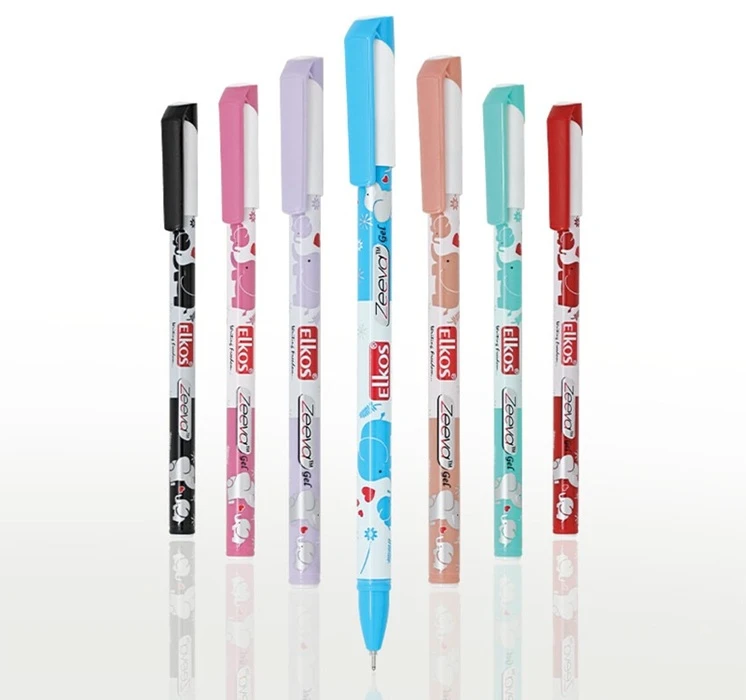
Many people spend years trying to improve their handwriting. They change notebooks, slow down strokes, and practice letter forms. Yet the problem often sits quietly in their pencil case. A closer look at gel pen manufacturers reveals why handwriting quality depends more on engineering than effort.
This is not about style. It is about mechanics.
Handwriting Is a Mechanical Outcome
Handwriting is the result of movement, friction, and ink transfer. When one element fails, letters lose shape.
A pen affects:
- Stroke width
- Line consistency
- Flow interruption
- Finger pressure
Even a skilled writer struggles if the pen resists motion. Smooth writing is not talent alone. It is cooperation between the hand and the tool.
Why Gel Pens Changed Writing Expectations
Gel pens manufacturers raised expectations. They introduced darker lines, smoother curves, and lighter pressure writing. But they also raised complexity.
Unlike oil-based ink, gel ink reacts instantly to speed and pressure. This makes it expressive but demanding.
If the internal system is poorly balanced, the ink:
- Skips during fast notes
- Smears under warm hands
- Breaks lines at sharp turns
When this happens, handwriting appears shaky or rushed, even when it is not.
What Happens Before a Gel Pen Is Sold
Most users see only the final product. The real decisions happen earlier.
Ink Behaviour Testing
Ink is tested at different speeds and temperatures. If it thickens or thins too much, writing suffers.
Tip Tolerance Control
Microscopic changes in tip size affect ink release. Poor control leads to blotting or dryness.
Barrel Balance
Weight distribution affects wrist motion. Front-heavy pens tire the hand faster.
Refill Stability
Ink must stay pressurised evenly. Air gaps cause skipping and hesitation.
These choices separate functional pens from frustrating ones.
Why Your Writing Looks Worse During Long Sessions
Handwriting quality drops during long writing sessions. This is often blamed on fatigue. In reality, pen performance plays a bigger role.
As pressure increases:
- Ink flow must adjust
- Grip friction becomes critical
- Tip wear becomes noticeable
Pens that fail here make writing harder as time passes. The hand compensates. Letters suffer.
This is why handwriting often looks neat at first and poor later.
The Cost Trap in Pen Manufacturing
Low-cost pens are designed backwards. Price comes first. Performance follows.
Common compromises include:
- Inferior ink stabilisers
- Inconsistent tip finishing
- Weak internal springs
- Minimal endurance testing
The result is unpredictable writing. Users adapt by pressing harder or slowing down. That damages consistency and comfort.
Why Consistency Matters More Than Smoothness
Many pens feel smooth for a few lines. Few stay consistent across pages.
Good handwriting depends on predictability. The brain adjusts movement based on feedback. When ink flow changes, rhythm breaks.
Serious pen production focuses on:
- Uniform line output
- Stable ink delivery
- Identical feel across batches
Without this, handwriting becomes uneven even if the technique stays the same.
How to Tell If the Pen Is the Problem
You can test this without experts or tools.
Write the same paragraph twice:
- Once with your usual pen
- Once with a different gel pen
Compare:
- Line breaks
- Pressure marks
- Stroke confidence
If letters improve instantly, the issue is never your hand.
Why This Knowledge Is Rare
Most people accept writing discomfort as normal. Pen education is almost nonexistent. Packaging talks about color and grip, not internal performance.
Manufacturers rarely explain engineering because it does not sell instantly. But it decides long-term satisfaction.
Understanding this shifts responsibility away from the writer and toward the tool.
Conclusion
Handwriting is not just a habit. It is interaction. When the pen resists, handwriting suffers quietly. When it supports movement, writing improves without effort.
The hidden decisions made by gel pen manufacturers shape daily writing more than practice ever could. Before changing how you write, change what you write with.
Sign in to leave a comment.