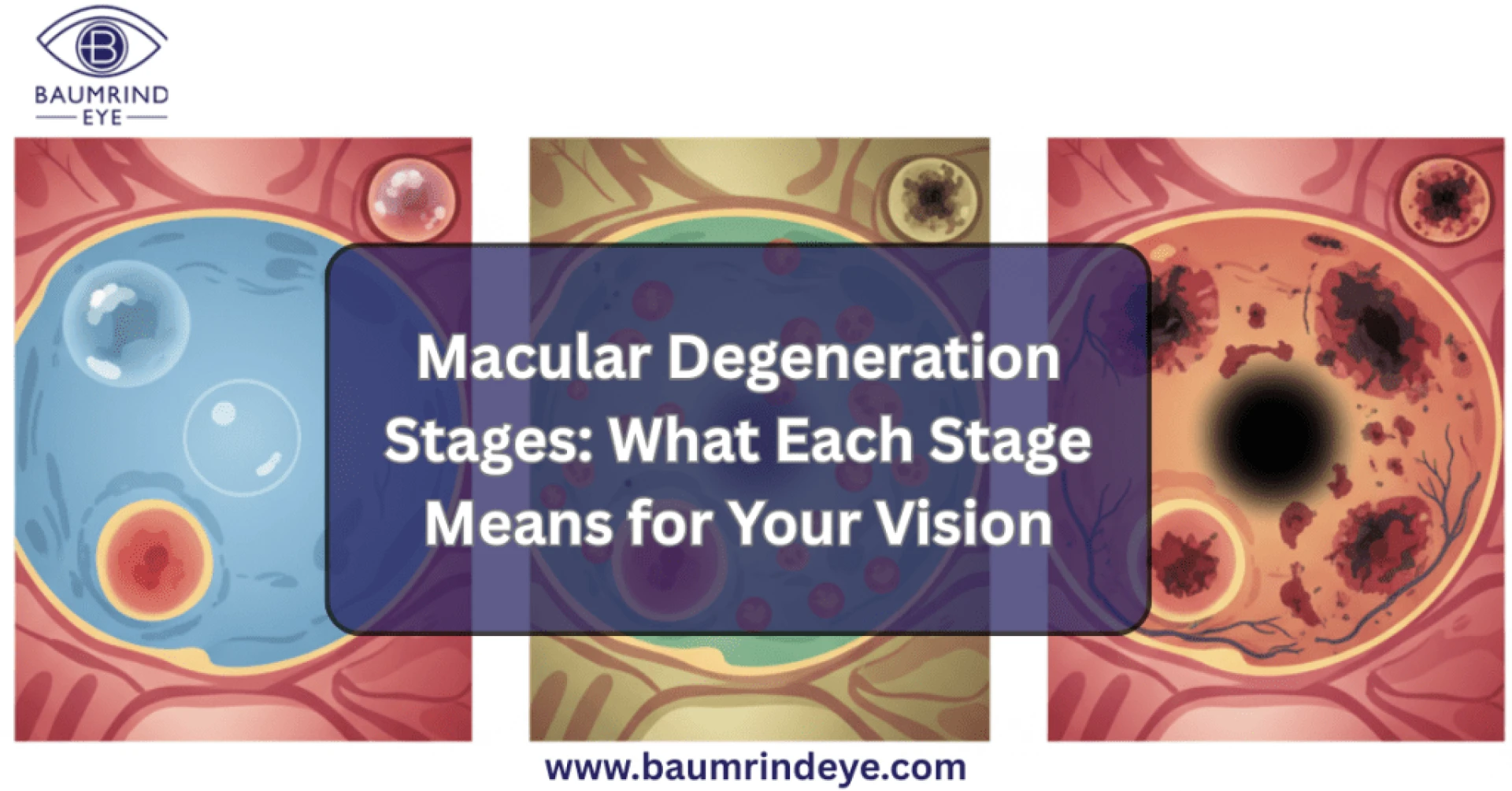

Macular degeneration is a progressive eye condition that affects the macula, the central part of the retina responsible for sharp, detailed vision. Understanding the stages of macular degeneration helps patients recognize symptoms early and seek timely care from an experienced eye doctor in Atlanta.
Early diagnosis and ongoing monitoring play a critical role in protecting long-term vision.
🧠 What Is Macular Degeneration?
Macular degeneration primarily affects central vision, making everyday activities such as reading, driving, and recognizing faces more difficult over time. While peripheral vision usually remains intact, damage to the macula can significantly impact quality of life.
An experienced eye specialist in Atlanta, GA can identify the condition early through a comprehensive eye exam and retinal imaging.
🟢 Early Stage Macular Degeneration
🔍 Minimal Vision Changes
In the early stage, macular degeneration often has no noticeable symptoms. Vision may appear normal, and many patients are unaware of changes occurring in the retina.
At this stage, the condition is typically detected during a routine eye exam through specialized imaging. Early diagnosis allows patients to focus on monitoring and macular degeneration prevention strategies to slow progression.
🟡 Intermediate Stage Macular Degeneration
👓 Subtle Changes in Vision
As macular degeneration progresses, patients may begin to notice mild vision changes. These may include difficulty seeing fine details, increased sensitivity to light, or the need for brighter lighting when reading.
An eye exam may reveal larger retinal changes that signal the need for closer monitoring. Your eye doctor may recommend lifestyle adjustments and more frequent follow-up visits to track progression.
🔴 Advanced Stage Macular Degeneration
⚠️ Significant Central Vision Loss
In the advanced stage, macular degeneration can cause noticeable central vision loss. This stage is divided into two forms: dry and wet macular degeneration.
- Advanced dry macular degeneration involves thinning of the macula, leading to blurred or missing central vision.
- Wet macular degeneration occurs when abnormal blood vessels grow under the retina and leak fluid or blood, causing rapid vision changes.
Prompt diagnosis is essential, as wet macular degeneration treatment may help slow further vision loss.
💉 Wet Macular Degeneration and Treatment Options
Wet macular degeneration often requires timely treatment to protect remaining vision. Treatment may include specialized therapies designed to reduce retinal swelling and control abnormal blood vessel growth.
Patients seeking an experienced eye doctor for macular degeneration benefit from advanced diagnostic tools and personalized treatment planning.
🧪 How Macular Degeneration Is Diagnosed
Accurate diagnosis relies on comprehensive retinal evaluation. Your eye doctor may perform a macular degeneration test or test for macular degeneration using advanced imaging to assess the macula and detect early changes.
These tests allow for precise staging and help guide appropriate care decisions.
🛡️ Managing and Monitoring Macular Degeneration
📅 Long-Term Vision Care
While macular degeneration cannot be cured, early detection and ongoing care can slow progression and preserve vision. Management often includes:
- Regular eye exams
- Monitoring for changes in vision
- Personalized treatment plans when needed
Working closely with macular degeneration eye doctors ensures consistent care and timely intervention.
⭐ Trusted Eye Care for Macular Degeneration in Atlanta
Understanding the stages of macular degeneration empowers patients to take an active role in their eye health. With early diagnosis, expert monitoring, and appropriate treatment, many patients maintain functional vision for years.
Choosing an experienced eye specialist in Atlanta ensures access to advanced technology, expert care, and personalized attention focused on long-term vision protection.































Sign in to leave a comment.