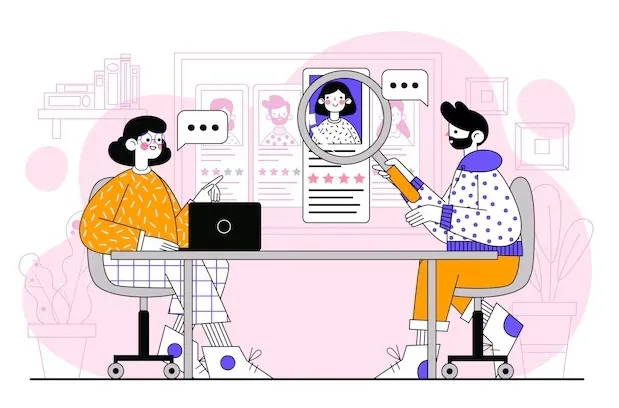

Recruitment was once a human challenge. Too many resumes, not enough time, and way too much speculation. In 2026, it’s turned into something completely new—data, technology, and for some businesses, culture. The ones who succeed at solving all three are assembling teams that leave the rest in the dust. Here are the top 10 recruitment trends setting apart the winners from the losers.
1. Autonomous agents have officially joined the team
The chatbot generation has been left behind. Technologies that will be dominating in 2026 do not sit around waiting for commands; they execute them. Self-directed agentic AI can find available job positions, find qualified candidates for those positions, send targeted outreach messages to potential applicants, and schedule interviews without requiring any action from the recruiting staff. In excess of 50% of global talent leaders are already integrating such systems into their teams. However, assigning responsibility should there be a mistake poses the real dilemma.
2. The recruiter job description has been rewritten
Spend a day among an innovative recruiting team, and what do you see? No one is organizing CVs. That task is for computers now. The new jobs for the people are relationship management, intelligent analysis, offer discussions, and overall workforce planning. AI-powered hiring has not reduced the recruiter's importance, it has elevated it. The role has shifted from inbox manager to talent advisor
3. Degrees are decorative. Skills are everything.
It’s not that the move toward skills-based recruiting is happening; it already has happened. Companies deploying AI-powered matching technology find suitable talent whom they might otherwise have rejected using the outdated degree-centric approach. With semantic search technology, individuals are surfaced according to their capabilities rather than their qualifications. Recruitment pools are expanding by multiples of hundreds for companies that have adopted this new paradigm.
4. Workforce planning now runs three years ahead
The most sophisticated HR teams in 2026 are not filling vacancies, they are preventing them. Through predictive analytics platforms that process performance indicators, market conditions, and employee turnover trends, companies have access to information on skill shortages well in advance of needing to make hires. The advantage of knowing about your skills shortage for fourth quarter 2027 in 2026 versus 2027 is crucial.
5. Onboarding is where retention is won or lost
Each company worries about the recruitment process and gives a new employee a laptop and handbook. It was only through intelligent automation during the onboarding process that people realized what they were missing out on. Intelligent automation now takes care of the paperwork, background checking, compliance checking, and custom onboarding for new employees even before their first day at work. Those who undergo an intelligent onboarding process stay for longer periods of time.
6. Candidate experience is a measurable revenue lever
Slow hiring procedures are not only annoying but costly. Candidates who decide to leave an outdated recruitment process don’t just vanish quietly; they tell others about it. Candidate experience will be measured by NPS scores, drop-off metrics, and response-time measures in parallel with cost per hire in the year 2026. AI-based communication systems have cut down response time to just seconds and have raised offer acceptances along with it.
7. Fairness needs proof, not promises
Boards, regulators, and candidates alike have stopped accepting "our process is fair" at face value. Proving it today entails constant algorithms testing, proper scoring matrices, trail recordkeeping of decisions made, and monitoring of demographic outcomes at all stages of hiring. Those companies who get it right achieve noticeable diversity gains among their staff. The ones treating bias reduction as a checkbox are carrying legal and reputational risk they may not fully appreciate yet.
8. Compliance has become a hiring strategy
The EU AI Act came into effect gradually from August 2024; however, the deadline with real consequences for HR professionals is only a few months away. The deadline to comply with all high-risk obligations in employment AI on 2 August 2026 is now approaching. The use of emotion recognition for recruiting candidates has been prohibited since February 2025. However, what awaits us in August is much more extensive. All AI systems used for hiring should conform to the requirements for deployment and comply with strict documented regulations, and both providers and users have liability. Compliance with AI hiring regulations is not just a legal concern anymore – it determines the choice of technologies available for you, how to design the recruitment process, and how prepared you are.
9. The candidate fraud arms race is heating up
Here is the uncomfortable flip side of an AI-powered world: candidates are using the same technology to game the process. Deepfake video impersonation, AI-generated interview answers, and proxy coaching during live assessments are documented problems in 2026 hiring. Forward-thinking organizations are responding with behavioral intelligence tools, integrity-focused assessment design, and proctoring systems that detect anomalies without crossing the line into surveillance overreach. The goal is verifying genuine capability — not punishing technology use.
10. Critical thinking beats AI certification every single time
CEOs require their employees to have AI knowledge. The boards require AI certifications. But if you ask those who are responsible for recruiting talent, what they badly need from humans who they recruit is one thing: the skill of being able to think critically and to judge the output of the system. In a world dominated by AI, the value of human beings lies in the capability to discern. Those organizations who recruit for this ability today are forming teams which will defeat AI-driven teams in the future.
Conclusion
The other possible vision of 2026 is one where the implementation of AI-powered hiring revolves around automating everything and trusting nothing about human judgment. This results in faster systems and inferior candidates. The more desirable vision is one where AI serves as the infrastructure while human beings represent the strategy. Employ Agentic AI to reduce activities that were inherently not worth performing by any human being. Employ predictive analytics to make decisions when conditions do not dictate you yet. Employ skills-based hiring to locate those hidden candidates from your past hiring filters. Just make sure human beings are accountable for making all the tough calls in creating your organizational culture and building your team.






























Sign in to leave a comment.