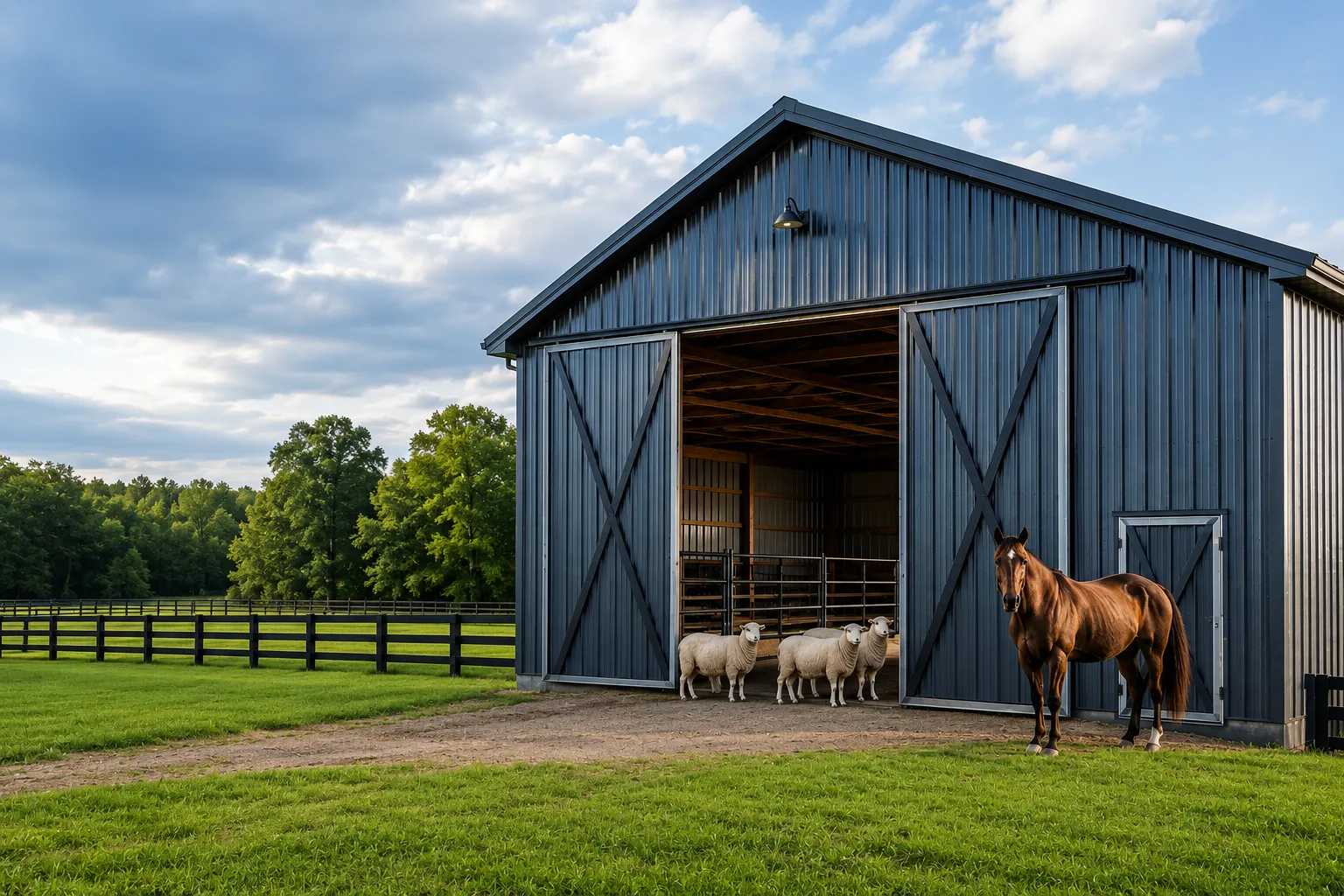

Buying a metal barn is an exciting investment. Whether you need space for farm equipment, livestock, vehicle storage, a workshop, or a growing agricultural operation, a steel barn can provide decades of reliable service when planned correctly.
However, many first-time buyers focus only on the building itself and overlook several important factors that affect the project's success. A metal barn may look simple on paper, but poor planning can lead to unexpected expenses, permit delays, structural issues, and costly modifications later.
According to 2023 USDA-related industry data, more than 60% of U.S. farms now use at least one prefabricated building because of their durability, flexibility, and long-term value. As metal barns continue gaining popularity, avoiding common mistakes has become more important than ever.
Before you sign a contract or order a building kit, take a look at the most common mistakes first-time buyers make and learn how to avoid them.
Why Planning Matters More Than Most Buyers Realize
Many buyers assume that selecting a size and placing an order is the hardest part of the process. In reality, most project delays and budget overruns happen because of decisions made before construction even begins.
Metal barns are long-term investments that often last 40 to 50 years or more. A few extra hours spent planning can save thousands of dollars in future modifications, repairs, and operational challenges.
The table below shows some of the most common issues that impact first-time buyers.
| Mistake Area | Potential Impact |
| Incorrect building size | Costly future expansion |
| Poor site preparation | Drainage and foundation issues |
| Permit delays | Construction delays and penalties |
| Cheap materials | Higher repair and replacement costs |
| No insulation plan | Increased energy expenses |
| Ignoring future needs | Expensive upgrades later |
Now let's examine the ten mistakes that create the biggest problems for new buyers.
Mistake #1: Choosing a Barn Based Only on Today's Needs
One of the biggest mistakes buyers make is planning only for their current requirements. A barn that feels large today can quickly become overcrowded as equipment, vehicles, livestock, or storage needs grow.
Many property owners select the smallest building possible to reduce upfront costs. Unfortunately, adding square footage later often costs far more than building slightly larger from the start.
When planning your metal barn, think about where your operation may be five or ten years from now. Consider future equipment purchases, additional storage requirements, or possible business expansion. A little extra space today can prevent major expenses tomorrow. Industry experts consistently recommend planning for future growth during the design phase rather than relying on later modifications.
Mistake #2: Ignoring Local Zoning and Permit Requirements
Many first-time buyers become excited about their project and place an order before checking local regulations. Unfortunately, this can create serious delays and additional costs.
Every county, municipality, and township has different requirements regarding setbacks, building height, property lines, wind ratings, and land use regulations. Some areas may also have homeowner association restrictions.
Permit issues remain one of the most common causes of construction delays. Experts recommend contacting your local building department before ordering a structure. A simple phone call can help you understand permitting requirements, inspections, and engineering documentation needed for approval.
The sooner you understand local regulations, the smoother your project will move forward.
Mistake #3: Underestimating the Total Project Cost
Many buyers focus exclusively on the advertised price of a metal barn kit. While the building package is a major expense, it represents only one portion of the overall project budget.
Site preparation, concrete work, permits, utility connections, delivery access, insulation, and interior improvements can significantly increase total costs. Buyers who ignore these expenses often experience budget surprises midway through construction.
A realistic budget should include every phase of the project from land preparation through final installation. Construction experts regularly identify incomplete budgeting as one of the most common reasons projects exceed expectations.
Understanding the full financial picture before ordering helps eliminate stress and keeps your project on track.
Mistake #4: Skipping Proper Site Preparation
A high-quality metal barn can only perform as well as the ground beneath it. Unfortunately, some buyers focus heavily on the building while neglecting site preparation.
Poor grading can create drainage problems that lead to standing water, erosion, foundation damage, and long-term maintenance issues. Uneven soil can also affect structural stability over time.
Site preparation should include evaluating drainage patterns, clearing vegetation, leveling the building area, and ensuring proper soil conditions. Industry professionals often emphasize that proper site preparation protects the entire investment and prevents expensive future repairs.
A solid foundation begins long before concrete is poured.
Mistake #5: Choosing the Cheapest Building Available
Everyone wants to save money. However, selecting a metal barn based solely on price can create problems that outweigh any initial savings.
Lower-priced structures may use lighter materials, offer limited engineering support, or provide weaker warranty coverage. Some buyers discover too late that their building is not designed for local wind, snow, or environmental conditions.
The growing demand for metal buildings has attracted many suppliers, but not all offer the same quality standards. Industry specialists warn buyers to verify certifications, engineering documents, warranty terms, and structural ratings before making a purchase decision.
A quality building may cost slightly more upfront but often delivers far greater value over its lifespan.
Mistake #6: Forgetting About Insulation and Climate Control
Many first-time buyers assume insulation can be added later if needed. While that is technically possible, retrofitting insulation often costs more than including it during construction.
Prefabricated steel buildings react quickly to temperature changes. Without proper insulation, interiors can become uncomfortable during hot summers and cold winters. Condensation may also become an issue in certain climates.
Experts frequently identify insulation planning as one of the most overlooked aspects of metal barn design. Proper insulation improves comfort, protects equipment, reduces moisture issues, and helps lower long-term energy costs.
If people, animals, equipment, or sensitive materials will occupy the barn, insulation should be part of the initial design discussion.
Mistake #7: Overlooking Ventilation Requirements
Ventilation and insulation work together, yet many buyers focus on one and ignore the other.
Poor airflow can create moisture buildup, condensation problems, mold growth, and unpleasant indoor conditions. This becomes especially important in barns used for livestock, feed storage, workshops, or enclosed equipment storage.
Modern ventilation systems help regulate airflow and reduce moisture accumulation throughout the year. Proper ventilation planning can also extend the lifespan of the building by minimizing conditions that encourage corrosion and interior deterioration.
Good airflow is not just about comfort. It protects the structure itself.
Mistake #8: Not Thinking About Equipment Access
Many buyers focus on floor space but overlook access requirements. A barn may have plenty of interior room yet still be difficult to use if doors are too small or positioned incorrectly.
Agricultural equipment, trailers, RVs, tractors, and large vehicles often require significant clearance. Door width, height, turning radius, and driveway access all affect daily usability.
Before finalizing a design, measure your largest equipment and consider future purchases. Experts recommend planning access requirements carefully because changing door locations or increasing opening sizes later can be expensive.
A functional layout improves efficiency every day the building is in use.
Mistake #9: Ignoring Future Utility Needs
Many metal barn owners eventually want electricity, plumbing, internet connectivity, security systems, or climate-controlled workspaces.
Unfortunately, some buyers fail to plan for these features during construction. Adding utilities after completion often requires additional excavation, wall modifications, and labor expenses.
Even if utilities are not immediately necessary, planning their future location can save considerable money. Conduit placement, electrical panel locations, and water access points should be considered early in the design process.
Future-proofing a barn costs far less than rebuilding sections later.
Mistake #10: Failing to Research the Manufacturer
The quality of your supplier can have just as much impact as the quality of the building itself.
A reputable manufacturer provides engineering support, warranty coverage, clear communication, and proven experience. Less reputable suppliers may offer attractive pricing but create problems with delivery, customer support, or product quality.
The U.S. pre-engineered metal building market was valued at nearly $13 billion in 2024 and continues growing rapidly. As demand increases, buyers have more options than ever before. This makes supplier research increasingly important.
Before committing to a purchase, review customer feedback, verify certifications, ask about warranties, and evaluate the company's track record. A little research can help you avoid years of frustration.
How to Buy a Metal Barn the Smart Way
After reviewing these mistakes, a clear pattern emerges. Most costly problems occur before construction starts. The good news is that almost all of them are preventable with proper planning.
Successful buyers typically follow a simple process. They define their long-term needs, verify permits, prepare a complete budget, evaluate site conditions, compare quality rather than price alone, and work with experienced suppliers.
When these steps are followed carefully, a metal barn becomes one of the most valuable and durable investments a property owner can make.
Final Thoughts
A metal barn can provide decades of dependable service, excellent storage capacity, and strong long-term value. However, the difference between a successful project and an expensive headache often comes down to the planning phase.
By avoiding these ten costly mistakes, first-time buyers can save money, reduce stress, and create a building that continues meeting their needs for many years. Whether you need a farm barn, horse barn, equipment storage facility, or multi-purpose workshop, careful planning today will help ensure your investment delivers maximum value tomorrow.
The smartest metal barn buyers are not necessarily the ones who spend the most money. They are the ones who ask the right questions before construction begins.
























Sign in to leave a comment.