
Summary:
Strong leaders are not born—they’re built through consistent habits, guided self-awareness, and expert coaching. With the right approach to leadership and management coaching, leaders can drive team performance, inspire trust, and support long-term business goals. This article examines ten essential habits that every leader should cultivate to succeed in today’s rapidly evolving business landscape.
Table of Contents
Introduction: Why Healthy Leadership Habits Matter
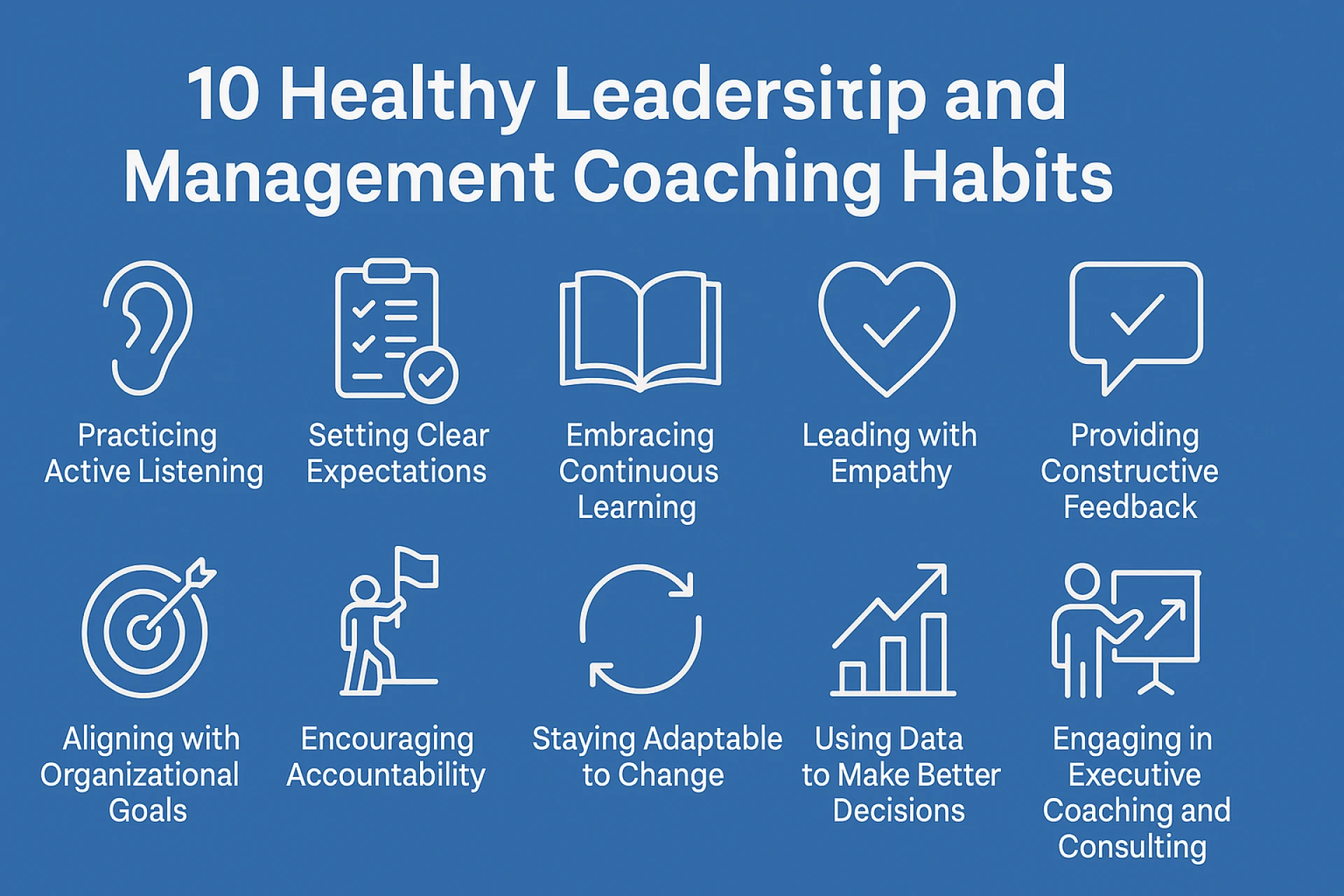
1. Practicing Active Listening
2. Setting Clear Expectations
3. Embracing Continuous Learning
4. Leading with Empathy
5. Providing Constructive Feedback
6. Aligning with Organisational Goals
7. Encouraging Accountability
8. Staying Adaptable to Change
9. Using Data to Make Better Decisions
10. Engaging in Executive Coaching and Consulting
Conclusion: How GatewaysGlobal Supports Leadership Growth
Frequently Asked Questions
Introduction: Why Healthy Leadership Habits Matter
Today’s business leaders need more than just vision—they need actionable habits that encourage growth, clarity, and alignment. Through consistent leadership and management coaching, professionals can strengthen key behaviours that lead to improved communication, stronger teams, and better decisions. These ten habits are essential for leaders at all levels aiming to lead with purpose and confidence.
1. Practicing Active Listening
Great leaders listen more than they speak. Active listening builds trust, reduces misunderstandings, and improves team collaboration.
- Tips to build this habit:
- Maintain eye contact
- Avoid interrupting
- Ask follow-up questions for clarity
2. Setting Clear Expectations
Teams perform better when they know what’s expected. Leaders must clearly communicate goals, roles, and performance standards.
- Quick checklist:
- Share objectives upfront
- Define responsibilities
- Offer timelines and check-ins
3. Embracing Continuous Learning
Modern leaders must be lifelong learners. Encourage professional development through workshops, books, or leadership courses.
Learning Activity Frequency
Online course or webinar Monthly
Team learning session Bi-Weekly
Personal reading time Weekly
4. Leading with Empathy
Empathy strengthens workplace relationships and improves employee well-being. Show understanding during conflict or stress.
Ways to lead with empathy:
- Recognise individual challenges
- Offer emotional support when needed
- Acknowledge achievements and efforts
5. Providing Constructive Feedback
Feedback fuels growth. Make it timely, specific, and solution-oriented.
Do this:
- Focus on behaviour, not personality
- Highlight what went well first
- End with actionable suggestions
6. Aligning with Organisational Goals
Leaders must align their team’s work with the company’s mission. This connects daily tasks to larger outcomes.
This supports:
- Strategic alignment
- Goal clarity
- Effective organisational design and restructuring
7. Encouraging Accountability
Create a culture where everyone owns their tasks and results.
- Encouragement tips:
- Set measurable targets
- Hold regular review meetings
- Celebrate wins and learn from setbacks
8. Staying Adaptable to Change
Leaders must stay flexible in the face of uncertainty. Embrace new ideas and pivot strategies when needed.
Example: During an unexpected market shift, adaptive leaders reassign resources to keep performance on track.
9. Using Data to Make Better Decisions
Use metrics and performance insights to guide decisions. This reduces bias and increases clarity.
Use tools for:
- Tracking KPIs
- Evaluating team performance
- Forecasting outcomes
10. Engaging in Executive Coaching and Consulting
Strong leaders invest in their own development. Through executive coaching and consulting, they gain fresh perspectives, refine strategies, and unlock new potential.
Benefits of coaching:
- Better decision-making
- Stronger communication
- Improved resilience during transitions
Final Thought
GatewaysGlobal helps leaders develop practical, lasting habits through tailored leadership and management coaching. By combining deep industry insight with expert-led executive coaching and consulting, they guide professionals to lead with clarity, confidence, and impact. Their strategies also support organisational design and restructuring, helping businesses stay agile and future-ready.
Frequently Asked Questions
1. What is leadership and management coaching?
It’s a structured process that helps leaders improve their skills, mindset, and behaviour to drive better team and business outcomes.
2. How does executive coaching differ from traditional training?
Executive coaching is personalized, focused on real-time challenges, and designed for long-term behavioural change—unlike general training sessions.
3. Why are healthy leadership habits important?
They promote consistency, build trust, and enable leaders to respond effectively to challenges.
4. When should a business consider leadership coaching?
Anytime leaders are managing change, scaling teams, or facing performance issues, coaching can offer valuable support.
5. Can leadership coaching help with restructuring?
Yes. It helps leaders communicate changes effectively, support teams emotionally, and align new structures with company goals.



























Sign in to leave a comment.