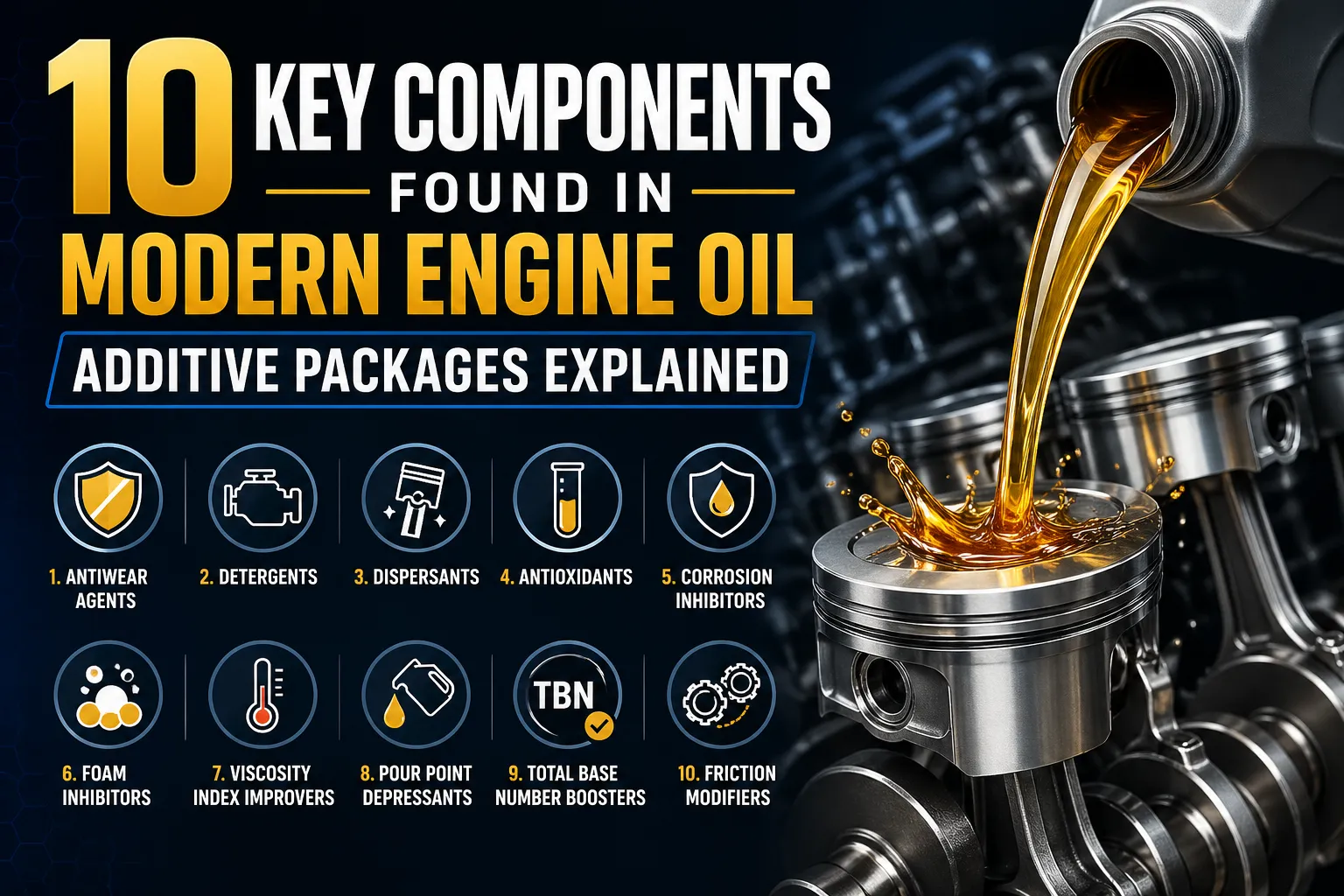

In the demanding automotive environment of the UAE—where extreme heat, dusty conditions, and long highway drives are common—engine protection is not just important, it’s essential. This is where engine oil additive packages play a critical role. Modern lubricants are no longer just base oils; they are carefully engineered chemical systems designed to enhance performance, extend engine life, and improve fuel efficiency.
In fact, industry studies suggest that up to 20–25% of modern engine oil formulation consists of additive chemistry, making these components just as important as the base oil itself. This blog breaks down the 10 key components found in modern engine oil additive packages, helping you understand what keeps your engine running smoothly under harsh conditions like those in the UAE.
1. Detergents – Keeping the Engine Clean
Detergents are metallic compounds (commonly calcium or magnesium-based) that neutralize acids and prevent deposit formation on engine parts. They ensure pistons and valves remain clean even under high temperatures. Without detergents, sludge buildup would significantly reduce engine efficiency over time
2. Dispersants – Fighting Sludge Formation
Dispersants work alongside detergents but focus on keeping contaminants suspended in oil rather than allowing them to settle. This prevents sludge and varnish formation. In UAE driving conditions, where stop-and-go traffic is common, dispersants are essential for maintaining oil cleanliness.
3. Viscosity Index Improvers (VIIs)
These additives help oil maintain consistent viscosity across temperature extremes. In hot climates like the UAE, oil tends to thin out quickly, but VIIs ensure it remains stable. This guarantees proper lubrication during both cold starts and high-temperature engine operation.
4. Anti-Wear Agents
Anti-wear additives form a protective film on metal surfaces, reducing friction and wear. A commonly used compound is ZDDP (zinc dialkyldithiophosphate). According to tribology studies, effective anti-wear additives can reduce metal-to-metal wear by up to 40% under high load conditions.
5. Friction Modifiers
These components reduce internal engine friction, improving fuel efficiency and performance. Molybdenum-based compounds are widely used. Even a small reduction in friction can improve fuel economy by 1–3%, which is significant for fleet operators in the UAE.
6. Antioxidants – Preventing Oil Degradation
Heat and oxygen cause oil to degrade over time. Antioxidants slow down this oxidation process, extending oil life and preventing thickening or acid formation. This is especially important in desert climates where engine temperatures regularly run high.
7. Corrosion and Rust Inhibitors
Moisture and combustion byproducts can cause corrosion inside engines. These additives form a protective layer on metal surfaces, preventing rust formation. This ensures long-term engine durability, even in humid coastal UAE regions.
8. Foam Inhibitors
Excess foam in engine oil reduces lubrication efficiency. Foam inhibitors ensure stable oil film formation, improving heat transfer and reducing wear. Silicone-based additives are commonly used for this purpose.
9. Pour Point Depressants
Although UAE winters are mild, lubricants still need to perform in varying conditions. Pour point depressants prevent oil from thickening excessively at lower temperatures, ensuring smooth engine start-up and flow.
10. Seal Swell Agents
These additives help maintain the elasticity of engine seals, preventing oil leaks. Over time, rubber seals can shrink or harden, but seal swell agents keep them conditioned and functional.
Why These Additives Matter in the UAE
The UAE’s extreme climate places additional stress on engines. High ambient temperatures, long-distance driving, and heavy-duty usage make high-performance engine oil additive packages essential for vehicle longevity.
A properly balanced additive system can:
- Extend engine life by reducing wear
- Improve fuel efficiency
- Reduce maintenance costs
- Enhance performance under heat stress
Conclusion
Modern lubricants are far more than just oil—they are precision-engineered chemical systems powered by advanced additive technology. Each component in engine oil additive packages plays a vital role in ensuring engine protection, efficiency, and durability, especially in demanding environments like the UAE.
For high-quality chemical solutions and advanced lubricant technologies, Top Polymers continues to deliver reliable and performance-driven products tailored to industrial and automotive needs.
If you're looking to enhance lubricant performance or understand the right additive balance for your application, exploring the right formulation partner can make all the difference.
Frequently Asked Questions
What are engine oil additives and why are they important?
Engine oil additives are chemical compounds mixed with base oils to enhance the performance and longevity of engine lubricants. They play crucial roles in cleaning, protecting, and improving the efficiency of engines, especially in demanding environments like the UAE, where extreme temperatures and conditions can lead to rapid engine wear.
How do detergents in engine oil additives work?
Detergents are metallic compounds that help keep engine parts clean by neutralizing acids and preventing deposit formation. They ensure that vital components like pistons and valves operate smoothly, which is essential for maintaining engine efficiency, particularly under high-temperature conditions.
What role do anti-wear agents play in engine oil?
Anti-wear agents form a protective film on metal surfaces, significantly reducing friction and wear during engine operation. For example, ZDDP (zinc dialkyldithiophosphate) can reduce metal-to-metal wear by up to 40%, making these additives vital for extending engine life, especially under heavy loads.
Why are viscosity index improvers necessary in hot climates?
Viscosity index improvers help maintain consistent oil thickness across varying temperatures, which is crucial in hot climates like the UAE. They prevent oil from thinning excessively, ensuring proper lubrication during both cold starts and high-temperature running conditions.
How do antioxidants benefit engine oil performance?
Antioxidants slow down the degradation of engine oil caused by heat and oxygen exposure, thereby extending the oil's life. This is particularly beneficial in desert environments where temperatures can soar, preventing thickening and acid formation that could harm engine components.
What are the benefits of using modern engine oil additives?
Modern engine oil additives enhance engine performance by extending engine life, improving fuel efficiency, and reducing maintenance costs. They are especially important in harsh conditions, as they help protect against wear, sludge, and corrosion, ensuring reliable vehicle operation.
Can engine oil additives really improve fuel economy?
Yes, engine oil additives, particularly friction modifiers, can reduce internal engine friction, leading to improved fuel efficiency. Even a minor reduction in friction can translate into a 1-3% increase in fuel economy, which can be significant for fleet operators.
What should I look for in high-performance engine oil additives?
When selecting high-performance engine oil additives, look for a balanced formulation that includes key components such as detergents, anti-wear agents, and antioxidants. These elements work together to enhance engine protection, efficiency, and durability, particularly in extreme operating conditions.




























Sign in to leave a comment.