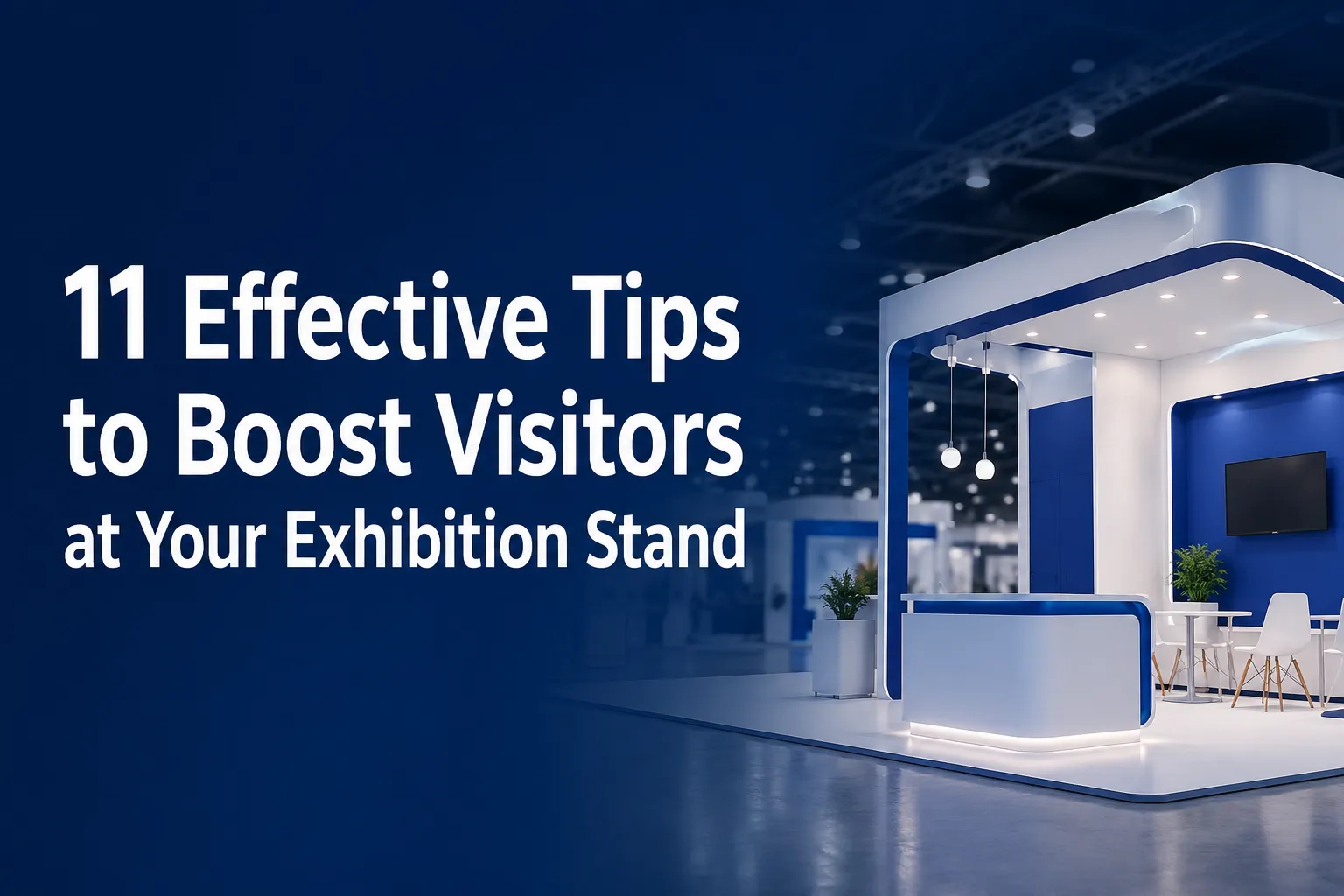

Every exhibitor wants the same thing: a busy stand. But busy doesn't happen by showing up with a banner and a bowl of sweets. The stands that consistently draw crowds — and convert that footfall into meaningful conversations — are built on deliberate decisions, from layout to staff behaviour to pre-show marketing. Brands that invest in expert exhibition stand design solutions tend to see the difference almost immediately, not just in visitor numbers but in the quality of those interactions.
If your last show felt quieter than it should have, here's what to change.
1. Ditch the Closed-Off Layout
Nothing kills foot traffic faster than a stand that feels like a room you have to be invited into. Closed facades, high counters positioned at the entrance, and narrow entry points all create subconscious barriers.
Open at least two sides of your stand. Position counters and displays along the perimeter rather than blocking the entrance. Let people drift in naturally rather than making them feel like they're stepping onto someone else's territory.
Exhibition stand designers refer to this as "permeable design" — and it consistently outperforms enclosed setups in visitor numbers.
2. Make Your Stand Visible From 20 Metres Away
At a busy trade show, visitors are scanning the floor from a distance. If your stand doesn't register within a few seconds of someone approaching, you've already lost them.
Height is your best tool. Suspended structures, tall backwalls, and elevated signage all increase your visibility across a crowded exhibition floor. One clear, bold message at height — your company name or a single-line proposition — does more work than ten detailed panels at eye level.
Custom exhibition stands with vertical impact consistently outperform smaller, flat-design setups in terms of walk-in traffic.
3. Give People a Reason to Stop — Not Just Look
A visually striking stand gets attention. A stand with something to do keeps people there long enough for a conversation to begin.
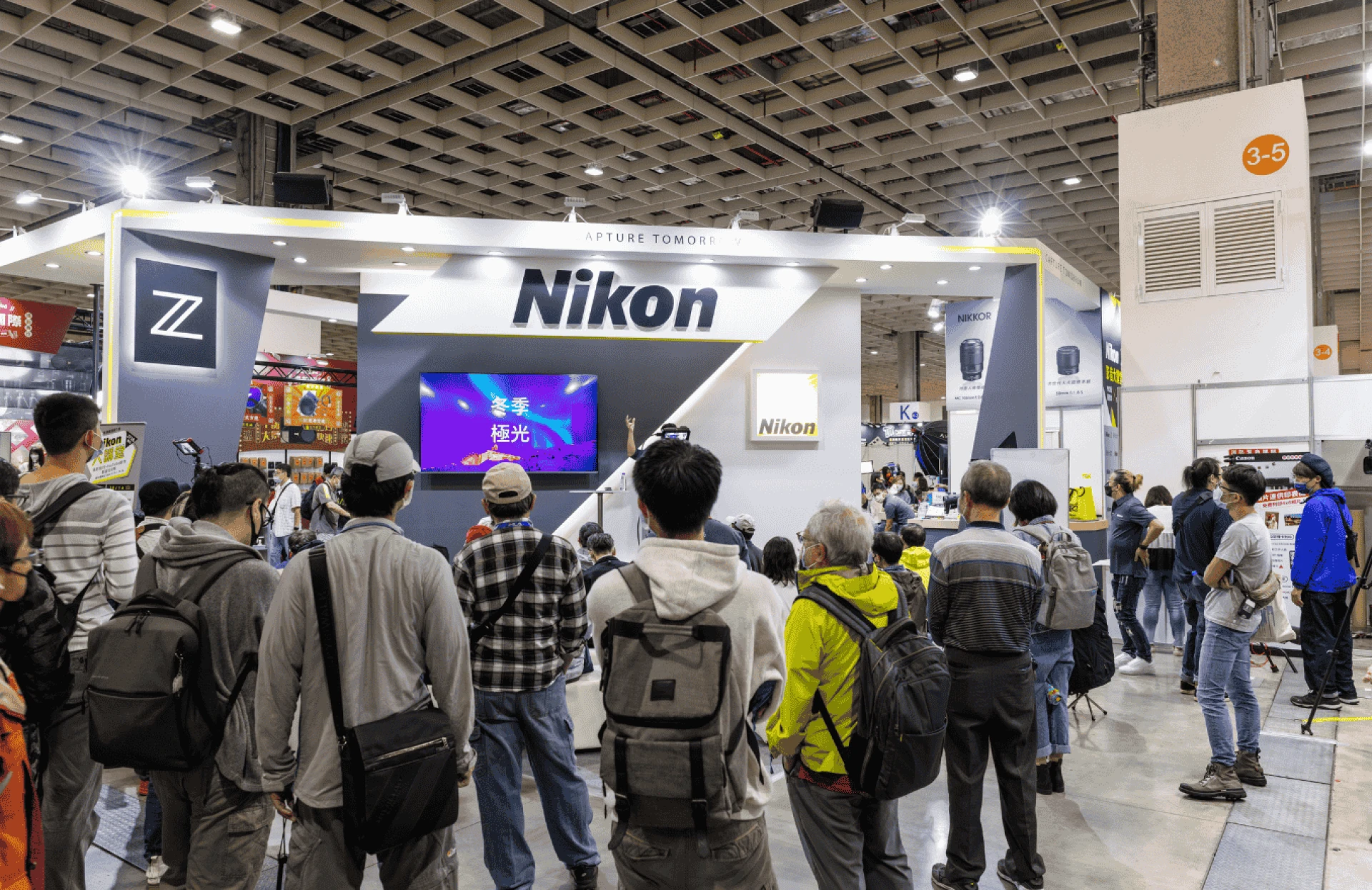
Product demonstrations, interactive screens, live builds, tasting stations, or hands-on testing areas all extend dwell time. Even a simple configurator — "build your version of this product on-screen" — gives visitors a reason to engage rather than just glance and move on.
The activity should connect to your product or service. A game that has nothing to do with what you sell might draw a crowd, but it draws the wrong crowd.
4. Sort Out Your Lighting Before Anything Else
Exhibitors regularly underestimate how much lighting affects visitor perception. A dimly lit stand looks closed. Harsh fluorescent lighting looks cheap. Neither invites people in.
Good exhibition booth design uses lighting intentionally — warm tones in conversation areas, focused spotlights on key products, and backlighting on graphic panels to make them pop. These aren't expensive upgrades. They're decisions your exhibition stand designer should be making from the start, not afterthoughts added at the end.
If you're taking your stand to multiple shows, build the lighting plan into your system rather than renting generic fixtures each time.
5. Pre-Show Marketing Is Half the Battle
The most common mistake exhibitors make is waiting for show day to attract visitors. By then, well-organised attendees already have their stand list planned.
Start promotion six to eight weeks before the show. Email your database with your stand number. Use LinkedIn to announce what you'll be showcasing. Create a reason to visit — a product launch, a live demonstration at a specific time, or an exclusive offer available only at the stand.
If the show has an attendee-facing app or exhibitor directory, make sure your listing is complete and includes a compelling reason to stop by. Many visitors plan their routes the night before.
6. Train Your Team on Engagement — Not Just Product Knowledge
Your staff can either draw people in or drive them away, and it has very little to do with how much they know about the product.
The biggest engagement killer is staff who stand behind counters, stare at their phones, or talk to each other. Visitors read body language quickly. A team that looks unapproachable is invisible, regardless of how well-designed the stand is.
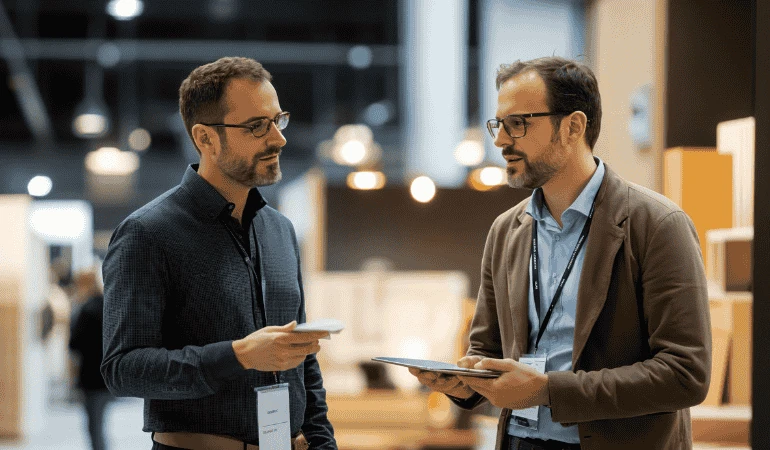
Train your team to stand at the edge of the stand, make eye contact, and open with a question — not a pitch. "What brings you to the show today?" opens a conversation. "Can I tell you about our product?" closes one.
7. Use Expert Exhibition Stand Design Solutions to Solve Real Problems
This is where good exhibition stand design goes beyond aesthetics. The best exhibition stand builders don't just make stands look impressive — they solve operational problems that exhibitors often don't realise they have.
Poor visitor flow, insufficient storage, awkward staff positioning, inadequate power access, and lighting that doesn't account for venue ambience are all design problems. Working with expert exhibition stand design solutions means these are addressed before build day, not discovered once the stand is up.
If you've had a show where the stand felt cramped, chaotic, or just off without being able to pinpoint why — the answer is almost always in the design brief.
8. Put Your Best Content at Eye Level and Below
There's a common instinct to put important information as high as possible so it can be seen from a distance. That works for your brand name and tagline. It doesn't work for product details, case studies, or anything requiring more than two seconds to read.
Eye-level panels — between 1.4m and 1.8m from the floor — are where visitors actually read. Below that, low-level displays work well for products being handled. Above 2m, you're in visibility territory, not reading territory.
Map your content hierarchy to the physical height of your exhibition stand. The right message at the right level.
9. Create a Physical Reason to Leave Contact Details
Lead capture is an afterthought for too many exhibitors. A badge scanner or a clipboard is passive — it puts the responsibility on the visitor to offer their information.
Build an active reason into the stand. A competition with a prize worth winning, a post-show resource available only to registered visitors, or a personalised report generated from a brief on-stand questionnaire all give visitors a clear exchange of value.
The stand itself should include a dedicated area for this interaction — a counter or kiosk that signals "this is where we capture your details" without it feeling like a data-grab.
10. Book a Corner Pitch — Then Design for It
Corner positions on a trade show floor offer exposure from two aisles instead of one. They're worth paying for, but only if your exhibition stand design actually takes advantage of the extra visibility.
A stand designed for a shell scheme slot placed in a corner position wastes the advantage entirely. Custom exhibition stand builders design for the specific pitch configuration — using both open sides intentionally, creating visual draws in both directions, and positioning staff to work two traffic streams rather than one.
If you're investing in a premium position, make sure your build matches it.
11. Debrief Honestly After Every Show
The exhibitors who improve fastest are the ones who review each show without defensiveness. Not "how many leads did we get?" but "what did we actually observe?"
Ask your team: Which part of the stand did visitors gravitate towards? What questions came up repeatedly that your messaging didn't address? Were there moments when the stand felt crowded in a way that turned visitors away? Was there dead time when the space felt empty despite good footfall nearby?
These observations shape the next iteration of your trade show booth design better than any assumption made in the office. The best exhibition stand designers work from real show feedback — and the brands that provide detailed debriefs consistently end up with stands that perform better each year.
The Bigger Picture
Visitor numbers at your exhibition stand aren't random. They're the result of decisions made months before the show — in the design brief, the pre-show marketing plan, the staff training session, and the pitch booking.
Each of these tips works on its own. But the biggest gains come when they work together: a stand designed to draw people in, staffed by a team trained to engage them, promoted to the right audience in advance, and refined honestly after each event.
That's not luck. That's a system. And it's one worth building.
























Sign in to leave a comment.