
Introduction
Driving traffic to your website is only half the battle. The real challenge is converting visitors into customers, leads, subscribers, or paying clients. Many businesses spend thousands on SEO, paid advertising, and social media campaigns but still struggle to achieve meaningful results because their website fails to convert visitors effectively.
This is where Conversion Rate Optimization (CRO) becomes essential. CRO focuses on improving your website experience so that more users take the desired action without increasing your traffic budget. Whether your goal is generating leads, increasing sales, or boosting inquiries, improving your conversion rate can significantly impact your revenue and overall business growth.
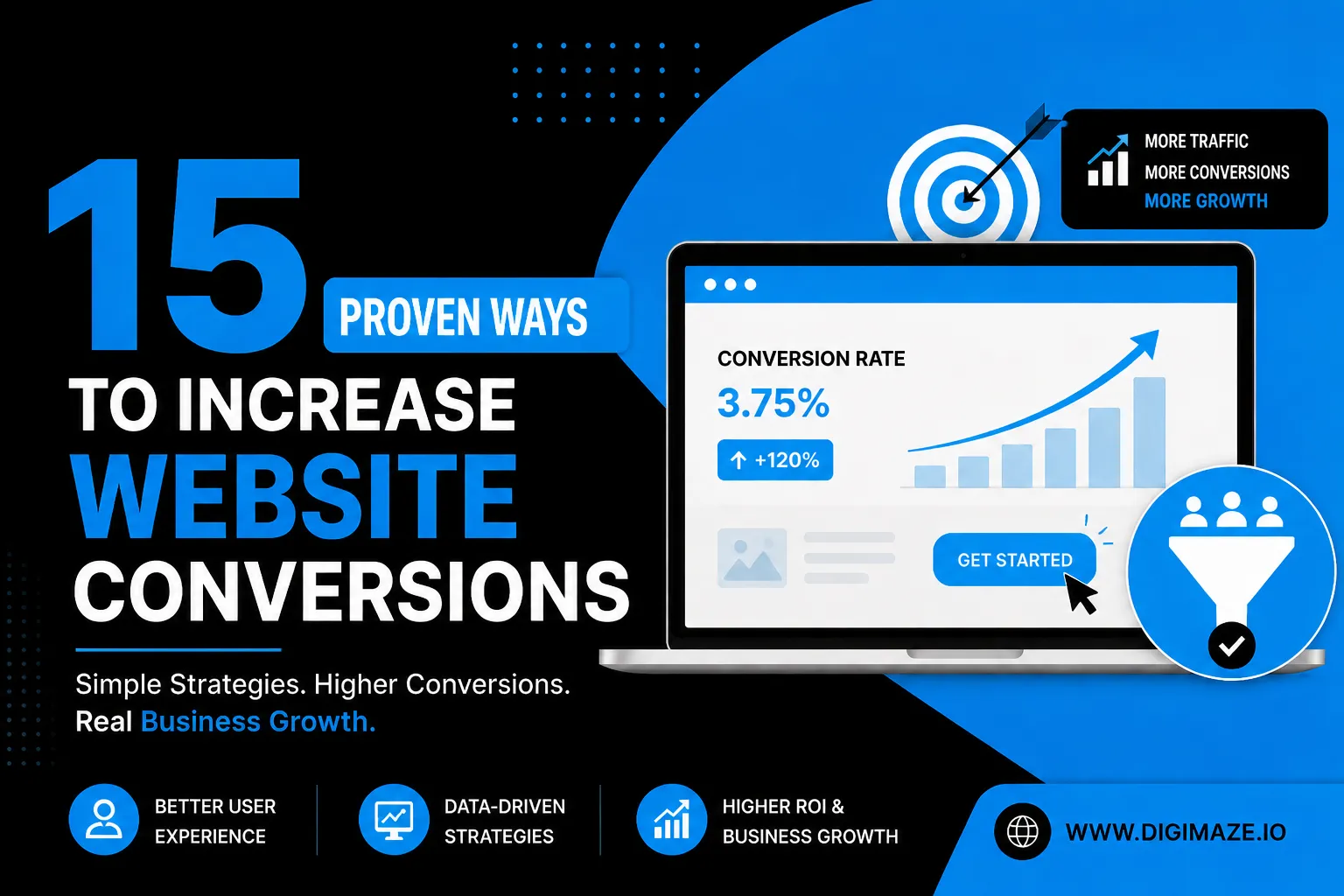
In this guide, we will explore 15 proven ways to increase website conversions and help you transform your website into a high-performing conversion machine.
Understand Your Audience Before Optimizing
Before making any changes to your website, you need to understand your audience. Many businesses fail because they optimize based on assumptions instead of user behavior.
Study your visitors carefully through analytics tools, heatmaps, surveys, and session recordings. Understand where users drop off, what pages they spend time on, and what actions they take before converting. When you understand your audience’s pain points and expectations, you can create a website experience that matches their needs.
Create User-Centered Messaging
Your website messaging should focus on solving customer problems instead of simply describing your services. Visitors care about benefits, outcomes, and solutions more than features.
Improve Website Speed
Website speed has a direct impact on conversions. Modern users expect websites to load almost instantly. Even a one-second delay can increase bounce rates and reduce conversions significantly.
A fast-loading website improves user experience, builds trust, and keeps visitors engaged longer.
Optimize Technical Performance
Compress large images, minimize unnecessary scripts, use browser caching, and invest in reliable hosting. Mobile users especially expect smooth and fast browsing experiences.
Create Clear and Compelling Headlines
Your headline is the first thing users notice when they land on your website. If it fails to grab attention immediately, visitors may leave within seconds.
Strong headlines clearly communicate value and explain what users will gain by staying on the page. Avoid vague or overly creative language that confuses visitors.
Focus on Benefits Instead of Features
A powerful headline highlights outcomes and customer benefits. Instead of saying “Advanced Marketing Solutions,” say “Grow Your Business with Data-Driven Marketing Strategies.”
Optimize Your Call-to-Action Buttons
Your call-to-action (CTA) buttons guide users toward conversion. Weak CTAs often lead to lost opportunities.
Use action-oriented language that creates urgency and clarity. Phrases like “Get Started Today,” “Book Your Free Consultation,” or “Download the Guide” perform better than generic phrases like “Submit.”
Improve CTA Placement
Place CTAs strategically throughout your website. Important buttons should appear above the fold and at logical points within the content journey.
Make Your Website Mobile-Friendly
Most website traffic now comes from mobile devices. A website that performs poorly on smartphones can lose a large percentage of potential customers.
Responsive design ensures users have a smooth experience regardless of device size. Mobile optimization is no longer optional for businesses that want better conversions.
Simplify Mobile Navigation
Reduce clutter and make menus easy to access. Large buttons, readable fonts, and simple layouts improve mobile usability significantly.
Build Trust with Social Proof
People trust businesses more when they see evidence that others have had positive experiences.
Social proof reduces uncertainty and encourages users to take action. Display customer reviews, testimonials, ratings, and client logos prominently throughout your website.
Showcase Real Customer Experiences
Detailed testimonials with names, photos, and measurable results create stronger credibility compared to generic reviews.
Reduce Form Friction
Long and complicated forms discourage users from completing conversions. Every unnecessary field increases friction.
Keep forms short and only ask for essential information. Simpler forms generally produce higher completion rates.
Use Multi-Step Forms Carefully
For complex lead generation processes, breaking forms into smaller steps can improve completion rates while making the process feel less overwhelming.
Improve Website Design and Visual Hierarchy
A cluttered website confuses users and distracts them from important actions. Clean and organized design improves readability and engagement.
Effective visual hierarchy guides users naturally toward your most important content and CTAs.
Use White Space Strategically
White space improves focus and makes content easier to consume. Overcrowded pages often overwhelm visitors.
Personalize User Experiences
Personalization helps users feel that your website understands their needs.
Showing customized content based on location, browsing behavior, or traffic source can improve engagement and conversion rates significantly.
Match Landing Pages to Traffic Sources
Users clicking on specific ads should land on pages that match the ad messaging exactly. Consistency improves trust and reduces bounce rates.
Use High-Quality Visual Content
Visual content influences purchasing decisions and user perception. Poor-quality images and outdated graphics can reduce trust instantly.
Professional visuals create a stronger first impression and improve brand credibility.
Use Videos to Increase Engagement
Explainer videos, product demos, and customer success stories can increase user understanding and encourage conversions.
Focus on SEO and User Experience Together
SEO brings visitors to your website, but user experience determines whether they convert.
A website optimized for both search engines and users creates long-term business growth.
Create Content That Solves Problems
Educational and informative content builds authority and keeps visitors engaged longer, increasing conversion opportunities.
Use A/B Testing Regularly
Successful CRO depends on continuous testing. Small changes can create major improvements in conversion rates.
A/B testing allows businesses to compare variations of headlines, buttons, layouts, and forms to determine what performs best.
Test One Element at a Time
Testing too many variables simultaneously makes it difficult to identify what caused performance improvements.
Improve Navigation and Site Structure
Visitors should be able to find information quickly and easily. Confusing navigation increases frustration and bounce rates.
A clear website structure improves usability and encourages users to explore more pages.
Minimize Distractions
Avoid excessive pop-ups, unnecessary animations, and distracting elements that interrupt the user journey.
Create Urgency and Scarcity
Urgency motivates users to act faster. Limited-time offers, countdown timers, and low-stock indicators can increase conversions when used strategically.
However, overusing urgency tactics can damage trust.
Keep Messaging Authentic
Authentic urgency performs better than manipulative tactics. Users appreciate transparency.
Track Analytics and User Behavior
Without data, conversion optimization becomes guesswork. Tracking user behavior helps businesses identify weaknesses and opportunities.
Use tools like Google Analytics, heatmaps, and session recordings to monitor user interactions and conversion paths.
H3: Monitor Conversion Funnels
Analyze where users abandon the conversion process and optimize those areas first.
Continuously Improve and Adapt
Conversion optimization is not a one-time task. User behavior, technology, and digital trends constantly evolve.
Businesses that continuously analyze data, test strategies, and improve user experiences achieve better long-term results.
Build a CRO Strategy
Successful CRO requires a structured approach that combines analytics, design, psychology, and marketing.
Conclusion
Increasing website conversions is not about making random design changes or adding flashy elements. It requires understanding your audience, improving user experience, reducing friction, and continuously testing what works best.
From optimizing website speed and CTAs to improving mobile experiences and using social proof, each strategy plays a critical role in building a high-converting website. Businesses that focus on conversion rate optimization can generate more revenue, leads, and customer engagement without increasing advertising costs.
By implementing these 15 proven strategies consistently, your website can become a powerful tool for business growth, customer acquisition, and long-term digital success.
























Sign in to leave a comment.