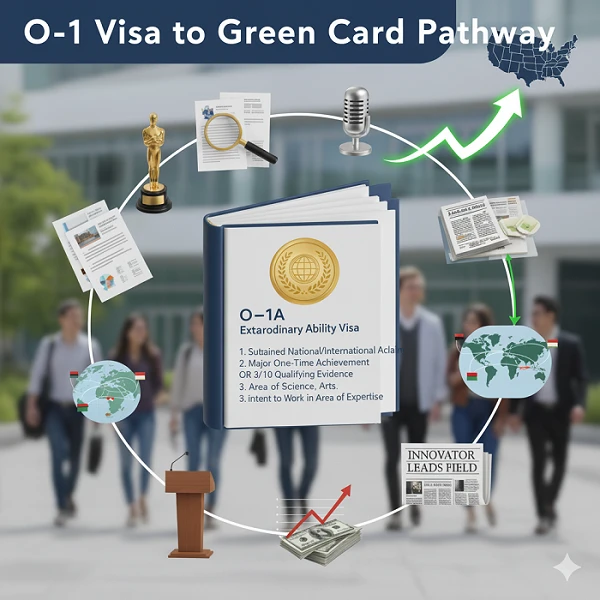

Transitioning from an O-1 visa to a U.S. green card can feel overwhelming, especially with evolving immigration guidelines in 2025. Whether you are pursuing an EB-1A (Extraordinary Ability) or NIW (National Interest Waiver), the right documentation plays a major role in ensuring a smooth and successful petition. This guide highlights the most updated 2025 document checklist specifically designed for O-1 visa holders planning their next step toward permanent residency.
Understanding the Transition From O-1 to EB-1A or NIW
Before diving into the checklist, it’s important to understand the connection between the O-1 category and green card pathways. Many applicants consider the o1 visa to green card route because their achievements already meet high-level standards. If you’re working under the o1 a visa, you may already have extensive evidence of extraordinary ability—making you a strong candidate. In fact, professionals often rely on the o1 visa to green card strategy because much of the documentation used previously can be repurposed. Likewise, holding an o1 a visa often places you just a step away from the requirements of EB-1A or NIW.
Why O-1 Visa Holders Are Strong Candidates for EB-1A / NIW
As an O-1 professional, you already possess a record of extraordinary achievement, which aligns closely with EB-1A standards. Many applicants find that following the o1 visa to green card pathway reduces documentation effort because they previously gathered strong evidence for their O-1 petition. Additionally, individuals with the o1 a visa often meet key criteria for both categories. The overlap between o1 visa to green card requirements and the evidentiary standards of EB-1A or NIW makes the transition easier. With the o1 a visa, the chances of meeting the high bar for extraordinary ability or national interest contributions increases significantly.
2025 Document Checklist for O-1 Visa Holders Filing for EB-1A or NIW
1. Personal Identification & Immigration Status Documents
These documents verify your current legal status in the U.S. and your personal identity:
- Passport (valid for at least 6 months)
- O-1 visa stamp pages
- All I-94 records
- All prior approval notices (I-797 for O-1, O-2 if applicable)
- Previous visa and travel history
Having organized immigration records speeds up your petition and avoids RFEs (Requests for Evidence).
2. Evidence of Extraordinary Ability (EB-1A) or Exceptional Contributions (NIW)
This is the core of your petition. For an EB-1A petition, you must show sustained national or international acclaim. NIW applicants, meanwhile, must show contributions of substantial merit and national importance.
Key evidence includes:
Awards & Recognitions
- National or international awards
- Government, institutional, or industry-recognized honors
- Certificates or official recognition letters
Published Work About You
- Media articles, press releases, interviews
- Coverage in major newspapers, magazines, or reputable online platforms
- Reviews or features related to your work in the field
Original Contributions
- Patents or patent citations
- Innovations in your industry
- Contributions referenced or adopted by others
- Documented positive outcomes from your work
3. Letters of Recommendation (Expert Opinion Letters)
Strong recommendation letters remain essential in 2025. Choose experts who are well-established in your field—preferably individuals who have not worked directly with you to demonstrate unbiased support.
Each letter should include:
- Expert’s background and credentials
- Explanation of your extraordinary ability
- Examples of significant contributions
- Evidence of your national or global impact
- Why your work is critical to the U.S. (for NIW applicants)
Aim for 5–8 detailed letters, including at least 2 independent experts with no prior professional relationship.
4. Evidence of High Salary, Critical Roles, or Leading Positions
To strengthen your EB-1A or NIW application, include proof that demonstrates leadership or exceptional capability.
Documents to include:
- Employment contracts with salary details
- Industry salary comparisons showing your income is high in your field
- Appointment letters for key roles
- Documentation confirming advisory, board, or leadership positions
5. Published Research, Exhibitions, Performances, or Creative Output
Depending on your field, acceptable documentation may include:
- Peer-reviewed journal publications
- Citations on Google Scholar or Scopus
- Exhibitions or showcases
- Creative portfolios
- Conference presentations
- Performance history
- Professional reviews of your work
Provide clear records, screenshots, links, and third-party verification for each item.
6. Evidence of Judging the Work of Others
If you served as a judge, reviewer, or panel evaluator, include:
- Invitation emails
- Confirmation messages
- Screenshots of journal reviewer dashboards
- Photos or videos of contest judging (if applicable)
This helps prove your authority in your field.
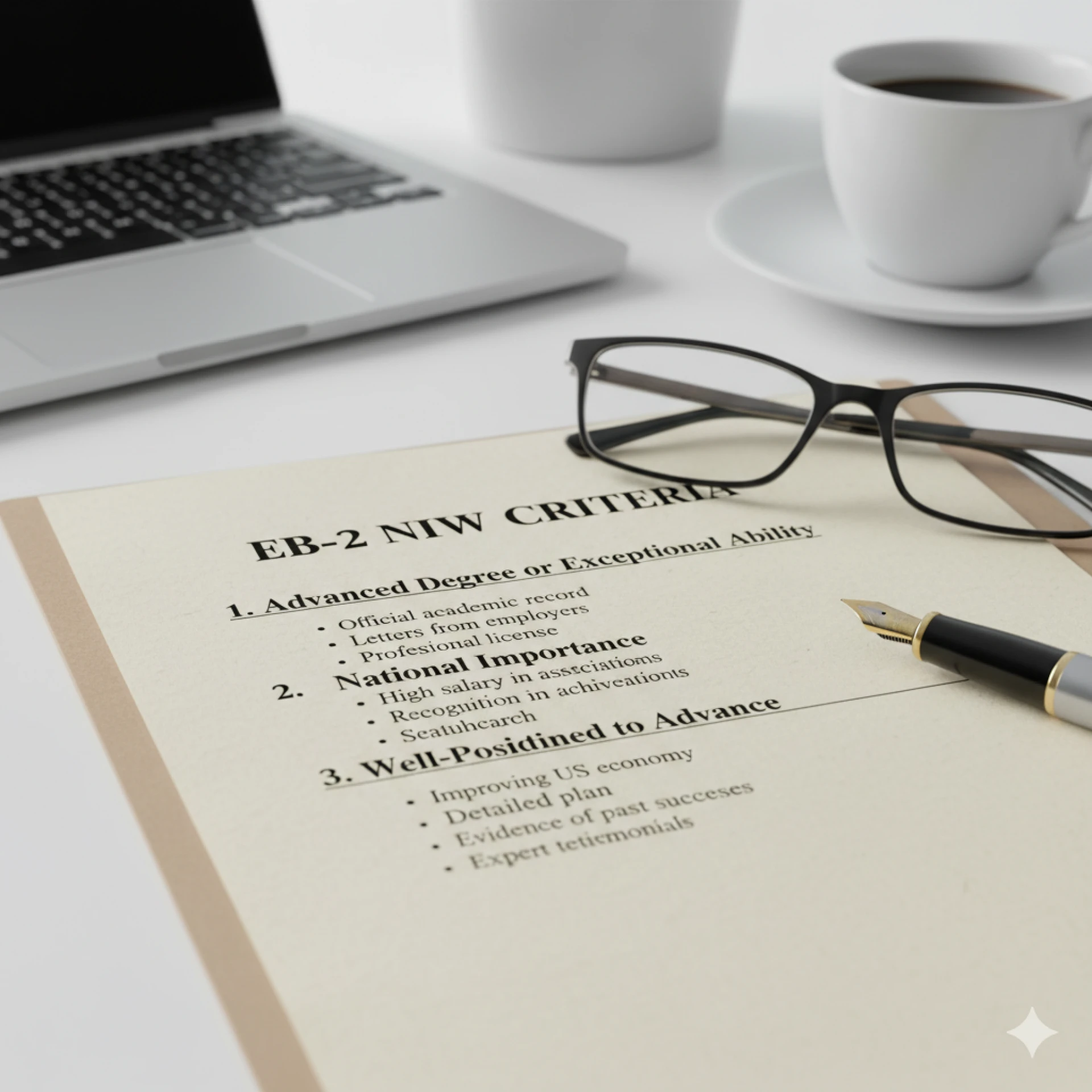
7. NIW-Specific Documents (If Not Filing EB-1A)
If you are applying for a National Interest Waiver, add:
- A detailed personal statement explaining how your work benefits the U.S.
- Market impact analysis of your contributions
- Evidence of future projected impact
- Proof that your work addresses national priorities (health, science, economy, technology, etc.)
8. Petition Forms and Supporting Paperwork
Make sure to include:
- Form I-140 (Immigrant Petition for Alien Worker)
- Form ETA-750B (if applicable)
- G-28 (if represented by an attorney)
- Filing fee receipts
- Cover letter explaining your eligibility
Conclusion
The transition from an O-1 visa to EB-1A or NIW is one of the most efficient paths toward permanent residency because the requirements naturally overlap. With updated 2025 documentation standards, O-1 visa holders are in a strong position to secure an approval—especially when their achievements are well-documented and supported by credible evidence. Proper organization, expert letters, and proof of extraordinary impact can significantly boost your chances of moving closer to your green card dream.





























Sign in to leave a comment.