
Introduction
In today’s fast-paced design world, 3D model architecture has revolutionized the way architects communicate their ideas. Whether it's for client presentations, competitions, or planning approvals, architectural 3D models provide a powerful visual language that bridges the gap between concept and reality.
With the rise of digital tools and technologies like 3D printing and BIM (Building Information Modeling), the architectural industry is undergoing a major transformation—where physical and digital 3D model architecture go hand in hand. In this blog, we’ll explore what 3D architectural models are, why they matter, and how they are shaping the future of architecture.
What Is 3D Model Architecture?
3D model architecture refers to the process of creating a three-dimensional representation of a building or space. These models can be:
- Digital models (created using software like Revit, Rhino, or SketchUp)
- Physical models (produced using 3D printers or traditional model-making techniques)
These models are used to simulate the shape, size, structure, and spatial relationships within a design before construction begins. They help architects test ideas, detect design flaws, and improve collaboration between clients, engineers, and contractors.
Benefits of 3D Architectural Models
1. 🧠 Enhanced Visualization
Traditional 2D drawings often require interpretation. A 3D model eliminates that ambiguity by showing exactly how the final structure will look and feel.
- Digital walkthroughs offer immersive experiences
- Physical models allow for tactile understanding
- Helps non-technical stakeholders grasp the design easily
2. 🛠️ Accurate Design Communication
With 3D model architecture, design intent is communicated more clearly. From facade treatments to interior volumes, every detail can be visualized.
- Perfect for client meetings and investor pitches
- Useful in planning submissions where clarity is key
- Assists engineers and consultants in accurate decision-making
3. 🧪 Design Iteration & Testing
One of the greatest strengths of 3D modeling is the ability to iterate. Architects can experiment with forms, materials, or spatial arrangements rapidly.
- Test light, airflow, structure digitally
- Print scaled prototypes for review
- Validate design assumptions before construction
4. 📊 Better Collaboration Across Teams
A 3D model acts as a central source of truth that all project stakeholders can refer to.
- Enhances BIM coordination with engineers and contractors
- Reduces the chance of miscommunication or error
- Speeds up project approvals and execution
Types of 3D Model Architecture
🔷 Digital 3D Models
Created using architectural software, digital 3D models are editable, interactive, and often integrated into virtual reality or BIM systems.
Popular tools include:
- SketchUp – Ideal for quick concepts
- Revit – BIM-focused, detailed modeling
- Rhino + Grasshopper – Parametric design and complex geometry
- 3ds Max & Blender – For photorealistic rendering and animation
🔷 Physical 3D Models
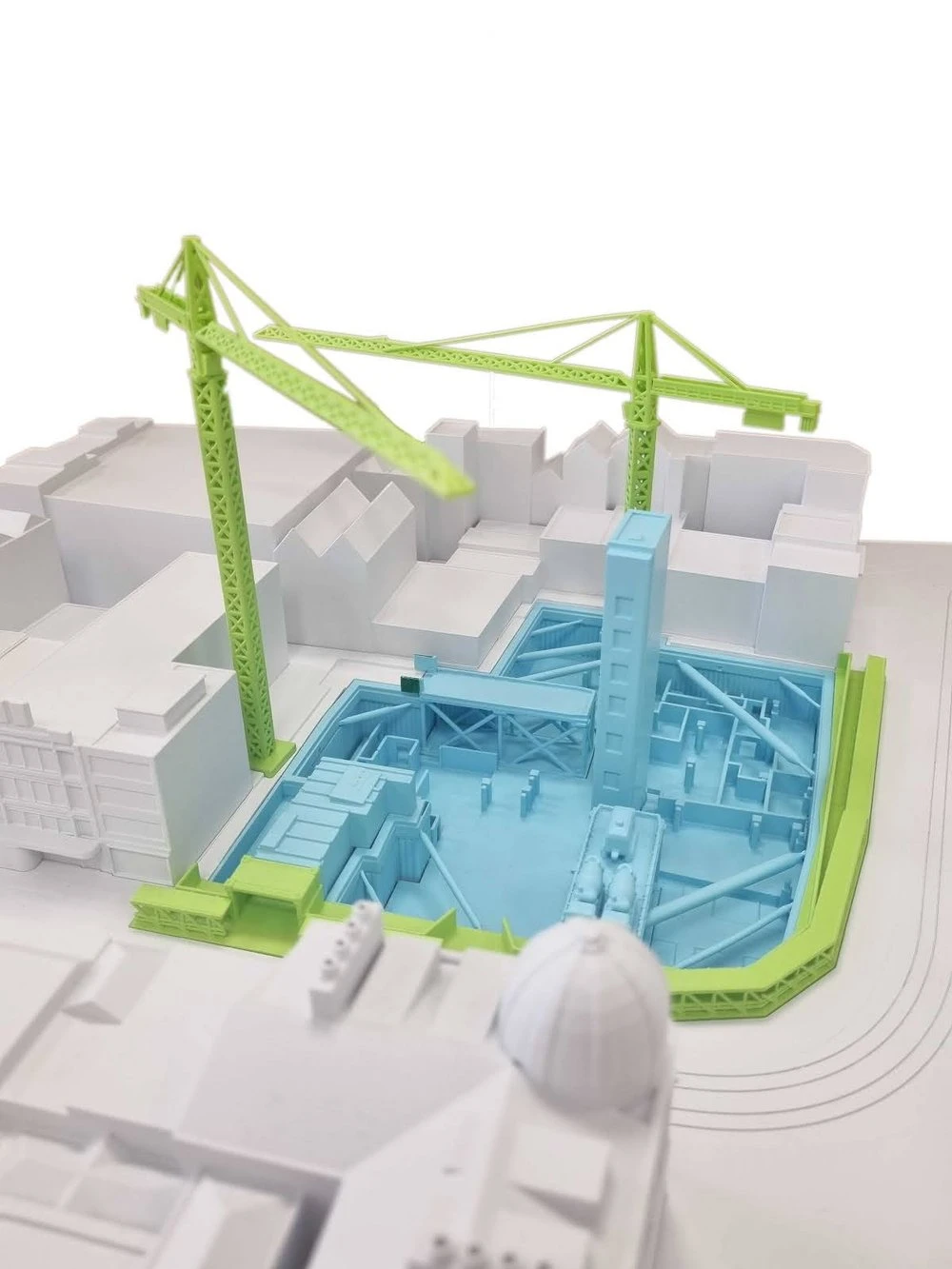
Physical models are often 3D printed or manually assembled using foam, plastic, resin, or card. They provide a tangible, real-world experience that digital models can’t replicate.
- Perfect for competitions and client presentations
- Great for understanding proportions, volumes, and context
- Often created using SLA or FDM 3D printing technologies
3D Printing in Architectural Model Making
The use of 3D printing in 3D model architecture is a game-changer for UK architects and global studios alike.
🔍 Common 3D Printing Methods:
- SLA (Stereolithography) – Offers high detail and smooth surfaces
- FDM (Fused Deposition Modelling) – Affordable and suitable for massing models
✅ Advantages:
- Faster production compared to manual crafting
- Precise, detailed models suitable for painting or finishing
- Scalable for small components or large cityscapes
Architectural 3D printing services in the UK—like Fixie 3D—specialize in high-resolution models, offering secure, professional services to studios of all sizes.
Who Uses 3D Model Architecture?
🏢 Architects & Designers
To explore and present building concepts.
🏗️ Engineers & Contractors
To analyze buildability, structure, and MEP integration.
🏛️ Developers & Investors
To visualize ROI potential before committing to large investments.
🏠 Homeowners & Self-Builders
To understand design plans and options before construction.
Real-World Applications
- Urban planning: Visualizing zoning, density, and infrastructure
- Interior design: Modeling furniture layouts and lighting schemes
- Historical preservation: Recreating landmarks or protected buildings
- Education: Teaching spatial thinking and construction techniques
The Future of 3D Model Architecture
As technologies like AI, generative design, and mixed reality evolve, the capabilities of 3D model architecture will expand. We’re moving toward a world where:
- Virtual models are built into AR/VR environments
- Construction robots use 3D models as direct instruction
- Clients walk through models before a single brick is laid
Final Thoughts
Whether you're a solo designer or a large UK-based studio, 3D model architecture is a powerful tool that enhances creativity, communication, and collaboration.
From digital BIM models to high-resolution 3D printed displays, the future of architecture lies in 3D. If you're not already embracing this evolution, now is the time to start.
Need High-Quality 3D Architectural Models?
At Fixie 3D, we specialize in producing professional 3D printed architectural models across the UK. With SLA precision, secure file handling, and expert finishing, we help bring your designs to life—on time and on budget.
🔗 Visit: www.fixie3d.com
📍 Based in London – Serving all of the UK
























Sign in to leave a comment.