
The success of building projects depends much on the instruments chosen. While underlining economic limits, proper equipment guarantees superior results, increases safety, and increases production. From little house jobs to big commercial projects, some equipment always shows their worth in all kinds of building contexts. Effective modern building operations are based on these five fundamental tool categories.
Advanced Measurement and Layout Systems
Tools for precision measuring remove expensive mistakes before building starts. Modern laser levels greatly increase accuracy by replacing conventional spirit levels with accurate horizontal and vertical reference lines across great distances. Total stations provide an exact layout of difficult constructions by combining electronic distance measuring with angle measuring capability. At the same time, laser measurement tools offer instantaneous computations for spans that conventional tape measures struggle to capture precisely; electronic measuring wheels record distances with exact digital technology. For remodeling projects, 3D scanners record thorough spatial data on current buildings. These sophisticated measuring technologies lower human error, speed up layout, and produce digital documentation that can be distributed throughout project teams, thereby laying a basis for effective construction that benefits all through the project life.
Power Tools and Fastening Systems
Unlike hand tools, power tools drastically speed up building and lessen physical strain. Interchangeable batteries on cordless platforms enable many tools, hence improving mobility across job sites without compromising performance. While oscillating multi-tools accomplish cutting, sanding, and scraping with one tool, impact drivers give great torque for driving bolts swiftly. Rotary hammers are very good at drilling through concrete and stone, and regular drills wear down quickly. Powder-actuated fastening tools don't need to be pre-drilled to attach materials straight to steel or concrete. Advances in battery technology today allow instruments, once limited to corded operation, enough power. Modern fastening methods use collated screws and customized fasteners made for particular materials that cut installation time. Purchasing premium power tools with metal gearing and brushless motors guarantees dependability under tough conditions and reduces expensive equipment breakdown downtime.
Material Handling Equipment
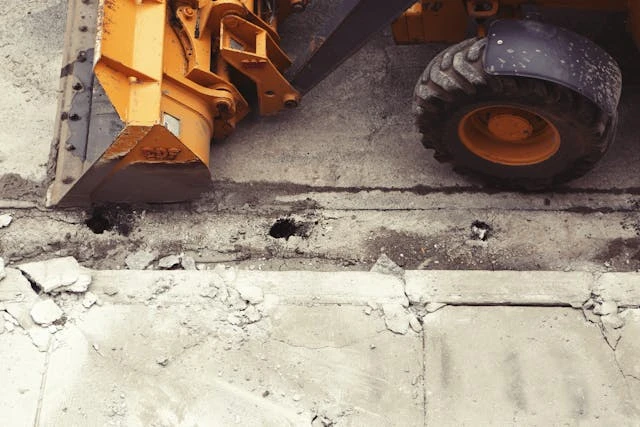
Good material flow helps to avoid congestion and lessens worker fatigue. Combining the reach of cranes with the lifting capacity of forklifts, telehandlers precisely position objects at height. From material movement to excavation, compact skid steers with replaceable accessories serve many purposes. Safely elevating large objects to working height, electric hoists and material lifts save laborious lifting. Shoring scaffolding systems help works in progress by offering both raised work platforms and structural support, therefore allowing safe access. Bulk goods like gravel and dirt are quickly moved around sites via conveyor systems. By adjusting to ideal working heights, hydraulic material carts help to minimize back pain on repeated jobs. Project-specific requirements, including load weights, needed reach, topographical conditions, and space restrictions, define the proper material-handling equipment choice. A strategic material handling zone layout reduces travel lengths and keeps high-traffic regions free, thereby greatly enhancing the general project flow and deadline adherence.
Project Management and Documentation Technology
Through better documentation and communication, digital tools change construction management. Centralizing project data, including schedules, submittals, and change orders, in cloud-accessible platforms is what construction management software does. Mobile apps let you keep track of work in real time and document problems right from the field. 360-degree cameras take detailed pictures of the conditions of a place that can be used as a reference or to settle a dispute. Digital plan tables let one closely examine construction documentation at full scale on-site. Monitoring tools and equipment location via RFID tracking systems helps to lower search time and stop losses. Accurate labor hour recording by task via time tracking programs guarantees exact job costs. Through speedier problem-solving, less miscommunication, thorough documentation protecting all parties involved in the building process, and administrative burden streamlining, these technological investments yield dividends.
Safety and Environmental Control Equipment
While environmental controls preserve appropriate conditions for building operations, safety equipment guards personnel. Advanced respiratory protection, impact-resistant eyeglasses, and ergonomic support systems among personal protective gear help to lower injury risks and related project delays. Self-retracting lifelines and other fall-prevention devices let workers move quickly and safely at heights. Early warning of dangerous atmospheric conditions in confined areas comes from gas-detecting devices. High-efficiency LED technology portable lighting solutions illuminate minimally power-consuming work locations. While maintaining work surfaces clean, dust extractor systems shield workers from silica and other hazardous pollutants. By minimizing sound transmission to nearby locations, noise reduction barriers help to meet environmental compliance criteria. Pumps and filtration devices, among other water management tools, handle site drainage and avoid contaminated runoff. These expenditures in environmental management and safety help to avert expensive work stoppages by encouraging regulatory compliance and personnel well-being.
Conclusion
The choice of strategic tools significantly affects profitability, quality, and construction efficiency. By means of speedier project completion and lower labor costs, investing in these five basic categories yields quantifiable benefits. Maintaining a competitive advantage depends on routinely adding creative ideas to your toolkit of equipment. Giving these tool investments a priority helps your construction operations run at their best in a field where success is measured by efficiency.































Sign in to leave a comment.