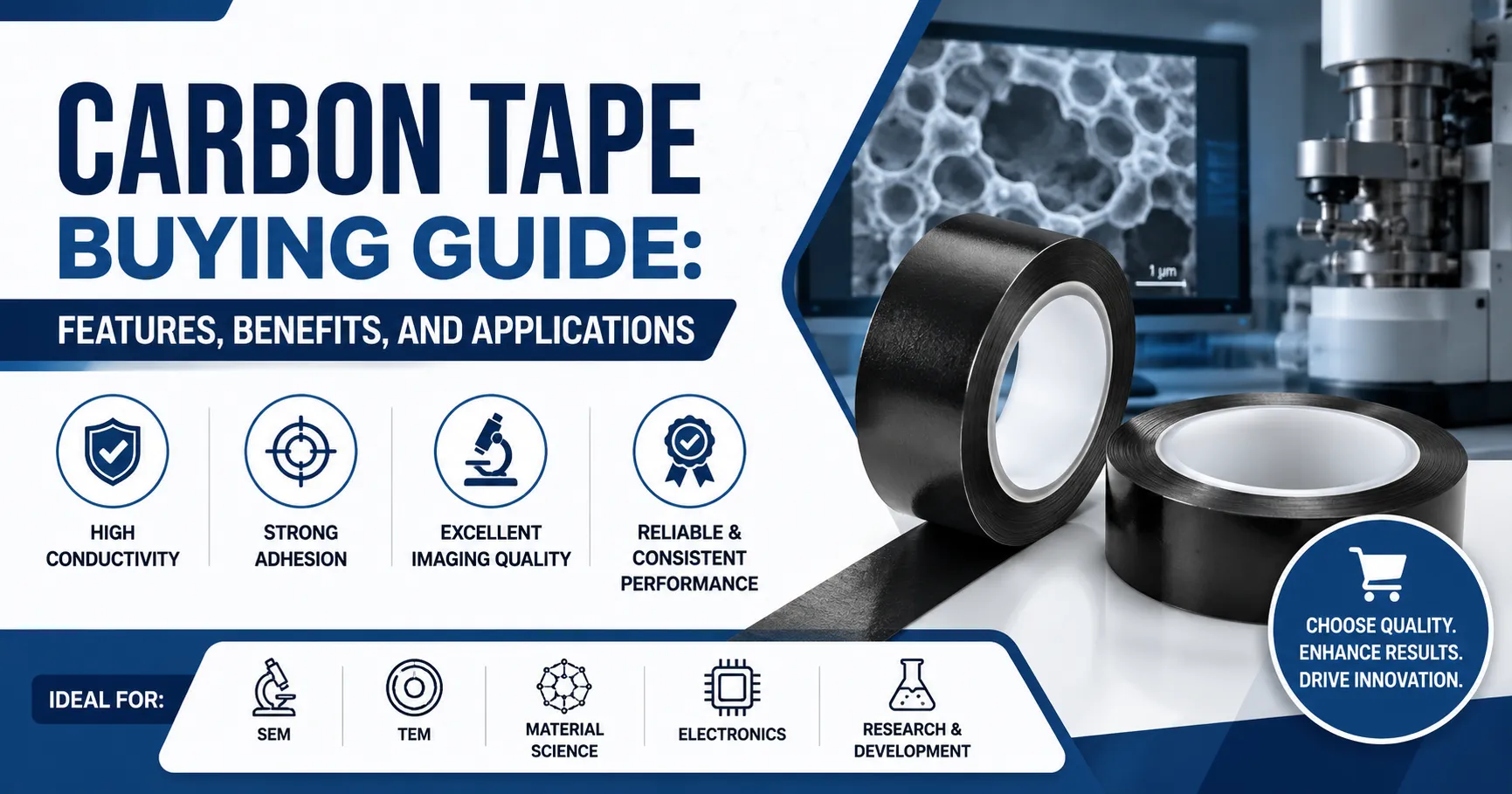

Carbon tape is one of the most widely used laboratory consumables in material science, electronics, nanotechnology, and industrial quality control. Its excellent electrical conductivity, strong adhesive properties, and ease of use make it an essential tool for sample preparation, especially in scanning electron microscopy (SEM). Whether you work in a research laboratory, manufacturing facility, or educational institution, selecting the right carbon tape can significantly improve the quality of your analysis and imaging.
This comprehensive buying guide explains the key features, benefits, applications, and important factors to consider when purchasing carbon tape.
What Is Carbon Tape?
Carbon tape is a pressure-sensitive adhesive tape coated with conductive carbon material. It is primarily used to mount samples for electron microscopy and other analytical techniques. The conductive nature of carbon tape helps minimize surface charging during SEM imaging, resulting in clearer and more accurate images.
Carbon tape is available in various widths, thicknesses, adhesive strengths, and formats, making it suitable for different laboratory and industrial applications.
Key Features of High-Quality Carbon Tape
When selecting carbon tape, consider the following important features:
1. Excellent Electrical Conductivity
High-quality carbon tape provides reliable conductivity, reducing electrostatic charging during electron microscopy and ensuring superior image quality.
2. Strong Adhesion
The tape should firmly hold samples without leaving excessive adhesive residue after removal. Strong adhesion is particularly important for irregular or delicate specimens.
3. Uniform Carbon Coating
A consistent carbon coating ensures even conductivity across the entire surface, improving imaging accuracy and reproducibility.
4. Easy Application
Premium carbon tape should be easy to cut, peel, and apply without tearing or curling.
5. Low Outgassing
For vacuum environments such as SEM chambers, low-outgassing carbon tape helps maintain instrument performance and prevents contamination.
6. Chemical Stability
Quality carbon tape resists degradation from common laboratory conditions, providing long-term reliability.
7. Multiple Size Options
Carbon tape is available in different widths and roll lengths to meet various laboratory requirements.
Benefits of Using Carbon Tape
Improved SEM Imaging
Carbon tape minimizes charging effects, enabling high-resolution imaging of both conductive and non-conductive samples.
Faster Sample Preparation
Its simple peel-and-stick application reduces preparation time and improves laboratory efficiency.
Secure Sample Mounting
Strong adhesive properties keep samples stable during handling and analysis.
Versatile Usage
Carbon tape supports a wide range of materials, including:
- Metals
- Ceramics
- Polymers
- Powders
- Minerals
- Electronic components
- Biological specimens
Cost-Effective Solution
Compared to complex mounting methods, carbon tape offers an affordable and reliable option for routine laboratory work.
Reduced Sample Damage
The gentle adhesive minimizes the risk of damaging delicate specimens during mounting and removal.
Common Applications of Carbon Tape
Scanning Electron Microscopy (SEM)
Carbon tape is widely used for mounting samples on SEM stubs before imaging.
Typical SEM Applications
- Material characterization
- Failure analysis
- Surface morphology studies
- Particle analysis
- Quality control inspections
Electronics Industry
Carbon tape is commonly used for:
- PCB inspection
- Semiconductor analysis
- Component testing
- Failure investigation
Materials Science
Researchers use carbon tape for studying:
- Metals
- Alloys
- Composites
- Ceramics
- Nanomaterials
Geological Research
Geologists use carbon tape to mount minerals, rocks, and soil particles for microscopic examination.
Pharmaceutical Industry
Carbon tape assists in analyzing powders, tablets, coatings, and other pharmaceutical materials.
Nanotechnology
Carbon tape provides reliable mounting for nanoparticles, nanowires, thin films, and advanced materials.
Educational Laboratories
Universities and research institutes use carbon tape for student demonstrations and scientific experiments involving microscopy.
Factors to Consider Before Buying Carbon Tape
Conductivity Requirements
Choose carbon tape with conductivity suitable for your analytical instrument and sample type.
Adhesive Strength
Different applications require different adhesion levels. Select a tape that securely holds samples without damaging them.
Tape Width
Available widths vary depending on sample size and mounting requirements.
Thickness
Thicker tapes may provide better cushioning, while thinner tapes offer greater precision.
Compatibility with Instruments
Ensure the carbon tape is compatible with:
- SEM
- FESEM
- Electron microscopy accessories
- Analytical instruments
Manufacturer Quality
Purchase from reputable suppliers that offer consistent product quality and technical specifications.
Storage Life
Check the product's shelf life and recommended storage conditions to maintain adhesive performance.
Tips for Proper Carbon Tape Usage
- Store carbon tape in a cool, dry environment.
- Avoid touching the adhesive surface with bare hands.
- Use clean scissors or precision cutters for accurate sizing.
- Mount samples carefully to avoid trapped air bubbles.
- Keep the tape free from dust and contamination.
- Seal unused rolls properly after each use.
Common Mistakes to Avoid
Many users experience imaging problems due to improper carbon tape selection or handling.
Avoid these common mistakes:
- Using non-conductive adhesive tapes for SEM
- Selecting low-quality carbon tape with uneven conductivity
- Touching the adhesive surface frequently
- Applying excessive pressure during sample mounting
- Using expired or poorly stored tape
- Choosing incorrect tape dimensions for the sample
Why Buy Carbon Tape from Reliable Suppliers?
Trusted suppliers provide products that meet laboratory standards and ensure consistent performance.
Reliable suppliers typically offer:
- High-purity conductive carbon tape
- Consistent adhesive quality
- Multiple size options
- Technical support
- Fast delivery
- Quality assurance
- Competitive pricing
Working with an experienced supplier helps laboratories maintain accurate analytical results while reducing downtime caused by inferior consumables.
Future Trends in Carbon Tape Technology
As laboratory technologies continue to evolve, manufacturers are developing carbon tapes with improved conductivity, stronger adhesives, lower outgassing, and enhanced compatibility with advanced electron microscopy systems. These innovations support increasingly demanding research in nanotechnology, semiconductor manufacturing, and materials engineering.
Conclusion
Carbon tape is an indispensable laboratory consumable for electron microscopy, materials research, electronics, and industrial testing. Choosing the right product involves evaluating factors such as conductivity, adhesive strength, coating quality, and compatibility with your analytical equipment. By purchasing from reliable carbon tape suppliers and following proper handling practices, laboratories can achieve consistent sample preparation, improved imaging quality, and dependable analytical results.
Whether you are setting up a new laboratory or upgrading your existing microscopy workflow, investing in high-quality carbon tape is a simple yet essential step toward achieving accurate and reliable scientific results.































Sign in to leave a comment.