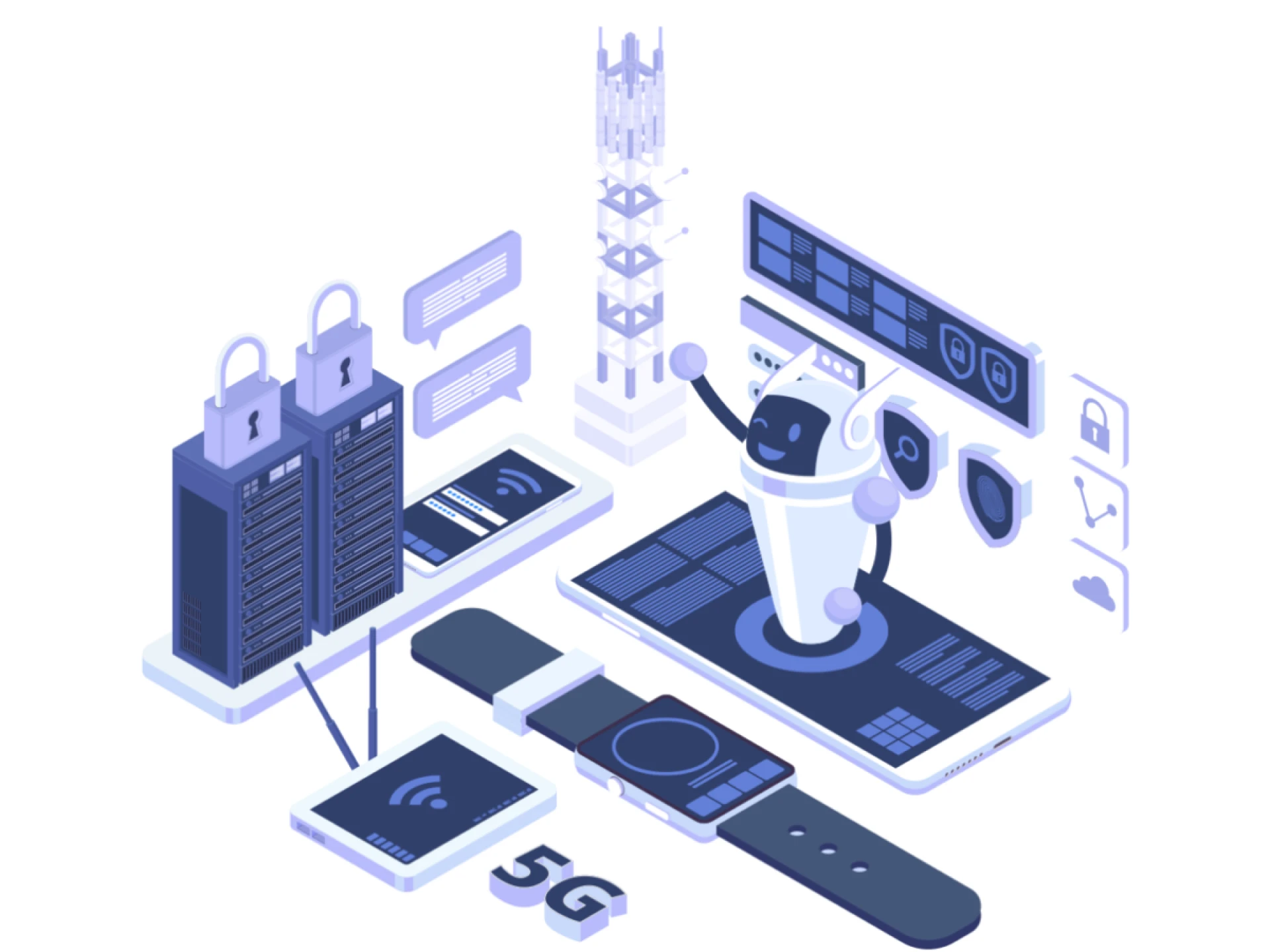

There are more than 5 billion smartphone users on the planet. Mobile app market trends not only provide a fantastic opportunity to reach previously untapped audiences, but they also provide the unparalleled potential for your company to use cutting-edge technologies like machine learning. Integrate cloud computing and natural language processing (NLP) into your customer offers. It's no surprise that mobile app developers are in high demand as smartphones increasingly replace computers. Various mobile application development trends will be prevalent in future apps, along with different techniques. Taking advantage of the app development potential, like any other opportunity, demands remaining current with current developments.
1. Cloud-Based Computing Services IntegrationBecause mobile devices have limited memory and storage, it's critical to have a centralized data source on the cloud. This has resulted in a flood of cloud service offerings from big names like Amazon Web Services (AWS), Microsoft Azure, Google, IBM, Oracle, and a slew of smaller competitors. Almost all future mobile apps will require a cloud backend to store and access data and computational power. The trend has been bolstered by announcements from all major cloud providers that they will offer quantum computing capabilities, allowing future modern programs to access extraordinarily high computing capacity for a fraction of the cost.
As computer power grows, so does the ability to analyze larger data sets, making future mobile apps more capable of running advanced algorithms with increased AI and ML.
2. Artificial IntelligenceCloud-based infrastructure services have quickly ushered in a new era of enhanced machine learning models thanks to considerably expanded processing capacity. Every day, an increasing number of smartphone users access the internet. These models can learn from ever-growing data sources indefinitely. As a result, their capacities are improving by the minute. While it used to be that only big corporations could use state-of-the-art machine learning models in mobile applications, that is no longer the case. Regardless of the size of the user base, these models are becoming standard integration for mobile applications. Machine learning's impact on mobile app trends can be seen in the following ways:
There is no need for human engagement or interference.
With the use of machine learning, it can effortlessly handle a significant amount of multi-dimensional data.
The process of operation, analysis, and improvement will all be continuously improved.
Data analysis allows for better predictive and recommendation models.
3. Artificial Intelligence and ChatbotsBy 2025, according to Oracle CEO Mark Hurd, over 80% of consumer-company interactions will be conducted without human customer service employees. Automated chatbots, such as those based on IBM's Watson Assistant's natural-language-understanding engine, will be able to process customer requests instantly and provide a superior, much more personalized version of customer service while reducing the burdensome overhead associated with staff and manual labor. Chatbots, unlike their traditional human counterparts, are capable of working 24 hours a day. Even the most demanding consumers can be served seven days a week, 365 days a year. With all of these advantages, it's no surprise that the global market for automated chatbots and artificial intelligence is booming.
Uses of artificial intelligence in chatbots-
By giving customer support, it improves customer service and engagement.
Consumers will find it to be incredibly cost-effective.
It has a positive impact on business by increasing sales and enhancing customer service.
4. Mobile technology (5G)
With quicker and more dependable connections, access to information, internet speed, and the ability to stay more connected, 5G mobile communication will be a massive boon for mobile apps. In the next years, 5G will aid applications such as smart homes and smart cities, remote medical industries, and 3D arrays. The advantages of 5G technology are as follows:
For 5g networks, excellent internet speed and performance are essential.
For consumers of mobile apps, good and stable connections are essential.
For corporate users, more dependable B2B apps are needed.
Data processing and transfer among connected devices are becoming more common.
5 G is still a new trend in the market, but it is gaining traction. As more smart devices become connected via 5G, this technology will undoubtedly define the new mobile app development methodologies of the future.
5. The blockchain technologyBlockchain technology is another component of the next generation of mobile apps that will be available in the near future. Blockchain, as we all know, is a method of storing transactional data that can only be accessed by authorized individuals and cannot be manipulated. It is the core cornerstone of cryptocurrencies and is hailed as the next generation of data storage that is transparent. As we all know, Blockchain will be utilized in the future in any transaction involving more than two parties sharing and controlling data and executing contracts. Blockchain will become the backbone of data accessed by mobile apps in the not-too-distant future.
EndnoteIf you're looking for the best software development solutions or want to digitally alter your company. Make sure your overall plan includes producing mobile apps that follow the newest mobile app industry trends. Mobile apps give you access to new markets, allow you to get closer to your users, and allow you to conduct transactions directly.























Sign in to leave a comment.