
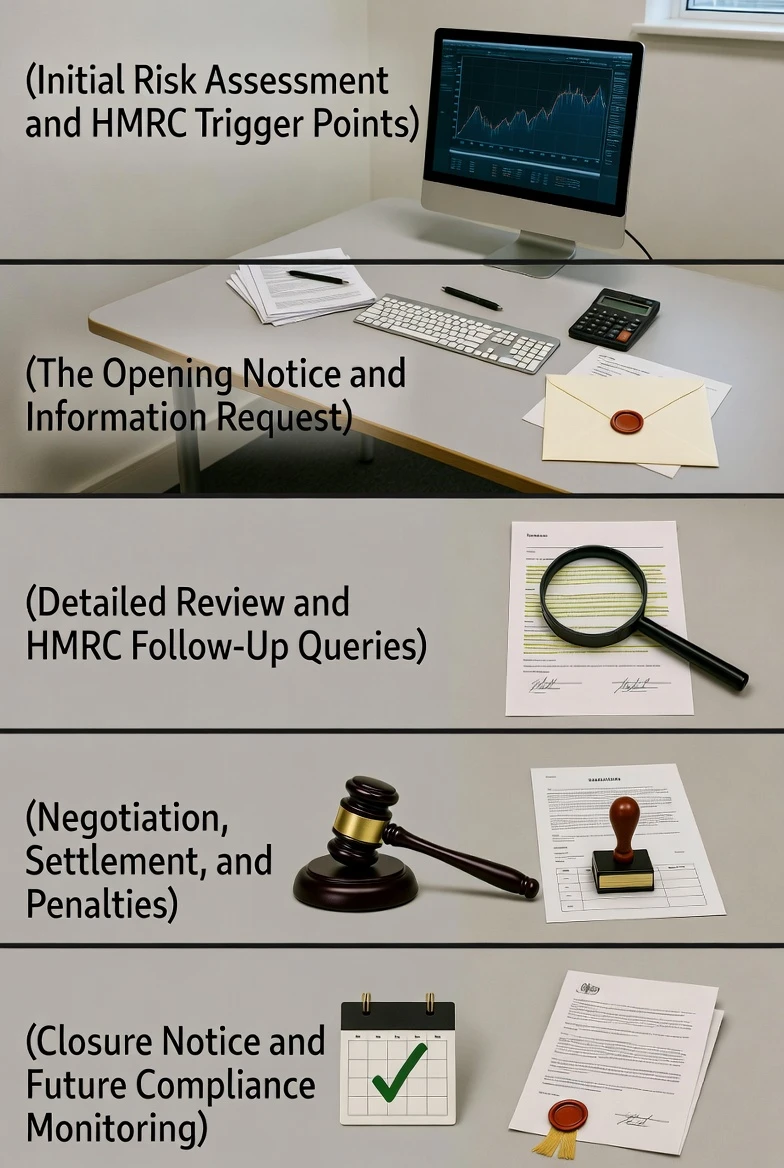
Stage 1: Initial Risk Assessment and HMRC Trigger Points
Most taxpayers assume HMRC opens enquiries randomly, but this is rarely the case. HMRC’s Risk and Intelligence Service uses increasingly sophisticated tools, including the Connect database, to match over 55 billion data points from banks, employers, property records, DVLA, offshore information, and foreign tax authorities.
From experience, the most common triggers include:
Unexpected income differences
A sharp rise in rental profits, dividends, or freelance income compared to previous years is a red flag. For example, if a landlord suddenly reports half the rental income they did last year without explanation, HMRC’s systems flag it instantly.
Industry benchmarking
HMRC compares businesses with sector averages. A restaurant consistently reporting lower gross profit margins than its comparable restaurants in the region may face scrutiny.
Inconsistent PAYE and Self-Assessment data
A mismatch between a P60 figure and the amount declared in the tax return often triggers a PAYE check.
Offshore or digital income
Since the introduction of the Common Reporting Standard (CRS), offshore bank interest is automatically reported in HMRC records. Crypto trading and online marketplace income are also subject to heightened scrutiny.
You usually won’t know this stage is happening, but it determines how soon HMRC moves to stage two.
Stage 2: The Opening Notice and Information Request
This is where the investigation becomes visible. HMRC sends an official opening letter—either under Section 9A (income tax), Schedule 36 (information powers), or Corporation Tax Act provisions for companies.
The opening notice establishes three key points:
- What HMRC wants to check
- could be a specific figure, such as rental income, or the entire tax return.
- What documents do they require?
- Typical requests include bank statements, invoices, bookkeeping records, payroll summaries, VAT workings, loan agreements, mileage logs, or digital platform earnings.
- Compliance deadlines
- HMRC usually gives 30 days to respond, but advisers commonly negotiate longer when the volume of data is large.
How the opening letter is handled often shapes the entire investigation. A complete, well-organised response can narrow the enquiry. A delayed, unclear, or partial response nearly always expands it.
From experience, the worst thing a taxpayer can do is attempt to “explain with words instead of evidence.” HMRC deals in documents, numbers, and timelines—not opinions.
Stage 3: Detailed Review and HMRC Follow-Up Queries
Once HMRC receives your records, they compare the information with declared figures, third-party data, and sector benchmarks. This stage usually lasts the longest.
Common issues HMRC identifies:
Unexplained bank deposits
HMRC often challenges deposits that look like income. Even transfers between personal accounts may be questioned unless properly documented. Gifts from family, cash reimbursements, and loan movements must be clarified with evidence.
Disallowed expenses
Examples include:
• personal use of vehicles claimed as business costs
• non-wholly-and-exclusively expenses
• missing receipts
• over claimed work-from-home deductions
Payroll discrepancies
HMRC regularly checks whether directors’ salaries in the accounts match RTI submissions. A mismatch leads to PAYE penalties.
Rental income gaps
letting agents now provide annual statements directly to HMRC. If these totals exceed what’s been declared, HMRC will request an explanation.
Crypto or online trading profits
Platform providers and exchanges increasingly share data. Undeclared gains are now common targets.
During this stage, HMRC may issue additional Schedule 36 notices, request meetings, or ask for explanations in writing. It’s normal for this stage to go back and forth several times.
Stage 4: Negotiation, Settlement, and Penalties
Once HMRC has gathered what it needs, the discussion moves to resolving the tax position. This stage is often the most worrying for taxpayers, especially if HMRC believes errors were careless or deliberate.
HMRC calculates:
- Underpaid tax
- Includes income tax, corporation tax, VAT, PAYE, NICs—whatever the enquiry relates to.
- Interest
- Charged daily until the tax is fully paid.
- Penalties
- based on behaviour and disclosure. The standard UK penalty ranges are:
Stage 5: Closure Notice and Future Compliance Monitoring
HMRC finalises the enquiry by issuing a Closure Notice. This document sets out:
• agreed corrections to income, expenses, or tax calculations
• final tax and interest due
• penalties and the behaviour category
• any required amendments to future record-keeping
In more complex cases, HMRC may maintain an elevated compliance profile for several years. Businesses with prior failures may find they receive more frequent VAT inspections, employer compliance reviews, or real-time interventions.
From experience, this final stage is also a turning point for many clients. A well-handled investigation often leads to improved bookkeeping systems, better digital records, and fewer discrepancies. HMRC’s digital systems increasingly favour taxpayers who maintain clean, consistent, and well-documented financial trails.





























Sign in to leave a comment.