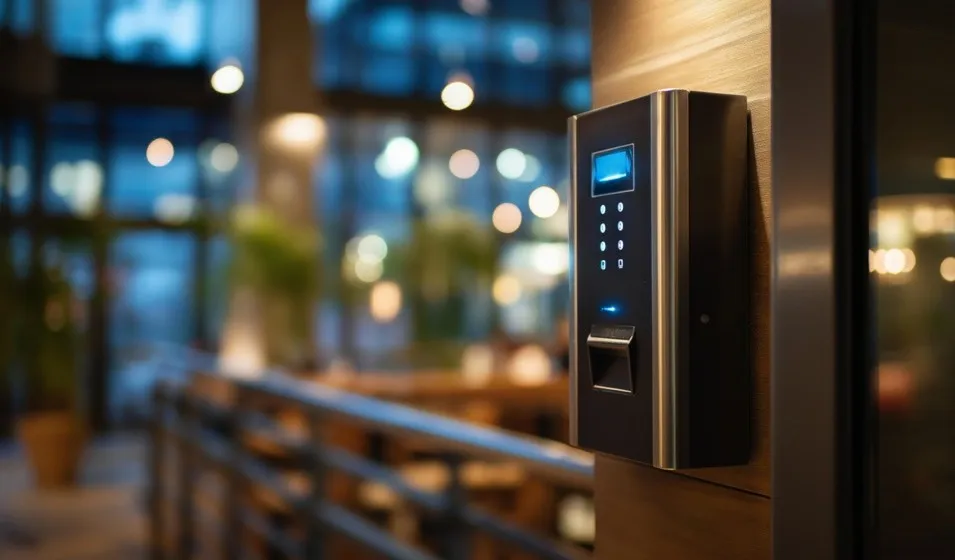

Deploying commercial security systems across a commercial facility is a structured process, not a single purchasing decision. Facility security directors, procurement officers, and operations leads each bring distinct priorities to the table, and a deployment that ignores any one of those perspectives tends to produce gaps. The factors below are ordered for procurement decisions, moving from site assessment through vendor selection, so teams can evaluate each stage independently and make confident, defensible choices.
1. Assess Perimeters for Commercial Security Systems
Outer perimeter assessment is the foundation of any credible security deployment. Teams that skip this step consistently discover blind spots after installation, when remediation costs are materially higher than they would have been at the planning stage.
A structured physical survey documents every access point, entry vector, and transition zone across the property. This includes loading docks, utility corridors, and secondary entrances that are frequently overlooked in preliminary walkthroughs.
Environmental factors, including lighting conditions, weather exposure, and line-of-sight obstructions, directly affect hardware selection. Cameras specified without accounting for these variables tend to underperform in the exact locations where reliable coverage matters most.
- Identify all perimeter entry and exit points, including low-traffic access routes
- Document lighting conditions across day and night cycles
- Flag environmental hazards such as direct sun exposure or moisture ingress
- Note existing infrastructure that could support or complicate mounting
2. Align Hardware with Commercial Security Solutions
Hardware selection shapes every downstream decision in a commercial security solutions deployment. Mixing camera types strategically, fixed, wide-angle, and PTZ, delivers broader coverage without generating excessive storage overhead.
Network administrators must be engaged early. Surveillance traffic placed on an undersized or improperly segmented network degrades business operations and creates latency that undermines real-time monitoring capability.
Equipment rooms housing network video recorders and access control servers require physical hardening. Unauthorized access to these command centers can compromise the entire system, making room-level security a non-negotiable design requirement.
Best for: facilities with mixed indoor and outdoor zones requiring varied optical coverage
Not for: deployments where network capacity has not been assessed in advance
Cost posture: moderate upfront investment, meaningfully lower remediation costs over the system lifecycle
3. Integrate Access Control into Commercial Security Systems
Access control integration transforms isolated cameras and credential readers into a unified operational picture. Unified platforms eliminate the data silos that force security teams to cross-reference disconnected systems during incident investigations.
Vendor-agnostic architecture is the most durable long-term choice. Facilities that lock into proprietary ecosystems consistently face painful migration costs when expanding or upgrading, particularly when legacy hardware cannot communicate with newer credentialing technology.
Automated workflows add a critical layer of responsiveness. When a triggered event, such as a forced door or credential anomaly, automatically initiates a lockdown protocol, response time compresses materially compared to manual intervention.
- Confirm that video and access control platforms share a common data layer
- Verify open API support before committing to any single vendor
- Test automated lockdown triggers under simulated conditions before go-live
4. Establish Privacy Protocols for Commercial Security Systems
Privacy compliance is not a post-deployment checkbox; it is a design input. Privacy impact assessments conducted before installation allow organizations to define restricted viewing zones, protecting employee areas and sensitive operational spaces from unnecessary surveillance coverage.
Strong encryption across data transmission and storage protects footage from interception on the network. Unencrypted video streams represent a meaningful liability exposure, particularly in regulated industries where data handling standards carry enforcement consequences.
Regular audits sustain compliance over time. Regulations evolve, and a system that meets requirements at deployment may fall short as privacy frameworks tighten. Scheduled reviews catch drift before it becomes a compliance failure.
5. Select a Security Systems Company for Integration
Choosing the right security systems company determines whether a well-designed deployment performs reliably over its full operational life. Dedicated integration partners carry accountability for the entire physical ecosystem, not just individual components.
Proactive maintenance agreements are a meaningful differentiator. Silent hardware failures, cameras that stop recording without triggering an alert, represent the highest-risk failure mode in any surveillance deployment. Partners with structured maintenance programs catch these failures before they create coverage gaps.
Facility managers comparing options should request a site evaluation before signing any agreement. A credible integration partner will assess the specific environment, not offer a generic proposal, and that distinction is a reliable signal of operational competence.
Build a Smarter and More Resilient Physical Security Environment
Commercial IP surveillance systems deliver stronger results when video surveillance, access control, and monitoring technologies operate as part of one coordinated security ecosystem. Organizations planning upgrades should prioritize scalable integration, long-term lifecycle support, and centralized visibility across facilities.
Cobalt FTS delivers integrated physical security solutions that improve visibility, streamline monitoring, and support long-term system performance. Contact the team today to schedule a site assessment and build a surveillance and facility security strategy tailored to operational requirements.



























Sign in to leave a comment.