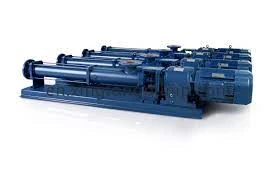

Reliable fluid handling supports productivity in oil and gas operations. When fluids become viscous, abrasive, or shear-sensitive, maintaining steady flow becomes more difficult. Progressive cavity pumps meet this challenge with a design that supports controlled, consistent movement under demanding conditions. These pumps offer constant performance, tolerance for solids, and the ability to handle complex fluid profiles. This makes them a dependable choice for upstream, midstream, and downstream facilities.
This article outlines why PC pumps remain a reliable choice for oil and gas operations. Their controlled movement, flow stability, and suitability for demanding applications support consistent process performance.
How the Progressive Cavity Design Supports Predictable Movement
Progressive cavity pumps use a helical rotor turning inside an elastomer stator. As the rotor turns, sealed cavities form and move fluid forward at a consistent rate. This simple, controlled displacement supports reliable flow across a wide range of pressures and viscosities.
Key advantages include:
- Uniform flow without pulsation
- Low shear movement for fluid integrity
- Accurate volumetric control
- Stable performance with thick or abrasive media
This PC pump design helps reduce flow interruptions and maintain predictable process conditions even when fluid properties change.
Handling Viscous and Abrasive Fluids With Less Stress
Oil and gas operations often handle crude blends, slurries, chemical additives, and water-oil mixtures. These fluids vary in viscosity and may contain solids that challenge other pump types.
Progressive cavity pumps support these conditions because:
- Large cavities carry solids without a grinding motion
- Elastomer stator materials absorb abrasion better than rigid components
- Slow operating speeds reduce wear and heat
- Consistent flow helps prevent settling and blockages
This design effectively supports abrasive and particulate-laden fluids. It remains a suitable choice for applications that involve frequent exposure to solids.
Supporting Accurate Metering and Injection Duties
Chemical injection systems rely on accurate dosing. Flow inconsistencies can affect corrosion protection, separation quality, and equipment life. Progressive cavity pumps deliver steady, metered flow across varying pressures, enabling reliable dosing and chemical delivery.
Common injection and metering applications include:
- Corrosion inhibitors
- Scale and paraffin control chemicals
- Demulsifiers
- Biocides and treatment additives
- Polymer injection
Flow remains consistent despite pressure fluctuations, helping maintain chemical treatment performance throughout the process.
Maintaining Fluid Integrity With Low Shear Movement
Many additives used in oil and gas production require gentle handling. High-shear pumping can alter product behaviour or reduce effectiveness. The controlled displacement inside a progressive cavity pump avoids turbulence, protecting the physical and chemical properties of:
- Polymers
- Viscosity modifiers
- Emulsion stabilizers
- Specialty treatment chemicals
This low-shear movement supports predictable results in both production and refining environments.
Energy Efficiency and Operating Stability in PC Pumps
Energy use and maintenance frequency directly affect lifecycle cost. Progressive cavity pumps operate with slow, smooth movement, which reduces both mechanical stress and energy demand.
Operational benefits include:
- Predictable power consumption
- Reduced vibration and noise
- Fewer wear-related failures
- Long service intervals with proper lubrication and stator care
Since the pump maintains its efficiency across a wide viscosity range, it provides stable performance without frequent adjustments.
Adaptability Across Oil and Gas Applications
Progressive cavity pumps appear across many segments of the oil and gas industry due to their durability and flexibility. Typical uses of this equipment from progressive cavity pump suppliers include:
- Crude oil transfer
- Produced water pumping
- Tank emptying and sludge movement
- Polymer flooding operations
- Chemical injection and blending
- Waste stream handling
Their ability to move challenging media at controlled rates helps maintain continuity in both continuous and batch operations.
Installation and Maintenance Considerations for Progressive Cavity Pumps
While every installation varies, progressive cavity pumps integrate easily into existing systems. Their compact footprint and straightforward drive arrangement make them convenient in constrained spaces.
Maintenance focuses on:
- Rotor and stator condition
- Lubrication practices
- Speed control to avoid overstressing elastomers
- Monitoring for abrasion in solid-laden applications
With proper selection and sizing, these pumps maintain stable performance across long service intervals.
Why Progressive Cavity Pumps Continue to Support Reliable Oil and Gas Operations
Progressive cavity pumps continue to support a wide range of oil and gas operations. It is ideal for operations that depend on stable flow, predictable dosing, and efficient handling of viscous or abrasive fluids. Their controlled displacement, adaptability, and low-shear pumping action position them as a reliable choice. Selecting a suitable progressive cavity pump distributor helps ensure the equipment aligns with industrial process requirements.
For support in selecting progressive cavity pumps suited to industrial process needs, contact Vissers Sales Corp.




























Sign in to leave a comment.