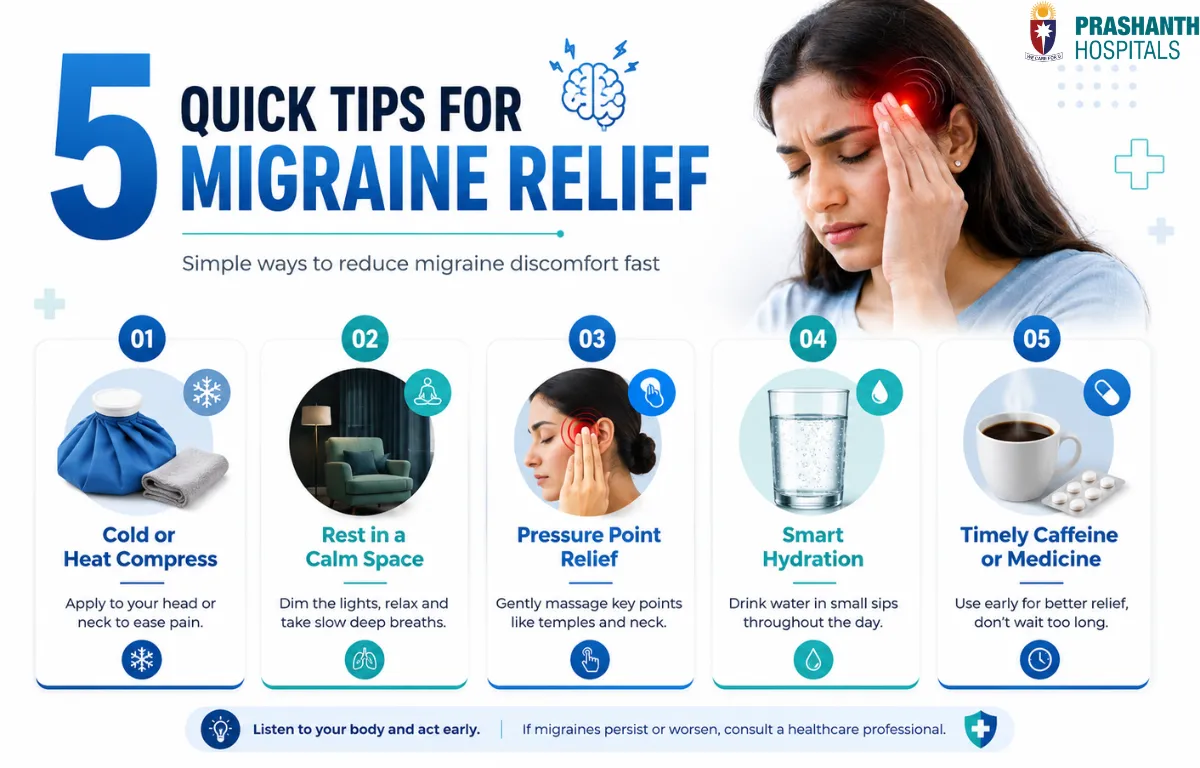

Migraines can interrupt your entire day. The throbbing pain, nausea, sensitivity to light, and dizziness can make even simple tasks difficult. If you are searching for 5 Tips for Instant Migraine Relief, the good news is that there are practical steps you can try at home to reduce discomfort quickly and feel more in control of your symptoms.
Migraine attacks can happen for many reasons. Stress, dehydration, lack of sleep, skipped meals, bright lights, and hormonal changes are common triggers. While medical treatment may be necessary for frequent or severe migraines, certain immediate relief techniques can help ease symptoms faster and improve comfort during an attack.
What Does a Migraine Feel Like?
A migraine is more than a regular headache. Symptoms can vary from person to person, but common signs include:
- Throbbing or pulsating head pain
- Pain on one side of the head
- Nausea or vomiting
- Sensitivity to light and sound
- Blurred vision
- Fatigue or dizziness
- Difficulty concentrating
Some people also experience an “aura” before the migraine starts. This may include flashing lights, tingling sensations, or temporary vision changes.
Recognizing symptoms early can help you act quickly and reduce the intensity of the migraine.
Tip 1: Rest in a Quiet and Dark Room
One of the fastest ways to reduce migraine discomfort is to lower sensory stimulation.
Bright lights, loud noises, phone screens, and busy surroundings can worsen migraine symptoms. Moving to a calm, dark room may help your brain relax and reduce pain intensity.
What You Can Do
- Turn off bright lights
- Close curtains or blinds
- Reduce screen time
- Avoid loud music or conversations
- Lie down comfortably with your eyes closed
Many people notice improvement after resting quietly for 20 to 30 minutes. If possible, short naps may also help reduce symptoms.
Tip 2: Stay Hydrated
Dehydration is a common migraine trigger. Even mild dehydration can make headaches worse and increase fatigue.
Drinking enough fluids may help your body recover and support better circulation.
Best Fluids During a Migraine
- Water
- Coconut water
- Oral rehydration solutions
- Herbal teas
- Electrolyte drinks with low sugar
Avoid excessive caffeine and alcohol, as they may worsen dehydration in some people.
Signs You May Be Dehydrated
- Dry mouth
- Dark urine
- Dizziness
- Weakness
- Increased headache intensity
Sip fluids slowly if nausea is present.
Tip 3: Use a Cold Compress
Cold therapy can help numb pain and reduce inflammation around the head and neck.
Applying a cold pack to the forehead, temples, or back of the neck may provide quick comfort during a migraine attack.
How to Use Cold Therapy Safely
- Wrap ice packs in a cloth
- Apply for 15 to 20 minutes at a time
- Take short breaks between applications
- Avoid direct ice contact with the skin
Some people prefer chilled towels or cooling gel masks for a gentler effect.
Cold therapy is especially helpful for throbbing headaches and migraines triggered by stress or heat.
Tip 4: Practice Slow Breathing and Relaxation
Stress is one of the most common migraine triggers. During a migraine, the body can become tense, making symptoms feel worse.
Slow breathing exercises may help calm the nervous system and reduce muscle tension.
Simple Breathing Exercise
- Sit or lie down comfortably
- Close your eyes
- Inhale slowly through your nose for 4 seconds
- Hold your breath for 2 seconds
- Exhale slowly through your mouth for 6 seconds
- Repeat for several minutes
Relaxation techniques such as meditation, gentle stretching, and mindfulness may also help reduce migraine severity.
Tip 5: Take Early Pain Relief When Recommended
For many people, treating a migraine early works better than waiting for symptoms to become severe.
Over-the-counter pain relievers may help when taken at the beginning of symptoms. However, it is important to use medications carefully and follow medical advice.
Commonly Used Migraine Medications
- Paracetamol
- Ibuprofen
- Naproxen
- Prescription migraine medicines
Always read labels and avoid taking pain medications too frequently, as overuse may lead to rebound headaches.
If migraines occur regularly, a doctor may recommend preventive treatment options.
Foods That May Help During a Migraine
Certain foods may be easier to tolerate and support recovery during a migraine episode.
Helpful Options
- Bananas
- Plain rice
- Toast or crackers
- Yogurt
- Soups
- Fresh fruits with high water content
Skipping meals can sometimes trigger migraines, so eating small, light meals may help maintain energy levels.
Common Migraine Triggers to Avoid
Understanding your triggers can help reduce future migraine attacks.
Common Triggers Include
- Stress and anxiety
- Poor sleep
- Dehydration
- Strong smells
- Bright lights
- Hormonal changes
- Excess caffeine
- Processed foods
- Skipping meals
Keeping a migraine diary may help identify patterns and possible triggers.
When Should You See a Doctor?
Occasional migraines are common, but some symptoms require medical attention.
Consult a Doctor If You Experience
- Frequent migraines
- Severe or worsening headaches
- Sudden intense headache
- Weakness or confusion
- Difficulty speaking
- Vision loss
- Fever with headache
- Headaches after an injury
Medical evaluation is important to rule out other causes and create a proper treatment plan.
Lifestyle Changes That May Reduce Migraines
Long-term migraine management often includes healthy daily habits.
Helpful Lifestyle Tips
- Sleep at the same time every day
- Stay hydrated
- Exercise regularly
- Manage stress
- Avoid skipping meals
- Limit excessive screen exposure
- Reduce processed food intake
Small routine changes can make a significant difference over time.
Final Thoughts
Migraines can be painful and exhausting, but simple strategies may provide fast comfort during an attack. These 5 Tips for Instant Migraine Relief — resting in a dark room, staying hydrated, using cold therapy, practicing relaxation, and taking early pain relief when appropriate — may help reduce symptoms and improve recovery.
Every person’s migraine experience is different. If migraines become frequent or interfere with daily life, seeking professional medical guidance is important. Early diagnosis and proper treatment can help you manage symptoms more effectively and improve your quality of life.
Read more https://prashanthhospitals.org/specialities/best-neuro-hospital-in-chennai/

























Sign in to leave a comment.