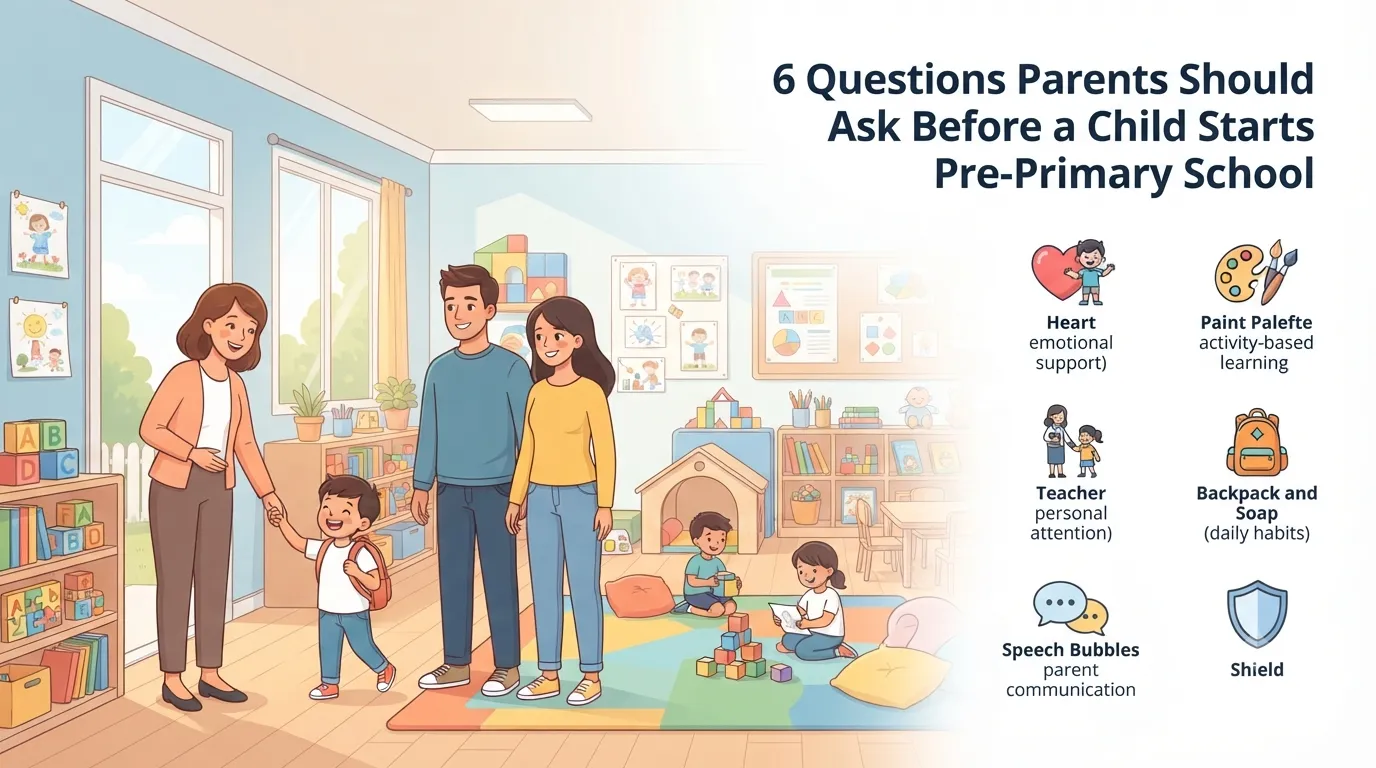

Starting pre-primary school is an important milestone for both children and parents. It may be the first time a child spends several hours away from home, follows a classroom routine, interacts with a larger group, and learns under the guidance of teachers. While parents often compare fees, transport, distance, and infrastructure, they should also ask deeper questions before choosing a pre-primary school adajan. The right questions can help parents understand whether the environment will truly support their child’s emotional, social, and early academic development.
1. How Does the School Handle Separation Anxiety?
Many young children cry, hesitate, or refuse to enter the classroom during the first few days. This is completely normal. Parents should ask how teachers help children settle and whether the school follows a gradual adjustment process. A supportive environment will not shame or force a child. Instead, teachers should use reassurance, engaging activities, and familiar routines to build trust and emotional comfort.
2. Is Learning Activity-Based or Worksheet-Heavy?
Pre-primary education should not depend mainly on writing practice, memorisation, or repeated worksheets. Young children learn best through play, movement, stories, songs, observation, role play, and hands-on exploration. Parents should check whether the classroom includes puzzles, art, music, sensory activities, storytelling, and outdoor play. These experiences strengthen language, coordination, creativity, and problem-solving skills without making learning feel stressful.
3. How Much Personal Attention Does Each Child Receive?
Every child has a different personality and learning pace. Some children speak confidently, while others need more time to participate. Some understand instructions quickly, while others need repetition and encouragement. Before selecting among cbse schools in adajan surat, parents should ask how teachers observe individual progress and support children who need additional guidance. Personal attention helps young learners feel secure, noticed, and motivated.
4. What Daily Habits Will the Child Learn?
A good pre-primary programme should support much more than alphabets and numbers. Children should gradually learn to keep their belongings properly, wash their hands, share materials, wait for their turn, follow instructions, and complete small tasks independently. These routines help build responsibility, self-discipline, and confidence. Parents should also ask how the school encourages kindness, cleanliness, cooperation, and respectful behaviour.
5. How Does the School Communicate With Parents?
Regular communication helps parents understand how their child is adjusting. Schools should provide updates about participation, classroom behaviour, eating habits, friendships, strengths, and areas that need support. Parents should know how frequently feedback is shared and whether teachers are available for meaningful discussions. Strong communication between school and home makes it easier to address concerns early.
6. Is the Environment Safe and Child-Friendly?
Parents should carefully observe classroom furniture, washrooms, play areas, entry points, cleanliness, and supervision. Materials should be age-appropriate, and children should be able to move safely. Emotional safety is equally important. Teachers should speak gently, handle mistakes patiently, and create an atmosphere where children feel comfortable asking for help.
Final Thoughts
The first school experience can influence how a child feels about learning for years. Choosing a pre-primary school adajan should involve more than comparing facilities or popularity. Parents should look for patient teachers, joyful learning, clear communication, safe surroundings, and routines that build independence. Asking these questions can help families choose a nurturing environment where children begin school feeling secure, curious, and confident.




























Sign in to leave a comment.