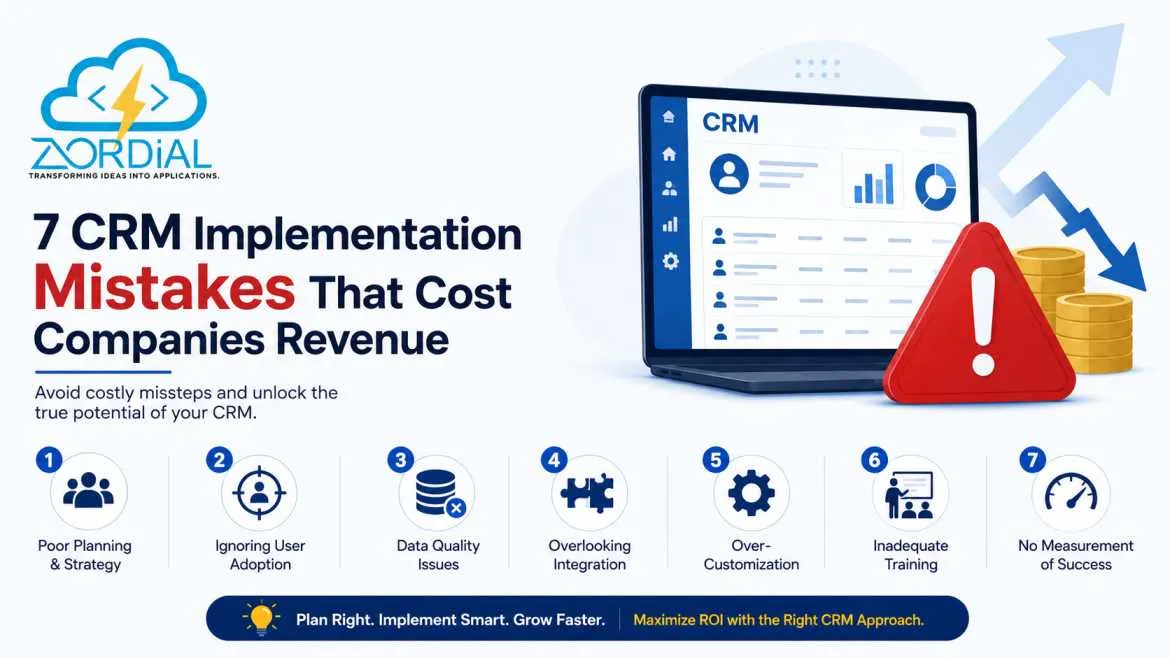

In today's competitive business environment, customer relationships play a critical role in driving growth and profitability. Companies invest heavily in Customer Relationship Management (CRM) platforms to improve sales performance, streamline operations, enhance customer experiences, and gain valuable business insights. However, simply purchasing a CRM solution does not guarantee success.
Many organizations fail to achieve the expected return on investment because of mistakes made during the implementation process. Poor planning, lack of user adoption, and ineffective data management can turn a promising CRM project into a costly business challenge.
Whether you're implementing a CRM for the first time or upgrading an existing system, understanding common implementation mistakes can help you avoid unnecessary expenses and maximize business value.
Why CRM Implementation Matters
A CRM platform serves as the central hub for managing customer interactions, sales pipelines, marketing campaigns, and customer service activities. When implemented correctly, it enables businesses to:
- Improve lead and opportunity management
- Increase sales productivity
- Strengthen customer relationships
- Automate repetitive tasks
- Enhance team collaboration
- Generate actionable business insights
- Improve customer retention rates
However, these benefits can only be achieved when the implementation process is aligned with business goals and user needs.
1. Starting Without Clear Business Goals
One of the most common CRM implementation mistakes is launching a project without defining measurable objectives.
Many organizations focus on software features rather than business outcomes. As a result, they struggle to determine whether the implementation is successful.
Before selecting or deploying a CRM platform, businesses should answer important questions:
- What specific challenges are we trying to solve?
- Do we want to increase sales conversions?
- Are we aiming to improve customer service efficiency?
- Do we need better reporting and forecasting?
Clearly defined goals help guide customization decisions, training programs, and performance measurements throughout the implementation process.
2. Poor Data Quality and Migration
Data is the foundation of every CRM system. Unfortunately, many businesses migrate inaccurate, incomplete, or duplicate customer records into their new platform.
Poor data quality creates multiple problems:
- Inaccurate reports
- Reduced user confidence
- Poor customer experiences
- Inefficient marketing campaigns
- Lost sales opportunities
Before migration begins, organizations should conduct a comprehensive data audit. Duplicate records should be removed, outdated information should be updated, and data standards should be established.
Clean data not only improves system performance but also provides more accurate insights for decision-making.
3. Ignoring User Adoption
Technology alone cannot improve business performance. Employees must actively use the CRM system for it to deliver value.
One of the biggest reasons CRM projects fail is low user adoption. Employees often resist new systems when they do not understand the benefits or receive insufficient training.
Common user adoption challenges include:
- Lack of training
- Complex workflows
- Poor user experience
- Resistance to organizational change
Successful companies invest in comprehensive onboarding programs and ongoing support. Employees should understand how the CRM simplifies daily tasks, improves productivity, and helps them achieve better results.
When users see personal value in the platform, adoption rates increase significantly.
4. Over-Customizing the CRM Platform
Customization is one of the major advantages of modern CRM solutions. However, excessive customization can create serious long-term problems.
Many businesses attempt to replicate every existing process within the CRM platform. This often leads to:
- Increased implementation costs
- Longer deployment timelines
- Complex maintenance requirements
- Upgrade compatibility issues
Instead of customizing everything, organizations should focus on business-critical requirements.
The best approach is to utilize standard CRM features whenever possible and customize only when a clear business need exists. This strategy reduces complexity while maintaining flexibility for future growth.
5. Lack of Integration with Other Business Systems
CRM systems rarely operate independently. Most organizations rely on multiple software platforms for accounting, marketing, customer support, inventory management, and operations.
When these systems are not integrated, valuable information becomes trapped in separate databases.
This creates several challenges:
- Data duplication
- Manual data entry
- Reporting inconsistencies
- Reduced productivity
- Customer experience gaps
A successful CRM implementation should include integration planning from the beginning.
Connecting the CRM platform with ERP systems, marketing automation tools, customer support software, and eCommerce platforms creates a unified view of customer information and improves operational efficiency.
6. Neglecting Reporting and Analytics Requirements
Many businesses focus heavily on implementation and configuration while overlooking reporting needs.
Without proper reporting capabilities, organizations struggle to measure performance and identify improvement opportunities.
Before implementation, teams should identify key performance indicators (KPIs) such as:
- Lead conversion rates
- Sales pipeline value
- Customer retention rates
- Service response times
- Revenue growth metrics
Dashboards and reports should be designed around these metrics to ensure stakeholders have access to meaningful business insights.
Effective reporting transforms CRM data into actionable intelligence that supports strategic decision-making.
7. Choosing Technology Without Expert Guidance
Selecting the right CRM platform is a critical business decision. Unfortunately, many organizations choose solutions based solely on price, popularity, or vendor marketing claims.
A CRM platform should align with:
- Business goals
- Industry requirements
- Team size
- Budget constraints
- Growth plans
- Existing technology infrastructure
Working with experienced CRM consultants helps organizations evaluate requirements, identify risks, and develop implementation strategies that support long-term success.
Businesses often benefit from partnering with professionals who provide Salesforce consulting services and CRM implementation expertise. Experienced consultants can streamline deployment, reduce costly errors, and ensure the platform is configured according to business objectives.
Additional Best Practices for CRM Success
Avoiding mistakes is important, but organizations should also focus on proven best practices.
Involve Stakeholders Early
Sales, marketing, customer support, and management teams should participate in the planning process. Their input helps ensure the CRM supports real-world workflows.
Focus on Change Management
CRM implementation is not just a technology project. It often requires significant changes in processes and employee behavior.
A structured change management strategy helps employees adapt more effectively.
Establish Ongoing Training Programs
User education should continue beyond the initial launch. Regular training sessions help teams maximize system capabilities and stay updated on new features.
Monitor Performance Regularly
Organizations should continuously evaluate CRM performance and user adoption metrics. Regular assessments help identify issues before they impact business results.
The Financial Impact of CRM Implementation Mistakes
CRM implementation mistakes can have significant financial consequences.
Organizations may experience:
- Lost sales opportunities
- Reduced employee productivity
- Increased operational costs
- Lower customer satisfaction
- Poor forecasting accuracy
- Delayed revenue growth
In some cases, businesses abandon CRM projects entirely after investing substantial time and money.
By following a strategic implementation approach, companies can reduce risks and improve the likelihood of long-term success.
Conclusion
A CRM platform can be one of the most valuable investments a business makes, but success depends heavily on proper implementation. Common mistakes such as unclear objectives, poor data quality, weak user adoption, excessive customization, lack of integrations, inadequate reporting, and poor technology selection can significantly reduce the value of a CRM initiative.
Organizations that take the time to plan carefully, involve stakeholders, maintain clean data, and seek expert guidance are far more likely to achieve positive outcomes.
A successful CRM implementation improves customer relationships, increases operational efficiency, supports better decision-making, and drives sustainable revenue growth. By avoiding these seven common mistakes, businesses can maximize their CRM investment and build a stronger foundation for future success.


























Sign in to leave a comment.