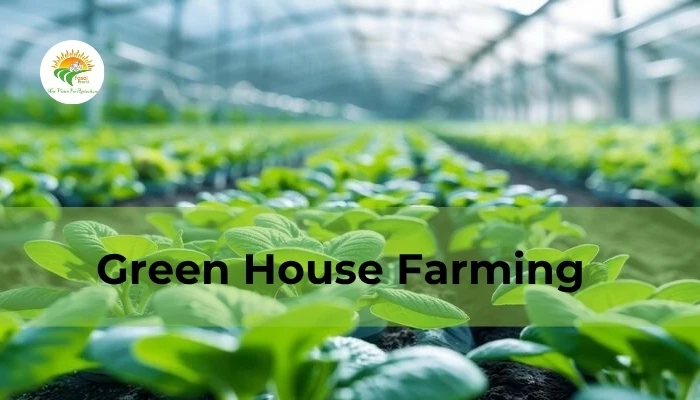
Greenhouse farming is rapidly becoming a smart solution for today’s farmers who want to grow more with less risk. As climate changes and traditional farming faces challenges like erratic rainfall, pest attacks, and poor soil health, controlled environment agriculture offers a reliable path to year-round production and higher profits. Whether you’re a new farmer or looking to upgrade your current methods, starting green house farming can future-proof your income and boost productivity. This article brings you 7 smart, simple steps to help you kick-start your green house journey with confidence no complex jargon, just practical tips you can apply. From choosing the right location and crops to using smart tools and joining support networks, we cover it all. Now is the perfect time to begin, as demand for quality, fresh produce is growing and government schemes support modern agri-practices. Let’s walk through each step and show how greenhouse farming can help you grow and thrive.
Step 1: Research Your Climate & Market
Before you build your greenhouse, the smartest first step is to understand your local climate and study the market demand. Greenhouse farming allows you to grow crops in controlled conditions, but knowing your region’s natural climate temperature, humidity, sunlight hours helps you choose the right structure and systems (like cooling, heating, or ventilation). This avoids costly mistakes later. Equally important is doing a market analysis. Check which vegetables, fruits, or flowers are in high demand locally and during the off-season. For example, tomatoes, bell peppers, or leafy greens often fetch good prices when grown out of season. Talk to nearby retailers, mandis, and agri-cooperatives to know what sells fast and what customers are asking for. Smart farmers always grow what sells, not just what grows. By matching your climate and market needs, you lay the foundation for a successful and profitable greenhouse farming venture.
Step 2: Choose the Right Greenhouse Type
Picking the right green house type is a key step toward successful farming. There are several options polyhouse, net house, glasshouse, and even hi-tech green houses each suited for different needs and budgets. A polyhouse is cost-effective and ideal for most vegetables and flowers. A net house works well in warm regions to protect crops from pests and harsh sun. A glasshouse, though more expensive, offers excellent light transmission and is perfect for high-value crops in cooler climates. Your choice should depend on three main things: budget, local weather, and the crops you want to grow. For example, if you're in a hot area and growing capsicum or cucumber, a ventilated polyhouse is smart. But if you're in a cooler region growing exotic flowers, a glasshouse may be better. Always choose a greenhouse type that fits your land, goals, and resources this ensures long-term profit and sustainability in your farming journey.
Step 3: Select Profitable Crops
Choosing the right crops is one of the smartest ways to ensure success in green house farming. Focus on high-value, fast-selling crops that perform well in controlled environments such as tomatoes, capsicum, lettuce, and herbs like basil or coriander. These crops have strong market demand and can be grown year-round inside a greenhouse, giving you steady income. It’s also important to study seasonal trends and market gaps in your area. For example, growing off-season vegetables when prices are high can boost your profits significantly. Visit local mandis, talk to vendors, and check supermarket shelves to identify which crops are in short supply during certain months. Also, consider crop rotation to keep the soil healthy and maintain continuous production. Smart crop selection, based on market demand, profitability, and climate compatibility, helps greenhouse farmers reduce risks and maximize returns setting you on the path to a thriving agri-business.
Step 4: Plan the Infrastructure & Budget
A strong start in green house farming begins with smart infrastructure planning and a clear budget. Your setup should include essential elements like the greenhouse structure, drip irrigation system, proper ventilation, shading, and optional automation tools like climate controllers or misting systems. These components ensure your crops stay healthy and yields stay high. Begin by sketching a layout of your green house farming, identifying where each system will go, and choosing materials that fit your budget. Don’t forget to plan for water storage and solar options if electricity is unreliable. Next, calculate the total investment, including construction, equipment, seedlings, and labor. Many farmers miss the opportunity to reduce costs explore government subsidies under schemes like MIDH (Mission for Integrated Development of Horticulture) or state-specific support programs for polyhouse farming. With smart budgeting and planning, you can build a greenhouse that is cost-efficient, productive, and ready to grow profits.
Step 5: Use Smart Irrigation & Climate Controls
To thrive in greenhouse farming, you must adopt smart systems that save water, reduce labor, and increase productivity. One of the most effective methods is drip irrigation, which delivers water directly to the plant roots, minimizing waste and promoting healthier growth. For crops that need extra humidity, misting systems can maintain ideal moisture levels without flooding the soil. Equally important are climate control tools like temperature and humidity sensors, exhaust fans, shade nets, and automatic vents. These help you monitor and maintain the optimal growing environment inside your greenhouse, even during extreme weather. By using automation and data-driven tools, you not only boost crop health but also cut down on manual labor and input costs. Investing in smart irrigation and climate control systems is a game-changer, especially for small and medium farmers aiming to scale up. These innovations make your farm more efficient, sustainable, and profitable.
Step 6: Get Quality Seeds & Nutrients
Success in greenhouse farming starts with the right seeds and balanced nutrition. Always buy high-quality, disease-resistant seeds from certified agro-input suppliers to ensure strong germination and high yields. Greenhouse conditions are unique, so it’s important to select varieties specifically suited for protected cultivation such as hybrid tomatoes, capsicum, lettuce, or herbs bred for high performance in controlled environments. Along with good seeds, your plants need the right nutrition. Use a balanced mix of biofertilizers and greenhouse-friendly agrochemicals as per expert recommendations. These include water-soluble fertilizers, micronutrients, and safe pest control solutions that work well in enclosed spaces without harming your crop or the environment. Avoid low-grade inputs, as they can affect plant health and reduce profits. A smart greenhouse farmer knows that investing in trusted seeds and the right nutrients is the foundation of healthy, profitable farming ensuring strong plants, better harvests, and long-term success.
Step 7: Join a Farmer Network or Cooperative
One of the smartest moves in green house farming is to join a farmer network or agricultural cooperative. Being part of a group gives you access to valuable support like training programs, expert advice, bulk input purchases, and shared tools or equipment. This not only lowers your overall farming costs but also improves the quality and quantity of your produce. Cooperatives often help members get better deals on seeds, fertilizers, green house materials, and even irrigation systems. More importantly, they connect you to wider markets and buyers, so you don’t have to rely on local mandis alone. You can sell directly to retailers, exporters, or food processors for better prices. Networking with experienced farmers also helps you stay updated with new techniques, government schemes, and profitable crop trends. By growing together, learning together, and selling together, you reduce risks and increase your chances of long-term green house farming success.
Top of Form
Bonus Tips to Maximize Profits
To truly thrive in green house farming, go beyond the basics with smart strategies that boost both yield and income. First, diversify your crops don’t rely on just one variety. Mixing high-value vegetables, herbs, or flowers reduces risk and keeps income steady year-round. Second, use vertical space wisely with stacked beds or trellises, especially for crops like tomatoes, cucumbers, and leafy greens. This helps you grow more in limited area, increasing your output without expanding land. Third, always rotate crops to maintain soil health, reduce pest buildup, and enhance productivity over time. For even greater profits, look into export markets or direct-to-consumer sales through local delivery, farmers' markets, or online platforms. These channels offer better prices than middlemen and help build loyal customer bases. Smart farmers combine greenhouse tech with creative selling methods to stay ahead turning small green houses into big income opportunities.
Final thoughts
Green house farming offers a smart, sustainable path to higher profits and year-round crop success. By following these 7 smart steps understanding your climate and market, choosing the right green house, selecting profitable crops, planning infrastructure and budget, using smart irrigation and climate controls, getting quality seeds and nutrients, and joining farmer networks you lay a solid foundation for growth. Start small, learn as you go, and keep long-term goals in mind. Every step forward brings you closer to a stable, profitable future. Remember, greenhouse farming isn’t just a technique it’s a smart investment in your farm’s future and your family’s prosperity.
FAQs
Q1. What is green house farming and how is it different from open farming?
Ans. Green house farming means growing crops inside a covered structure where temperature, sunlight, and humidity are controlled. Unlike open farming, it protects your crops from extreme weather, pests, and seasonal changes so you can grow high-quality produce all year round.
Q2. Is greenhouse farming profitable for small farmers?
Ans. Yes, greenhouse farming can be very profitable, even for small farmers. By growing high-value crops like tomatoes, capsicum, and herbs, and using space wisely, farmers can earn more in less area with fewer risks.
Q3. How much does it cost to start greenhouse farming?
Ans. Greenhouse cost varies by type and size Net house: ₹200–₹300/sq.m, Polyhouse: ₹600–₹1,200/sq.m, and Glasshouse: ₹2,000+/sq.m. The good news is, farmers can get 50–60% subsidy under schemes like MIDH, reducing setup costs greatly.
Q4. Which crops are best to grow in a greenhouse?
Ans. Start with fast-growing, high-demand crops like tomatoes, capsicum, lettuce, coriander, basil, or strawberries. These crops perform well in greenhouses and sell quickly. Always choose based on local market demand and off-season profit potential.
Q5. What kind of greenhouse should I choose?
Ans. Choose your greenhouse based on budget, weather, and crops. Polyhouse is affordable and suits vegetables. Net house is good for hot regions. Glasshouse suits cooler areas and high-value crops. Right choice ensures better yield and long-term profits..





























Sign in to leave a comment.