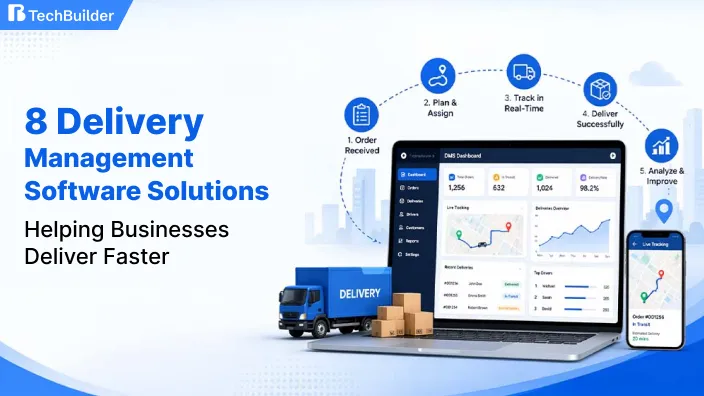

If you’ve been following logistics, courier, or on-demand delivery businesses lately, you’ve probably noticed one thing: speed and visibility are everything now. Customers don’t just want packages delivered—they want live tracking, accurate ETAs, fewer delays, and zero “where is my order?” moments. That’s exactly why Delivery Management Software has become a must-have instead of a “nice-to-have.”
In simple terms, it helps businesses manage orders, assign drivers, optimize routes, track deliveries in real time, and improve customer experience—all from one dashboard. Whether you’re running a small courier startup or a large logistics operation, these tools are basically the backbone of modern delivery operations. Below are 8 tools that keep showing up in real-world use cases, discussions, and logistics tech stacks.
Why Delivery Management Software Matters Right Now
Before jumping into tools, it’s worth understanding why this space is growing so fast. A few years ago, delivery operations were mostly manual—Excel sheets, WhatsApp coordination, and phone calls. That might still “work,” but it doesn’t scale.
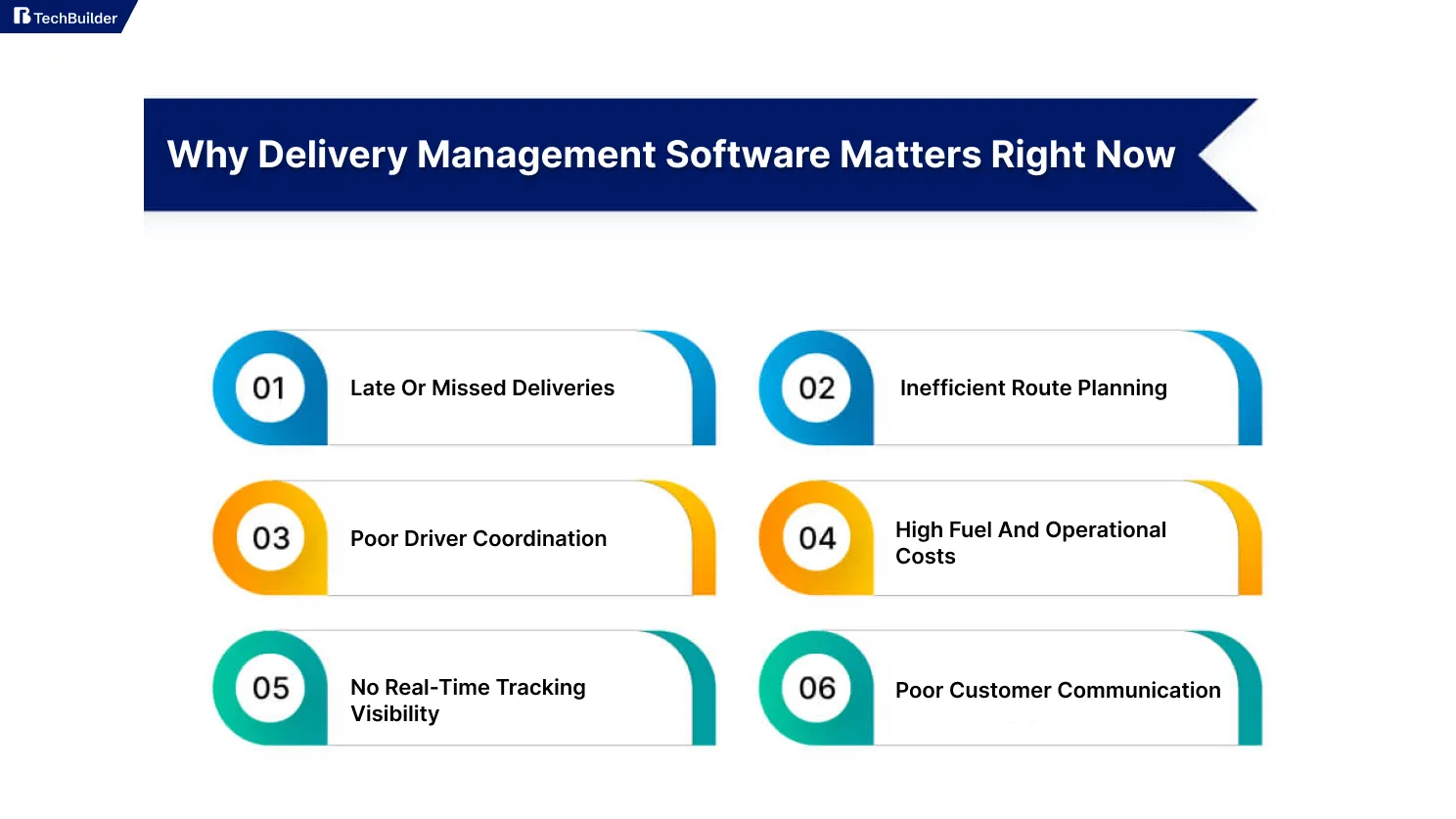
Modern Delivery Management Software solves problems like:
- Late Or Missed Deliveries
- Poor Driver Coordination
- No Real-Time Tracking Visibility
- Inefficient Route Planning
- High Fuel And Operational Costs
- Poor Customer Communication
Now let’s look at the platforms actually solving these issues in different ways.
1. TB Delivery
TB Delivery is more of a complete logistics ecosystem than just a tracking tool. It’s designed for businesses that want to run their own branded delivery operations without stitching together multiple tools. The thing that is striking is that it's all in one system: Operations + Automation. Order management, dispatch automation, live tracking of drivers, proof of delivery and analytics, all in a single platform.
It’s especially useful for companies that are scaling fast and don’t want to depend on multiple third-party apps for routing, tracking, and fleet coordination. Instead of juggling different tools, everything sits in one system. For startups building delivery networks or existing logistics companies upgrading their tech stack, TB Delivery often becomes the “all-in-one control center.”
2. Onro
Onro is a flexible last-mile delivery platform built for courier companies, retailers, and on-demand delivery businesses. What makes Onro interesting is its white-label capability. Companies can create their own brand name delivery system without having to start the software from scratch.
It can be used for dispatch automation, driver apps, real-time tracking and customer notifications. It is a good choice for a lot of small-to-mid logistics businesses since it is simple to set up - yet still provides enterprise-level features. Not too complicated, which is great if you don't want to learn a lot.
3. Onfleet
Onfleet is one of the most popular companies in the field of last-mile delivery. It is famous for its tidy interface and robust real-time shipping tracking ability. It's used in businesses - to assign drivers, optimize routes and give customers updates.
Its best feature is the ease of use. The system is easy to learn by drivers, dispatchers and admins. It is very common to use in both local courier and food delivery services, where tracking accuracy and speed of delivery are essential. If you've ever followed a delivery with an easy-to-use map-based interface, it's likely that it was using Onfleet.
4. Track-POD
The Proof of Delivery and Logistics Automation is a crucial part of - Track-POD. It's particularly well-suited for sectors that require paperwork - such as wholesale distribution, medical supply delivery, and retail logistics.
Drivers can take signatures, photos and delivery confirmations all within the app. That eliminates conflicts, makes things clearer for businesses and customers. It also features route optimization and dispatch capabilities, making it more than just a tracking app - but a field delivery solution.
5. Shipday
Shipday is built with small businesses in mind. Think restaurants, local stores, and small courier teams that need delivery tracking without complex setup. It’s lightweight but practical. It includes dispatch automation, driver tracking, customer notifications, and limited route optimization.
One of the reasons why a lot of small businesses like Shipday is because it is easy to implement and doesn't require technical knowledge. Helps to get started quickly without a lengthy process of onboarding. It seems like a “plug-and-play” solution for local delivery operations.
6. Spoke
Spoke is geared towards smart routing and optimization. It doesn't just monitor deliveries, it makes the whole delivery process smarter. That includes planning routes, workload distributing, efficiency improvements with the help of AI based logic.
Used by companies requiring high delivery volumes, and who wish to cut down on operating costs by making more informed planning choices. Spoke is less about the tracking, and more about the system behind delivering it.
7. DeTrack
DeTrack is a straightforward logistics management system designed for courier and field service companies. It enables live tracking and dispatching, driver management, and customer notifications.
One benefit to users of this is that it is simple. It does not overburden the user with additional bells and whistles. Instead, it's about reliably doing core delivery operations. Logistics firms typically prefer it because of its stability and clarity - which makes it a popular choice.
8. OptimoRoute
Route optimization and scheduling is a major focus of OptimoRoute. It not only monitors deliveries - but also aids businesses in optimizing their delivery schedules. That involves minimising fuel consumption, optimising load balancing and delivery speed.
It’s widely used in industries like - field services, grocery delivery, and home services where route efficiency directly impacts profitability. OptimoRoute is particularly handy for companies that deal with high volumes of deliveries in various delivery areas.
So what’s actually the difference between these tools?
Even though all of them fall under Delivery Management Software, they don’t solve the exact same problem.
Some focus on:
- Real-Time Tracking (Onfleet, Detrack)
- Small Business Simplicity (Shipday)
- Proof Of Delivery (Track-Pod)
- Route Optimization (Optimoroute, Spoke)
- Full-Stack Delivery Platforms (TB Delivery, Onro)
So choosing the right one depends less on popularity and more on what stage your business is in. A small restaurant doesn’t need the same system as a nationwide courier company. And a scaling logistics startup probably needs more than just basic tracking.
Final thoughts
The delivery space is getting more competitive every year. Customers expect faster deliveries, better tracking, and fewer errors—and businesses that can’t keep up usually struggle to retain users. This is why delivery management software is increasingly a business decision, rather than a tech upgrade.
Whether you’re building a new delivery business or upgrading an existing one, tools like TB Delivery, Onfleet, OptimoRoute, and others listed above show how varied the ecosystem has become. There’s no single “best” option—only the one that fits your workflow, scale, and customer expectations.
And honestly, in 2026, the companies that win in delivery are the ones that treat software as infrastructure, not just support tooling.

























Sign in to leave a comment.