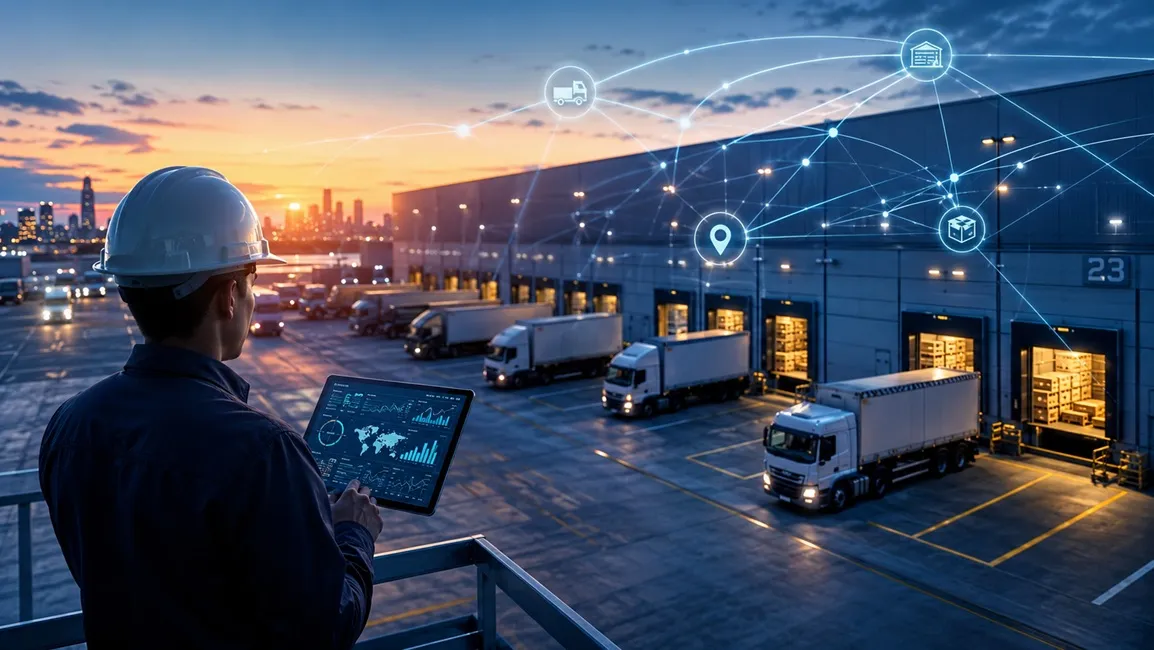

The logistics industry has entered a new era where data, automation, and intelligent decision-making shape daily operations. Businesses are no longer relying only on traditional methods to move products from manufacturers to customers. Instead, many organizations are exploring AI trends in supply chain distribution to improve efficiency, reduce costs, and respond faster to changing market demands. Artificial intelligence is helping companies make better decisions by analyzing massive amounts of data in real time, identifying patterns, and recommending the most effective actions. As global supply chains become more complex, AI has become a valuable tool for building smarter and more resilient logistics operations.
Why Logistics Needs Smarter Technology
Modern logistics involves much more than transporting goods from one location to another. Companies must manage inventory, coordinate warehouses, optimize delivery routes, monitor shipments, predict customer demand, and respond quickly to unexpected disruptions.
Traditional planning methods often depend on historical data and manual decision-making. While these methods have worked for many years, they struggle to keep up with today's fast-changing business environment. Weather events, labor shortages, fuel price fluctuations, global trade disruptions, and changing consumer expectations all create new challenges.
Artificial intelligence helps organizations respond to these challenges by processing information much faster than humans and providing data-driven recommendations that improve operational performance.
The Growing Role of AI in Logistics
Artificial intelligence combines machine learning, predictive analytics, computer vision, and automation to support logistics operations across the entire supply chain.
Instead of reacting after problems occur, companies can identify potential issues before they become expensive disruptions. AI systems continuously learn from new information, making future predictions more accurate over time.
Industry research shows that AI adoption across supply chain operations continues to accelerate. According to McKinsey & Company, organizations using AI-driven supply chain planning have reported improvements in inventory levels, forecasting accuracy, and service performance. Deloitte has also highlighted AI as one of the key technologies driving digital transformation across manufacturing, transportation, and logistics industries.
These improvements allow businesses to operate more efficiently while maintaining higher customer satisfaction.
Better Demand Forecasting
Demand forecasting remains one of the biggest challenges in logistics.
If companies underestimate demand, products become unavailable when customers need them. If they overestimate demand, warehouses become filled with excess inventory that increases storage costs.
Artificial intelligence improves forecasting by analyzing a much broader range of information than traditional forecasting tools.
Instead of relying only on previous sales numbers, AI can evaluate:
- Seasonal buying patterns
- Regional purchasing behavior
- Economic indicators
- Marketing campaigns
- Weather conditions
- Consumer trends
- Social media activity
By combining multiple data sources, businesses gain more accurate demand predictions, allowing them to purchase inventory more effectively and reduce waste.
Route Optimization Saves Time and Money
Transportation costs represent a significant portion of logistics expenses.
Artificial intelligence helps companies determine the most efficient delivery routes by evaluating factors such as traffic congestion, road conditions, fuel consumption, delivery priorities, and driver availability.
Rather than using static routes, AI-powered systems continuously adjust delivery plans throughout the day as conditions change.
This dynamic optimization provides several advantages:
- Lower fuel costs
- Shorter delivery times
- Reduced vehicle wear
- Better driver productivity
- Improved customer satisfaction
Many delivery companies now rely on AI-based route planning to manage thousands of daily shipments with greater efficiency.
Smarter Warehouse Operations
Warehouses have become increasingly automated with the help of artificial intelligence.
Modern AI systems monitor inventory movement, optimize storage locations, guide warehouse workers, and coordinate robotic equipment.
Instead of placing products randomly, intelligent software determines the best storage locations based on demand frequency, package size, and shipping schedules.
Computer vision technology also helps identify damaged products, verify shipments, and improve inventory accuracy.
Research from Gartner indicates that warehouse automation continues to expand as organizations seek faster order fulfillment while reducing operational costs.
Predictive Maintenance Reduces Downtime
Unexpected equipment failures create costly delays across logistics operations.
Artificial intelligence helps companies monitor equipment performance using sensor data collected from trucks, forklifts, conveyor systems, refrigeration units, and warehouse machinery.
Machine learning models identify unusual operating patterns before equipment breaks down.
Maintenance teams can schedule repairs before failures occur, resulting in:
- Less downtime
- Lower repair costs
- Longer equipment lifespan
- Improved operational reliability
Predictive maintenance allows businesses to avoid emergency repairs that interrupt daily operations.
Inventory Management Becomes More Accurate
Managing inventory efficiently requires balancing product availability with storage costs.
Artificial intelligence continuously evaluates inventory levels across multiple warehouses while considering incoming shipments, customer orders, supplier performance, and regional demand.
Instead of relying on periodic inventory reviews, AI systems monitor inventory continuously.
Businesses benefit from:
- Reduced stock shortages
- Lower excess inventory
- Faster replenishment decisions
- Better warehouse utilization
- Improved cash flow
More accurate inventory management also strengthens customer trust by reducing delayed or canceled orders.
Faster Decision-Making With Real-Time Data
Logistics generates enormous amounts of operational data every minute.
Artificial intelligence processes this information instantly, allowing managers to make informed decisions much faster than traditional reporting methods.
Real-time dashboards provide visibility into:
- Shipment status
- Vehicle locations
- Warehouse performance
- Delivery delays
- Inventory availability
- Supplier performance
Instead of waiting for daily reports, decision-makers receive immediate alerts whenever unusual events occur.
This proactive approach allows companies to solve problems before customers are affected.
Improving Customer Experience
Customer expectations continue to rise.
People expect accurate delivery estimates, fast shipping, real-time tracking, and immediate communication whenever delays occur.
Artificial intelligence supports these expectations by providing better visibility throughout the delivery process.
AI-powered customer service systems can answer common shipping questions, provide tracking updates, and assist customers around the clock.
More accurate delivery predictions also improve customer confidence while reducing support inquiries.
Satisfied customers are more likely to return, recommend the company, and remain loyal over time.
Supporting Sustainability Goals
Environmental responsibility has become an important priority for logistics companies.
Artificial intelligence contributes to sustainability by reducing unnecessary transportation, improving fuel efficiency, and minimizing waste.
Optimized delivery routes reduce fuel consumption.
Accurate forecasting decreases excess inventory.
Efficient warehouse operations lower energy usage.
According to the International Energy Agency, improving operational efficiency remains one of the most practical ways for transportation industries to reduce emissions while maintaining business growth.
Many organizations now include AI-driven efficiency improvements as part of their broader sustainability strategies.
Strengthening Supply Chain Resilience
Global supply chains have experienced significant disruptions in recent years due to natural disasters, geopolitical events, labor shortages, and changing consumer demand.
Artificial intelligence helps businesses prepare for uncertainty by identifying potential risks early.
AI systems monitor supplier performance, transportation networks, weather conditions, and market trends simultaneously.
When disruptions appear likely, businesses can evaluate alternative suppliers, reroute shipments, or adjust inventory levels before operations are significantly affected.
This improved visibility allows organizations to recover more quickly from unexpected events.
Challenges Organizations Must Address
Although artificial intelligence offers substantial benefits, successful implementation requires careful planning.
Many organizations face challenges such as integrating legacy software, maintaining high-quality data, protecting sensitive information, and training employees to work alongside AI-powered systems.
Poor data quality often produces inaccurate predictions, making data governance an essential part of every AI initiative.
Businesses also need skilled professionals who understand both logistics operations and advanced analytics.
Organizations that invest in employee training alongside technology adoption typically achieve better long-term results.
The Future of Intelligent Logistics
Artificial intelligence continues to evolve rapidly.
Future logistics operations will likely include more autonomous vehicles, advanced robotics, digital twins, intelligent warehouse automation, and increasingly sophisticated predictive analytics.
Generative AI may also support logistics teams by creating operational reports, analyzing complex scenarios, and assisting with strategic planning.
Industry analysts expect AI investments across transportation and logistics to continue growing over the next decade as companies pursue greater efficiency, resilience, and customer satisfaction.
Organizations that begin building AI capabilities today will likely be better prepared for future market changes.
Conclusion
Artificial intelligence is transforming logistics from a reactive operation into a proactive, data-driven system. From demand forecasting and route optimization to warehouse automation and predictive maintenance, AI enables companies to make faster, smarter decisions that improve efficiency across every stage of logistics. Businesses also benefit from better inventory management, stronger customer experiences, lower operational costs, and improved resilience against disruptions.
As technology continues to advance, artificial intelligence will play an even greater role in shaping the future of logistics. Companies that embrace intelligent solutions while investing in data quality, workforce development, and strategic planning will be well positioned to compete in an increasingly connected and rapidly evolving global marketplace.




























Sign in to leave a comment.