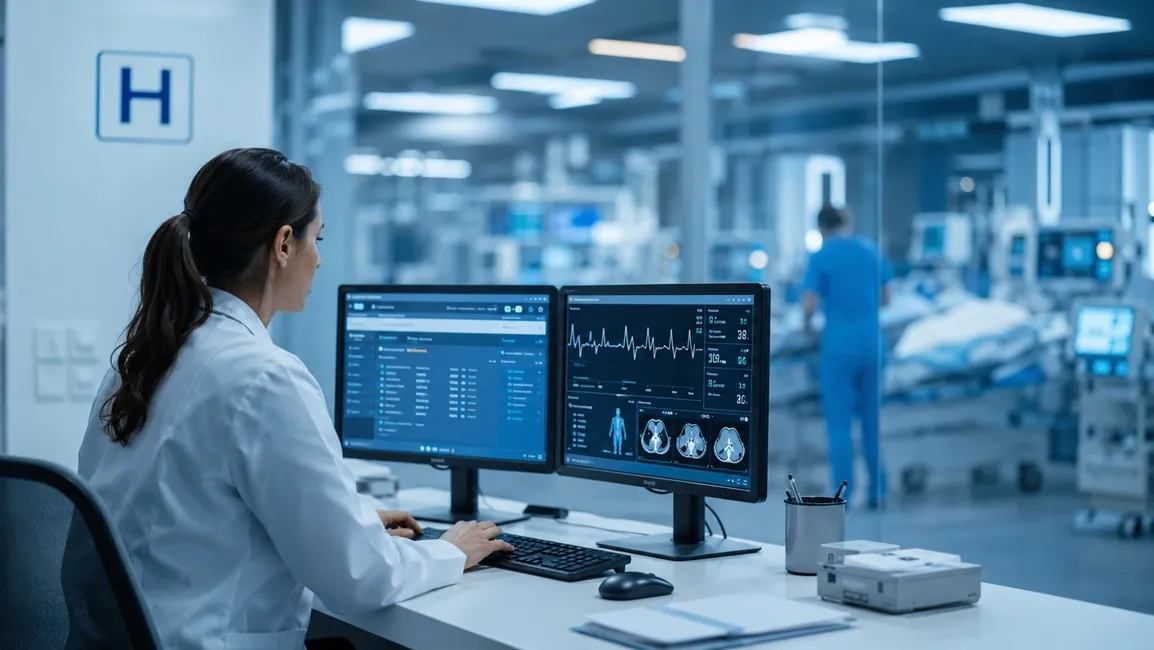

Healthcare organizations are under increasing pressure to deliver better patient outcomes while managing rising operational costs, workforce shortages, and stricter regulatory requirements. Modern healthcare software solutions have become an essential part of this transformation by helping hospitals improve efficiency, enhance communication, and support informed decision-making. From patient registration to discharge planning, digital platforms streamline daily operations and allow medical professionals to focus more on delivering quality care instead of managing paperwork.
The Growing Complexity of Hospital Operations
Hospitals are among the most complex organizations in any industry. Every day, thousands of activities occur simultaneously, including patient admissions, laboratory testing, diagnostic imaging, surgeries, pharmacy management, billing, insurance verification, inventory tracking, and staff scheduling.
Managing these tasks manually or with outdated software creates delays, increases administrative work, and raises the risk of errors. As patient expectations continue to rise, hospitals require systems capable of handling growing volumes of information accurately and efficiently.
The healthcare industry is also facing an aging population and a growing number of patients with chronic conditions. These factors place additional demands on hospitals, making digital transformation more important than ever.
Why Legacy Systems Create Challenges
Many hospitals still rely on technology that was implemented years or even decades ago. While these systems may continue to function, they often struggle to meet today's operational requirements.
Older platforms frequently operate in isolation, making it difficult for departments to exchange information quickly. Staff members may need to enter the same patient information multiple times, increasing workload and the possibility of human error.
Common challenges of legacy systems include:
- Slow access to patient information
- Limited integration between departments
- High maintenance costs
- Increased cybersecurity risks
- Poor reporting capabilities
- Difficulty supporting remote access
Modern software eliminates many of these obstacles by connecting departments through a unified digital environment.
Improving Patient Care Through Better Information Access
One of the biggest advantages of modern hospital software is immediate access to accurate patient information.
Doctors, nurses, specialists, pharmacists, and laboratory staff often need the same patient records throughout treatment. When information is available instantly, healthcare professionals can make faster and better-informed decisions.
According to the World Health Organization, digital health technologies have the potential to improve the quality, accessibility, and efficiency of healthcare services while supporting better health outcomes worldwide.
When medical teams share updated information in real time, they can:
- Reduce duplicate testing
- Identify treatment changes quickly
- Improve care coordination
- Respond faster during emergencies
- Support safer medication management
This connected approach creates a more efficient experience for both patients and medical professionals.
Reducing Administrative Work
Administrative tasks consume a significant portion of hospital resources. Registration, appointment scheduling, insurance verification, billing, compliance reporting, and documentation all require considerable time.
Modern software automates many repetitive processes, allowing administrative staff to focus on higher-value activities.
Automation may include:
- Patient appointment reminders
- Insurance eligibility verification
- Electronic billing workflows
- Digital document management
- Automated reporting
- Staff scheduling
The American Hospital Association has noted that administrative simplification remains an important opportunity for reducing operational costs while improving the patient experience.
Less manual work also reduces burnout among hospital employees.
Supporting Better Clinical Decisions
Medical professionals rely on accurate information when making treatment decisions. Modern software provides access to historical patient records, laboratory results, imaging reports, medication history, allergies, and physician notes from a centralized platform.
Many systems also include intelligent decision-support features that help clinicians identify potential medication interactions, abnormal test results, or recommended treatment guidelines.
Rather than replacing medical expertise, these tools help clinicians work with more complete information, improving confidence during diagnosis and treatment planning.
Strengthening Data Security
Healthcare organizations manage highly sensitive patient information, making cybersecurity one of their highest priorities.
According to IBM's annual Cost of a Data Breach Report, healthcare has remained one of the industries with the highest average data breach costs for several consecutive years.
Modern software platforms include stronger security capabilities such as:
- Multi-factor authentication
- Role-based access controls
- Data encryption
- Continuous activity monitoring
- Automated security updates
- Audit logs
These features help hospitals protect patient privacy while meeting evolving regulatory requirements.
Improving Communication Across Departments
Hospitals involve multiple teams working together around the clock.
A single patient may interact with emergency physicians, nurses, surgeons, radiologists, laboratory technicians, pharmacists, therapists, billing specialists, and discharge coordinators.
Without effective communication, treatment delays become more likely.
Modern systems enable departments to exchange information immediately instead of relying on phone calls, paper documents, or manual updates.
Better communication supports:
- Faster diagnosis
- Shorter waiting times
- Improved discharge planning
- Better patient coordination
- Reduced medical errors
This collaborative environment ultimately benefits both healthcare providers and patients.
Better Resource Management
Hospitals operate with limited resources that must be carefully managed.
Medical equipment, hospital beds, operating rooms, medications, and staff availability all require constant monitoring.
Digital management tools provide real-time visibility into hospital resources, helping administrators make informed decisions.
Examples include:
- Bed occupancy monitoring
- Operating room scheduling
- Inventory management
- Pharmacy stock tracking
- Workforce planning
- Equipment maintenance scheduling
Improved resource utilization reduces unnecessary expenses while supporting better patient care.
Meeting Growing Patient Expectations
Patients increasingly expect healthcare experiences similar to other modern digital services.
Many individuals prefer:
- Online appointment scheduling
- Digital registration forms
- Mobile notifications
- Secure messaging
- Faster billing
- Easy access to medical records
Hospitals adopting modern digital platforms are better positioned to meet these expectations while improving patient satisfaction.
The COVID-19 pandemic also accelerated demand for digital healthcare experiences, including virtual consultations and remote patient monitoring.
Many of these expectations continue even after the pandemic, making technology investments increasingly valuable.
Supporting Data-Driven Decision Making
Hospital leaders must make decisions based on accurate information rather than assumptions.
Modern software collects operational, financial, and clinical data that can be transformed into meaningful reports and dashboards.
These insights help leadership teams identify:
- Patient admission trends
- Emergency department performance
- Readmission rates
- Resource utilization
- Staffing requirements
- Financial performance
The Centers for Disease Control and Prevention continues to emphasize the importance of high-quality health data for improving public health planning and healthcare delivery.
Reliable reporting enables hospitals to identify improvement opportunities much faster than manual analysis.
Preparing for Artificial Intelligence
Artificial intelligence is becoming an increasingly important part of hospital operations.
AI-powered technologies assist with medical imaging analysis, predictive analytics, scheduling optimization, patient risk identification, and administrative automation.
Hospitals with modern digital infrastructure are better prepared to adopt these innovations because their data is already organized, standardized, and accessible.
Organizations relying on fragmented legacy systems often face significant barriers when implementing advanced technologies.
Building a strong digital foundation today creates opportunities for future innovation.
Enhancing Financial Performance
Financial sustainability remains a major concern for healthcare organizations.
Modern systems contribute to improved financial performance by reducing administrative costs, minimizing billing errors, improving documentation accuracy, and supporting better resource allocation.
Hospitals also benefit from improved revenue cycle management through streamlined claims processing and faster reimbursement.
Accurate financial reporting allows leadership teams to make more strategic investment decisions while maintaining high standards of patient care.
The Future of Hospital Technology
Healthcare technology continues to evolve rapidly.
Cloud computing, predictive analytics, remote monitoring, wearable devices, artificial intelligence, and interoperability standards are reshaping hospital operations across the world.
According to Gartner, healthcare organizations continue increasing investments in digital technologies to improve operational resilience and patient engagement.
Hospitals that modernize their systems today will be better prepared to adapt to future innovations while remaining competitive in an increasingly digital healthcare environment.
Technology alone cannot solve every challenge. However, when combined with skilled healthcare professionals and effective organizational processes, it becomes a powerful tool for improving efficiency, safety, and patient outcomes.
Conclusion
Modern hospital software is no longer a luxury. It has become a strategic necessity for organizations seeking to improve patient care, streamline operations, strengthen security, and support long-term growth. As healthcare continues to evolve, hospitals require digital platforms capable of connecting departments, simplifying workflows, and providing reliable information when it matters most.
Organizations that invest in modern technology today are better positioned to respond to changing patient expectations, emerging medical innovations, and increasing operational demands. By replacing outdated systems with connected digital platforms, hospitals can create a more efficient, secure, and patient-focused healthcare environment for years to come.




























Sign in to leave a comment.