
Intrigued by generative AI\'s possibilities and diverse use cases but unsure of how to get started? Constructing a generative AI solution from the start can feel like solving a difficult jigsaw. You can get stuck into technical issues and limitless options if you don\'t have a solid plan. Keeping the broader view in mind and knowing what to do next might be challenging. Not a problem! This blog will guide you through the process of building generative AI solutions from scratch. We\'ll break it down into straightforward steps with practical tips and explanations at every stage. So, are you ready to explore how to build generative AI solutions? Stay tuned!
How To Build Generative AI Solutions From Scratch
1. Know Your Requirement
You should pause and make sure you know what you want out of a generative AI solution prior to you starting making one. Are you interested in creating attention-grabbing visuals, crafting engaging text, or brainstorming a new design?
Alright, let\'s dive in and get started:
- Define Your Objectives: What are you expecting your Gen AI model to do? If you\'re in the fashion world, perhaps you want to design new clothing patterns. Likewise, businesses in marketing might need AI to craft catchy ad copy. Providing more detailed instructions can allow you to achieve greater results.
- Understand Your Audience: You need to know who you\'re serving to make the AI\'s output more relevant to your target audience. Make sure you know exactly who will gain from your AI solution.
- Set Specific Goals: Clear goals will guide your project and make measuring success easier. For example, instead of a vague goal like "create art," aim for something like "generate abstract paintings inspired by Van Gogh."
This way, you can make certain that every step you take aligns with your ultimate objectives and clearly define your requirements to set you up for success from the start.
2. Acquisition of Data
Data is crucial for any AI project. Having a big and top-notch dataset is really important for generative AI. Here’s how to get it:
1. Identify Data Sources
Find out where you can locate the required fuel(data) for your Gen AI models. Here are some ideas:
- Public Datasets: There are several websites like Kaggle, UCI Machine Learning Repository, and Google Dataset Search that provide a wide range of data that could be useful for you.
- Internal Databases: The data that your company collects can be a wealth of information to fuel your models.
- Third-Party Providers: Data gathering companies can offer you datasets that are customized to your needs.
- Web Scraping: Web Scraping might be useful if you need unique or specialized data, but remember to adhere to legal and ethical guidelines.
2. Gather Data
Start collecting inputs after identifying reliable sources:
- Ensure Diversity: Your dataset should be diverse and represent all scenarios your AI might encounter. For example, if you’re training an AI to generate human faces, include various ages, ethnicities, and expressions.
- Focus on Quality: Artificial intelligence functions better when fed high-quality data. Verify that your inputs are accurate, well-organized, and devoid of mistakes. This might involve preprocessing steps like removing duplicates, correcting inaccuracies, and standardizing formats.
3. Store Data Efficiently
Proper data storage is essential for smooth access and processing:
- Cloud Storage: AWS, Google Cloud, and Azure are platforms that offer scalable, secure, and accessible storage options. They also provide tools for data management and processing.
- Data Warehouses: Data Warehouses: You might want to look at data warehouse solutions like BigQuery or Snowflake in the presence of vast amounts of data. These systems are built to efficiently store and execute queries on a massive scale.
- Version Control: Make sure you set up version control for your datasets so you can easily keep track of changes and go back to previous versions if necessary.
3. Data Refining/Structuring
Collecting data is just the beginning. Now, it\'s time to refine and structure it so your AI can learn effectively. You provide a solid foundation for your AI to learn from by refining and structuring your data. This sets the stage for successful model training.
- Clean Your Data: Remove any duplicates, errors, or irrelevant information. Think of it as decluttering your workspace. Clean data ensures your AI isn’t learning from mistakes.
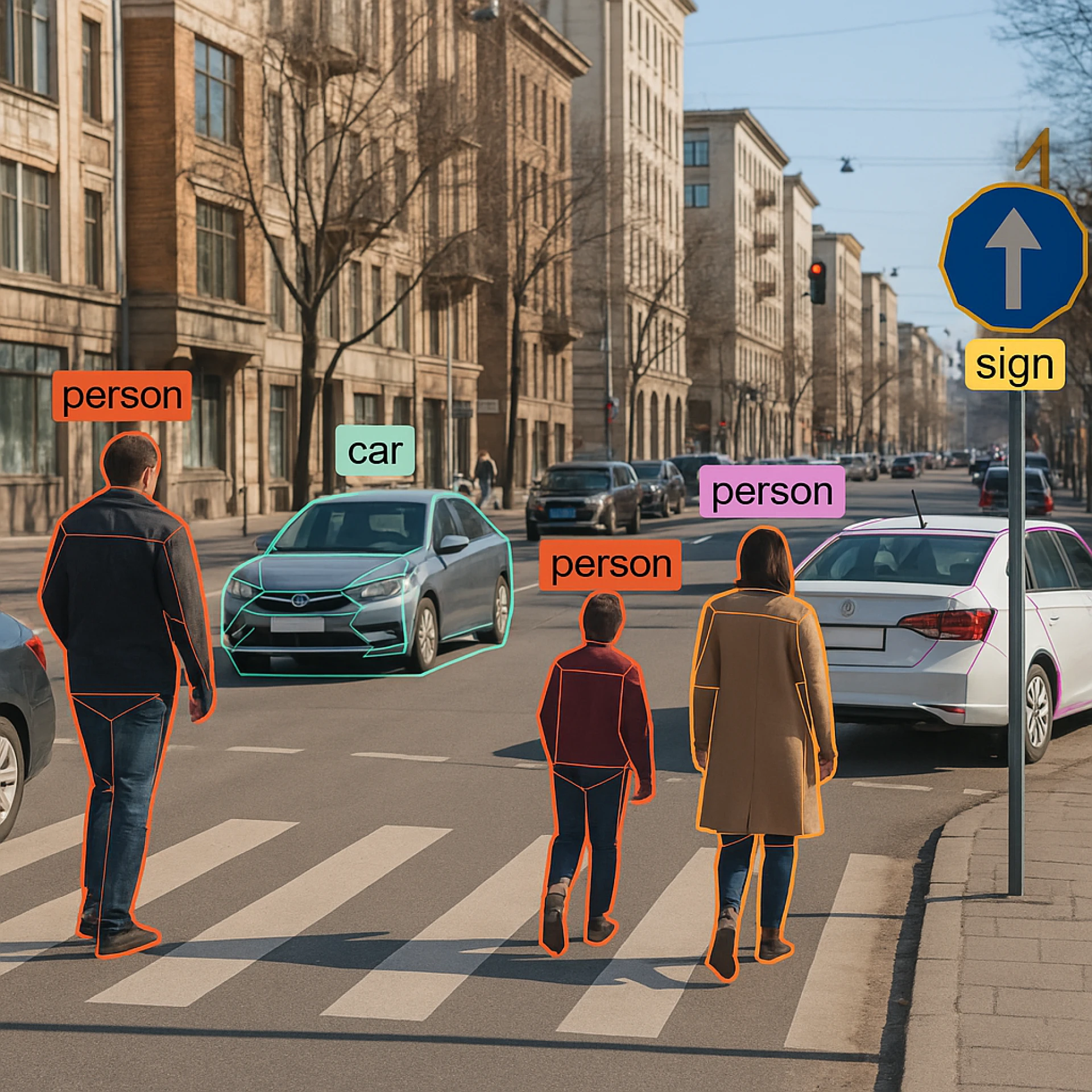
- Organize and Label: Data should be correctly organized for your project. Correctly label text and image data. For example, if you\'re training an AI to create cat pictures, it\'s important to properly label each image as a cat.
- Normalize and Standardize: Ensure your data follows a consistent format. This might mean resizing images to the same dimensions or converting all text to lowercase. Consistency is key to effective learning.
4. Model Architecture
Picking the right model architecture is crucial. It’s like choosing the right blueprint for building a house. This sets the entire framework for your AI solution. Here’s how to go about it:
- Understand Your Options: Different tasks require different architectures. For example, GANs (Generative Adversarial Networks) are great for generating images, whereas VAEs (Variational Autoencoders) may generate text better.
- Select the Right Architecture: Choose the one that fits best based on your objectives. Start with a popular model in your field if you\'re unsure, and tweak it to suit your needs.
- Design Your Model: Customize the architecture to better fit your specific requirements. This might involve adding or removing layers, adjusting activation functions, or experimenting with different configurations.
5. Model Training
Now comes the exciting part, which is training your model. This step in the process is like teaching a student; it requires patience, monitoring, and adjustments to ensure they learn effectively. Your generative AI model will be ready to create amazing solutions by option for the right approach. Here is how it goes:
- Start Training: Feed the training data into your model and let it learn. This process involves adjusting the model’s parameters to minimize errors.
- Monitor Progress: Monitor your model’s performance. Utilize the validation set to assess its learning performance and make any modifications. The training procedure may need to be changed if the model performs inadequately.
- Fine-Tune Your Model: Fine-tuning the model is important to improve its performance. Increase training data, change learning rates, or try other regularization methods.
- Test Your Model: Finally, use the test set to evaluate your model’s performance in a real-world scenario. This step ensures your model isn’t just memorizing the training data but genuinely learning to generate new content.
6. Deployment
Now that your model is trained and ready, it’s time to deploy it. This stage makes your AI solution available for real-world use. It’s like launching a product. It\'s exhilarating, but you must prepare for a smooth release.
- Choose a Platform: Select a deployment platform that suits your needs. Popular options include cloud services like AWS, Google Cloud, and Azure. They offer easy integration and scalability.
- Set Up the Environment: Prepare your deployment environment. Ensure it has the necessary resources, such as GPUs, to run your model efficiently.
- Deploy Your Model: Upload your trained model to the chosen platform. Set up endpoints that allow your application to interact with the model.
- Test in Real-World Scenarios: Test your model in real-world scenarios before it goes live to make certain it performs as expected. Make adjustments if necessary.
7. Model Development
You need a solid infrastructure to support a generative AI model. A flawless integration between frontend, backend, and API is required. This is to make certain that these components function together in a symphony to give the desired end result.
- Frontend Development: Create a user-friendly interface where users can interact with your AI solution. This could be either a web or mobile app. Make use of contemporary frameworks such as React, Angular, or Vue.js to create a user interface that is both responsive and visually appealing.
- Backend Development: Set up the backend to handle incoming requests, process data, and enable communication with the AI model. Use reliable frameworks like Node.js, Django, or Flask. Ensure your backend can scale to handle multiple users simultaneously.
- API Integration: Develop APIs that connect the front end with the backend and the AI model. It should be able to handle data input and output seamlessly to ensure smooth communication between all components. RESTful APIs are a common choice, but you can also use GraphQL for more flexibility.
A top generative AI development company knows which tools are right for delivering the best solutions that actually stand out! Hence, you might want to consider partnering with a reliable app development resource to create Gen AI solutions for you!
8. Continuous Optimization
The work doesn’t stop even after the generative AI model is live. Continuous optimization ensures your model stays effective and efficient. It also ensures your AI solution will thrive and keeps delivering outstanding results.
- Monitor Performance: Keep tabs on your model\'s performance in real-world scenarios. Track important metrics such as response time, accuracy, and user satisfaction using monitoring tools.
- Gather Feedback: Gather responses from users to understand how the model is performing and where it might be falling short. This insight is invaluable for making improvements.
- Update and Retrain: Periodically update your model with new data to keep it relevant. Retrain your model to improve its accuracy and performance. This ongoing process ensures your AI solution evolves with changing needs and trends.
- Optimize Infrastructure: It\'s essential that you constantly evaluate and optimize your deployment infrastructure. Make sure it\'s running smoothly. Adjust resource scaling based on consumption.
Conclusion
While starting from scratch to build generative AI solutions is no easy task. Yet the path ahead is exciting and full of possibilities when approached correctly. Follow the blog\'s important steps to transform lofty goals into ground-breaking solutions. Keep in mind that the magic isn\'t confined to the first setup but rather to the continuous process of improvement and adaptation. At the same time, the technical requirements can’t fulfill itself. Thus, you need to partner with a reliable company that provides generative AI development services. One that understands your goals and passions can help you in achieving your dreams by crafting tailored Gen AI solutions. Keep an open mind, keep experimenting, and let your imagination guide you.






















Sign in to leave a comment.