

When you’re working with high-performance fiber laser or sensing systems, small details often make the biggest difference. One of those details is polarization control. That’s exactly where 80um PM Components come into play. At DK Laser, these components are designed for engineers and system designers who need stable polarization, consistent output, and dependable long-term performance without unnecessary complexity.
In real-world setups, polarization drift is more common than many expect. Temperature changes, vibration, or even slight fiber bending can impact system stability. Using properly designed 80um PM Components helps reduce those risks by maintaining a fixed polarization axis, especially in demanding environments.
Why 80um PM Components Matter
Unlike standard PM fibers, 80um PM fiber components are often chosen for applications requiring higher power handling and better mode control. Engineers working on fiber lasers around the 1550nm wavelength frequently report improved stability once switching to 80um-based solutions. In fact, industry studies suggest that proper polarization management can reduce power fluctuation by nearly 20–30% in long-running laser systems.
From personal experience, teams running continuous laser operations often notice fewer alignment checks after upgrading to well-matched PM components. Less downtime means smoother workflows—and fewer late-night troubleshooting sessions.
Key Types of 80um PM Components Offered by DK Laser
DK Laser’s portfolio of 80um PM Components covers a wide range of practical needs:
- PM Filter WDMs for separating or combining wavelengths while maintaining polarization
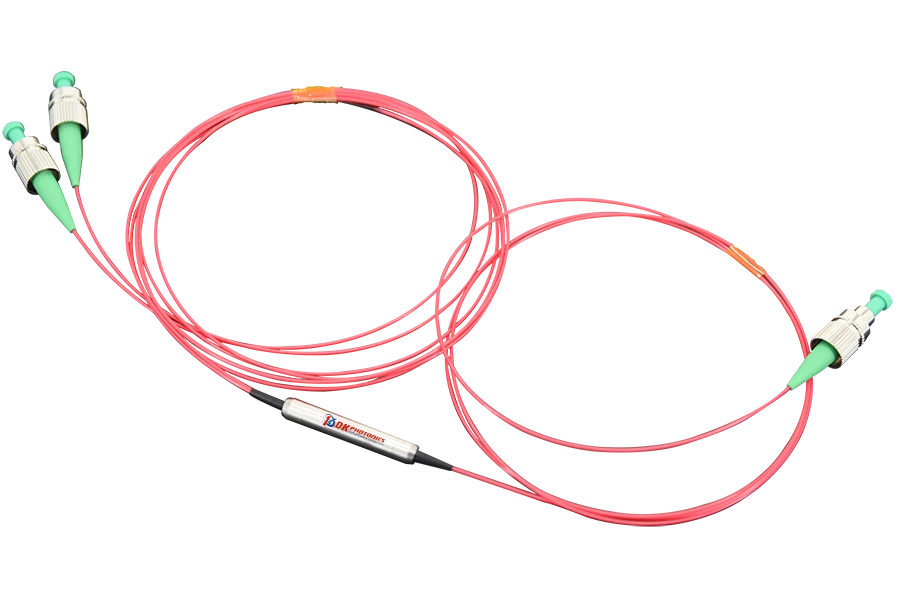
- 80um 1550nm PM Tap Couplers (1×2 / 2×2) with fast-axis blocking for monitoring signal power
- PM Filter Couplers designed for clean signal routing
- 80um 1550nm PM Isolators to reduce back reflection and protect sensitive laser sources
- Polarization Beam Combiners/Splitters for managing multiple polarized signals
- In-line Polarizers for systems that require precise polarization filtering
- PM Optical Circulators useful in bidirectional signal paths
- 80um Fused PM Fiber Couplers for balanced power distribution
Each component is built with applications like fiber lasers, telecom systems, and fiber sensing in mind.
Where These Components Are Commonly Used
If you’ve ever worked on a fiber laser amplifier chain, you know how quickly instability can propagate. 80um PM Components are commonly used in:
- Fiber laser systems operating near 1550nm
- Optical sensing and interferometry setups
- Telecom networks where polarization integrity matters
- Lab environments requiring repeatable results
One engineer once shared that replacing standard components with 80um PM versions reduced signal noise enough to pass a previously failing test on the first try. Those small wins add up over time.
Practical Tips When Choosing 80um PM Components
Here are a few things worth keeping in mind:
- Match the wavelength carefully – most 80um PM components are optimized for 1550nm
- Check insertion loss and extinction ratio, especially for isolators and polarizers
- Plan fiber routing to avoid unnecessary bends that can stress even PM fibers
- Use compatible connectors and splicing techniques to maintain polarization alignment
It’s easy to underestimate these details until something goes wrong.
Why Engineers Choose DK Laser
DK Laser focuses on optical passive components for fiber lasers, telecom, and sensing applications. Their experience shows in the consistency of their products and the clarity of specifications. Many system designers appreciate having access to a single source for PM isolators, WDMs, couplers, and hybrid components—all built around real application needs.
With growing system complexity, having dependable 80um PM Components can make daily operations noticeably smoother.
Final Thoughts
Polarization stability isn’t just a theoretical concern—it directly affects performance, reliability, and maintenance effort. Whether you’re building a new fiber laser system or refining an existing setup, 80um PM components offer a practical way to maintain control where it matters most.

Sign in to leave a comment.