
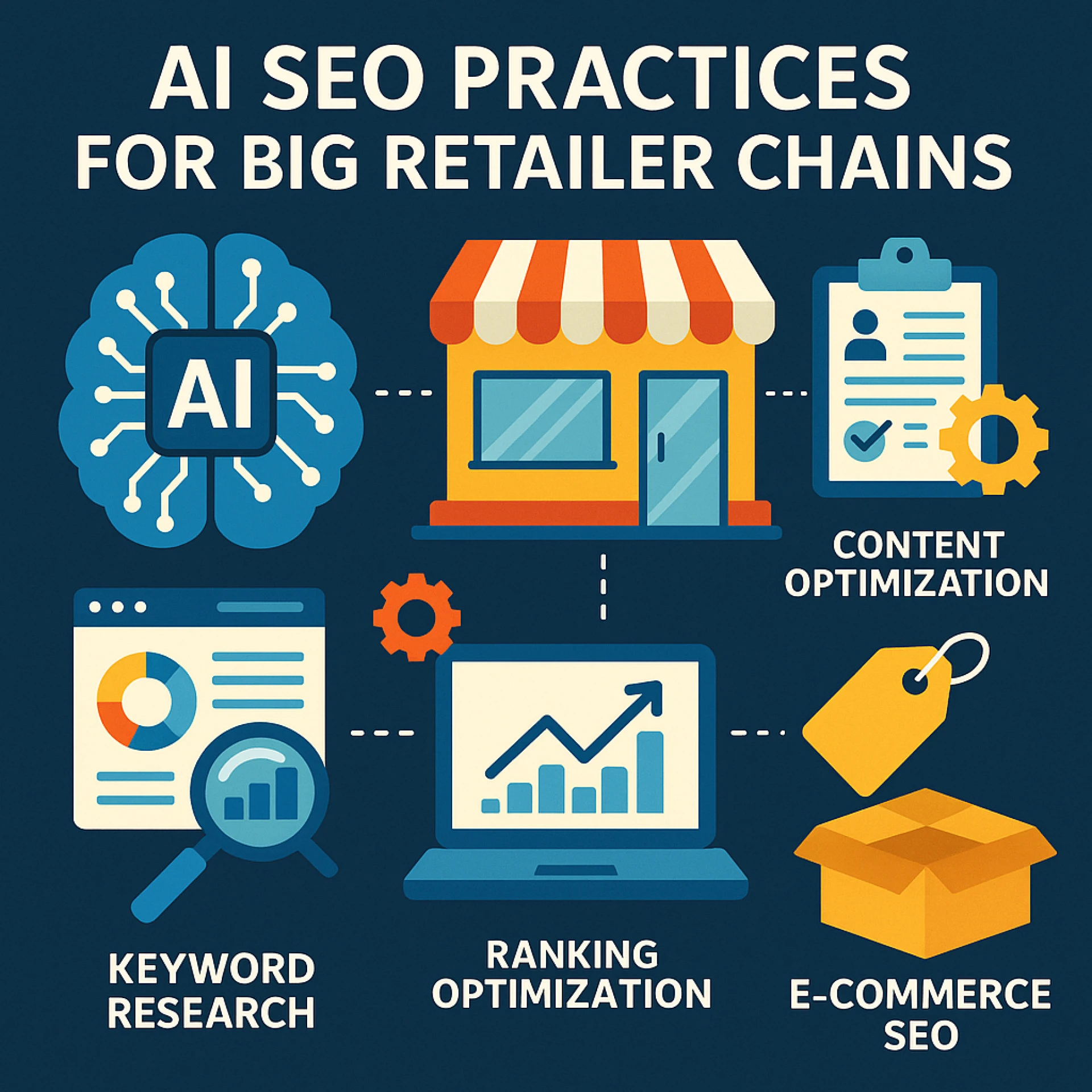
In 2025, AI is running the show. And if you're managing hundreds or thousands of store locations in retail industry, you need to know how to play by the new Ai optimization rules.
Here's the thing your old SEO tactics won't work anymore. But don't worry - I've got your back.
Let me walk you through 9 proven SEO strategies that big retailers like you are using right now to crush it in this AI-powered search world.
1. AI Overviews Optimization to Make Your Content More Valueable
Picture this: You search for something, and Google gives you an instant answer at the top. That's AI doing its thing.
But here's what most people don't know - AI needs your content to be structured in a specific way to understand it.
Think of AI like a really smart robot that needs clear instructions. If your content is messy, the robot gets confused.
Here's how to fix it:
Start formatting your content into FAQ sections. AI loves questions and answers. It's like feeding the robot exactly what it wants to eat.
Next, use simple, clear language that focuses on real things and concepts. Don't write "utilize" when you mean "use."
Add structured data to your pages. This is like putting labels on everything so AI knows what it's looking at.
Pro tip: Tools like SurferSEO and Frase can help you write content that AI actually understands. They're like having a translator between you and the robots.
The bottom line? Make your content so clear that even a robot can get it. Because that's exactly who's reading it first.
2. Search Experience Optimization To Think Beyond Keywords
Google isn't just looking at your keywords anymore. They're watching how people actually use your site.
It's like the difference between reading a restaurant menu and actually eating the food. Google wants to know if people are having a good time on your site.
Here's what you need to focus on:
Add videos and images to your product pages. People love visual content, and Google notices when they stick around to watch.
Make your pages interactive. Add things people can click, scroll through, or play with. The longer they stay, the better.
Speed up your site. Nobody waits for slow pages anymore. If your site takes forever to load, people bounce faster than a rubber ball.
Tool tip: Use Hotjar to see exactly how people use your pages. It's like having a security camera for your website behavior.
Think about it this way: if your website was a physical store, would people want to browse around or run for the exit? That's what Google is measuring now.
3. Local SEO 3.0 For Hyperlocal Search Domination
"Near me" searches are huge right now. People want to find stuff close to them, and they want it now.
But here's where most big retailers mess up: they treat all their locations the same way.
Here's how to dominate local search:
Create unique pages for each store location. Don't just copy and paste the same content everywhere. Each store has its own personality.
Keep your Google Business Profiles fresh. Post updates, share events, and add new photos regularly. Think of it like social media for your stores.
Add FAQ sections that answer real questions your local customers ask. "Do you have parking?" "What are your holiday hours?" Stuff like that.
Don't forget: Add location schema to tell search engines exactly where your stores are. It's like dropping pins on a digital map.
The key is thinking hyperlocal. What makes your downtown store different from your mall location? Highlight those differences.
4. Answer Engine Optimization To Win Voice & AI Chat-Based Results
People are asking questions to ChatGPT, Alexa, and Google's AI. And these tools need to find answers somewhere.
That somewhere could be your website.
Here's how to become the go-to answer source:
Build massive FAQ sections for every product category. Think like your customers and ask the questions they actually ask.
Write in a conversational way. Use the same words people use when they talk, not business jargon.
Format your answers clearly. Use bullet points and short paragraphs that are easy to scan and read out loud.
Power tools: AlsoAsked shows you questions people actually search for. AnswerThePublic does the same thing. Use them to build your FAQ content.
Think about voice search specifically. When someone asks Alexa "What's the best winter coat for kids," could she find that answer on your site?
5. AI Mode Optimization To Get Found in Chat & Shopping Agents
AI shopping assistants are becoming huge. People are asking ChatGPT and Bing Chat to help them find products.
These AI tools need good data to make recommendations. And that data comes from your product feeds and structured content.
Here's how to optimize for AI shopping:
Upload detailed product information to Google Shopping, Amazon, and other platforms. The more details you provide, the better.
Add structured data to every product page. This includes ratings, prices, availability, and specifications.
Create blog content that answers shopping questions. "Best running shoes for flat feet" or "How to choose a winter jacket."
Insider tip: Write some content specifically for AI answers. Think about how ChatGPT would explain your products to someone.
The goal is to become the source that AI tools turn to when people ask shopping questions.
6. Real-Time Inventory SEO To Rank with What's In Stock Now
Nothing's more frustrating than finding a product online just to discover it's out of stock.
Google knows this too. They're starting to favor sites that show real-time availability.
Here's how to use inventory as an SEO advantage:
Show stock levels in your page titles and descriptions when possible. "iPhone 15 - In Stock Now" beats "iPhone 15" every time.
Use technical solutions to keep your inventory data fresh on your website. This might mean server-side rendering or other technical approaches.
Best practice: When something's in stock at your local store but not online, make that clear. "Available for pickup at your local store."
This is especially powerful for "buy online, pick up in store" searches. People want to know they can get what they need right away.
7. E-E-A-T for Retail To Show Real Expertise and Trust In the Content
Google cares about Experience, Expertise, Authority, and Trust. For retailers, this means showing you know what you're talking about.
Here's how to build real credibility:
Feature real experts on your content. If you sell outdoor gear, have actual hikers and climbers write product guides.
Show off real customer reviews and photos. Nothing beats authentic customer experiences to build trust.
Add author bios and credentials to your content. Show that real people with real expertise created your buying guides.
Boost tip: Use review platforms like Trustpilot to get verified customer feedback that Google can understand and display.
The idea is simple: be genuine. Don't try to fake expertise. If you sell it, you should know about it.
8. Visual & Multimodal Search Optimization
People are using their cameras to search now. They take photos of products and ask Google Lens "Where can I buy this?"
Visual search on Pinterest, TikTok, and Google is becoming a major way people discover products.
Here's how to optimize for visual search:
Write detailed descriptions for every product image. Don't just say "blue shirt." Say "navy blue cotton crew neck t-shirt."
Add image schema to help search engines understand your photos better.
Make sure your images load fast on mobile devices. Slow images kill the visual search experience.
Tool tip: Services like Cloudinary and ImageKit can automatically optimize your images for different devices and connection speeds.
Think about it: if someone takes a photo of your product in the wild, could they find it on your website using visual search?
9. Semantic & Cross-Platform Keyword Strategy
SEO isn't just about Google anymore. People discover products on TikTok, Reddit, YouTube, and other platforms.
Your keyword strategy needs to work across all these platforms.
Here's how to build a cross-platform approach:
Monitor what's trending on social platforms. What products are people talking about on TikTok? What questions are they asking on Reddit?
Create content clusters around lifestyle and use-case scenarios. Don't just focus on product names.
Combine your brand keywords with social proof terms. "Best eco-friendly sneakers under $100 TikTok" captures both search intent and social validation.
Tools to help: Glimpse shows you trending topics. SparkToro reveals where your audience spends time online. Keyword Insights helps you build content clusters.
The key is thinking beyond traditional keywords. Focus on the conversations people are having about your products.
Conclusion
AI has made search smarter, but it's also made it more human. The sites that win are the ones that genuinely help people find what they need.
These 9 strategies will help you stay ahead of the curve. But remember - the best SEO strategy is still creating genuinely useful content that helps your customers.
Start with one or two of these strategies. Test them with your audience. See what works. Then expand from there.
The future of retail SEO isn't about tricking algorithms. It's about being so helpful that both AI and humans can't help but recommend you.
And that's a future worth building toward.




























Sign in to leave a comment.