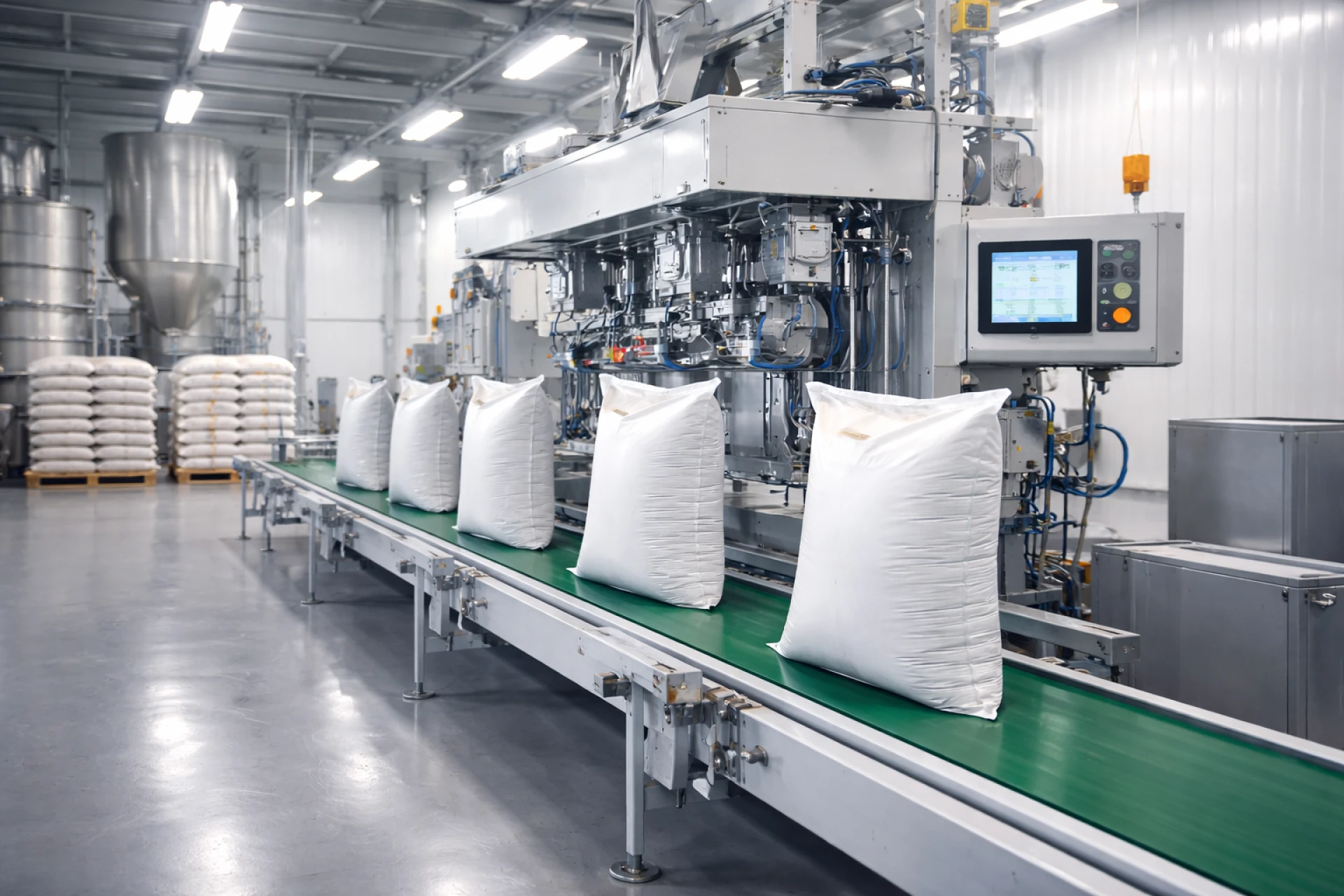

As industrial production scales up, packaging becomes a bottleneck if it relies on manual or outdated systems. Automatic bagging machines solve this problem by delivering speed, accuracy, consistency, and operational safety. For manufacturers handling bulk powders, granules, seeds, cement, feed, or chemicals, understanding how automatic bagging machines work and which type fits your operation is essential before making a purchase.
This article explains automatic bagging machines in detail, covering their working process, main types, industrial applications, and selection criteria. The content is written to match both informational and commercial search intent, helping decision-makers move from research to action.
What Is an Automatic Bagging Machine?
An automatic bagging machine is an industrial packaging system designed to automatically weigh, fill, seal, and discharge bags with minimal human involvement. These machines are built for high-volume operations where speed and precision are non-negotiable.
Unlike semi-automatic systems, automatic bagging machines integrate multiple stages into one continuous workflow. Bag feeding, material dosing, weighing, sealing, and conveying are synchronized through PLC-controlled automation.
Modern industrial setups often rely on an Auto Bagging Machine to maintain consistent output while reducing labor dependency and material loss.
How Automatic Bagging Machines Work
Although designs differ by material and bag type, the core working principle remains consistent across most systems.
1. Bag Feeding and Positioning
Empty bags are automatically picked from a bag magazine and positioned at the filling spout. This step removes manual bag handling, reducing operator fatigue and errors.
2. Material Feeding and Weighing
Material flows into the bag through gravity feed, auger feed, or belt feed systems. Integrated load cells ensure precise weight measurement before the bag is released.
3. Filling and Flow Control
The machine adjusts feeding speed dynamically to maintain accuracy. Coarse and fine feeding stages help prevent overfilling.
4. Bag Sealing or Closure
Depending on the bag type, sealing may involve stitching, heat sealing, or valve self-closing mechanisms.
5. Conveying and Discharge
Filled bags are transferred via conveyor belts for palletizing, stacking, or storage.
This fully automated cycle allows continuous, repeatable packaging with minimal downtime.
Main Types of Automatic Bagging Machines
Choosing the right type depends on material behavior, bag format, and production capacity.
Open-Mouth Automatic Bagging Machines
These machines fill bags from the top and seal them after filling. They are ideal for:
- Grains and cereals
- Sugar and salt
- Animal feed and pellets
- Fertilizers
They support multiple bag sizes and offer high flexibility.
Valve Bag Automatic Bagging Machines
Designed for fine powders, these machines fill through a valve that automatically closes after filling. Common applications include:
- Cement and white cement
- Fly ash and dry mortar
- Chemical powders
Valve bag systems are preferred where dust control and high speed are critical.
Auger Filling Bagging Machines
Auger-based systems are used for powders that require precise dosing. They are suitable for:
- Chemical powders
- Additives and premixes
- Fine industrial materials
Auger control ensures accurate and repeatable fills.
Gravity Feed Bagging Machines
Best for free-flowing granules and pellets. These systems are mechanically simple and highly efficient for high-volume operations.
Key Industrial Applications
Automatic bagging machines are used across multiple industries due to their adaptability.
Agriculture and Food Processing
Used for wheat, rice, seeds, grains, sugar, and flour in bulk packaging operations.
Construction and Building Materials
Cement, gypsum, mortar, and mineral powders rely on valve bag systems for dust-free packaging.
Chemical and Industrial Manufacturing
Granules, resins, pellets, and industrial powders require controlled and consistent packaging.
Feed and Fertilizer Industry
Animal feed, compost, and fertilizers benefit from high-speed, accurate bagging.
Benefits of Automatic Bagging Machines
Improved Productivity
Automatic systems can pack hundreds of bags per hour without fatigue or inconsistency.
Higher Accuracy
Integrated weighing systems reduce product giveaway and ensure compliance with weight regulations.
Reduced Labor Costs
One operator can oversee an entire bagging line, significantly lowering manpower requirements.
Cleaner Operations
Dust-controlled designs improve workplace safety and product hygiene.
Scalability
Automatic bagging machines integrate easily with conveyors, palletizers, and warehouse automation systems.
Automatic vs Semi-Automatic Bagging Machines
Automatic systems are designed for scale. Semi-automatic machines require manual bag placement and removal, which limits speed and increases labor costs.
If your operation handles consistent, high-volume output, a fully automatic system offers better long-term ROI.
Many industrial buyers transition to an Auto Bagging Machine once labor costs and demand exceed manual handling limits.
How to Choose the Right Automatic Bagging Machine
Material Characteristics
Powder, granule, pellet, or mixed material behavior determines the feeding mechanism.
Bag Type and Size
Open-mouth, valve bags, PP woven bags, or paper bags require different machine configurations.
Output Requirements
Define realistic bags-per-hour targets based on production forecasts.
Automation Level
Fully automatic systems cost more upfront but offer faster ROI for medium and large plants.
Dust Control and Safety
Essential for cement, chemicals, and fine powders.
Common Mistakes Buyers Make
- Choosing speed without considering material behavior
- Ignoring future capacity expansion
- Underestimating maintenance and cleaning requirements
- Selecting generic machines instead of application-specific designs
A well-matched machine performs better and lasts longer.
Final Thoughts
Automatic bagging machines are no longer optional for competitive industrial operations. They improve efficiency, accuracy, safety, and scalability across multiple industries. Understanding the types, working process, and applications helps buyers avoid costly mistakes and choose systems that deliver long-term value.
When selected correctly, automatic bagging machines become a core component of a reliable, modern packaging line.
























Sign in to leave a comment.