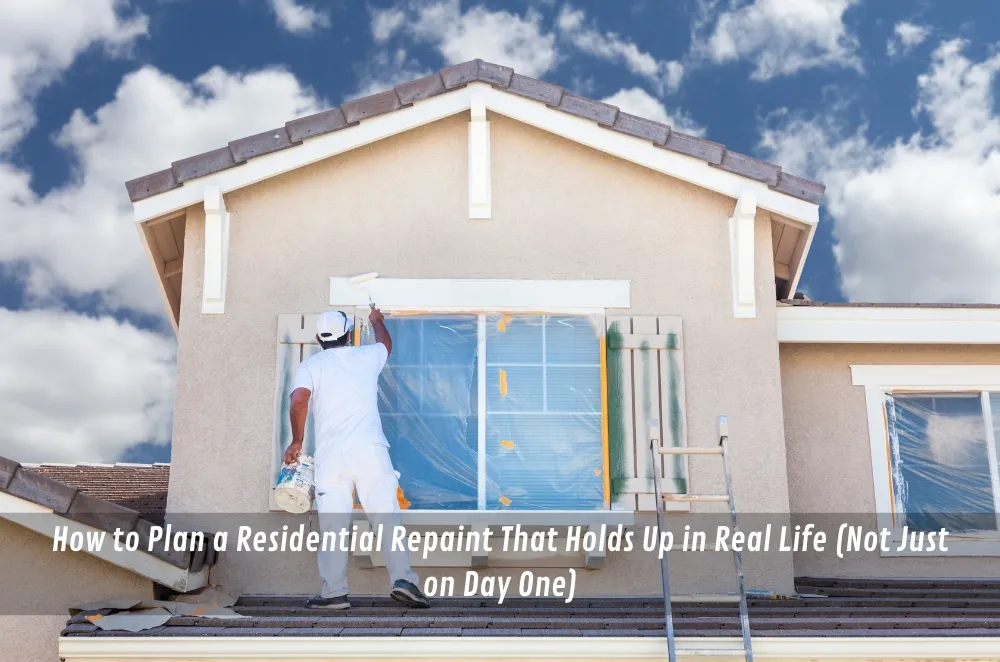

Fresh paint can make a home feel calmer, brighter, and easier to live in.
But the difference between “nice for a week” and “still looks sharp next year” is rarely the colour.
If you’re comparing residential painting services from experienced painting contractors in Sydney, it helps to understand what actually drives durability, mess, and downtime, especially when you’re living in the home while work happens.
This guide focuses on the decisions that prevent peeling, patch telegraphing, lap marks, and that dull, grubby look that arrives sooner than expected.
What “good” looks like after 6–12 months
A successful repaint isn’t judged when the last drop sheet is folded.
It’s judged after summer humidity, winter condensation, kids’ hands on hallways, and the first time you wipe a scuff off the wall.
Look for these “later” outcomes:
- Consistent sheen and colour in changing light. Rooms with big windows show every overlap if cutting-in and rolling weren’t managed well.
- Cleanability where it matters. The right finish in high-traffic zones should tolerate gentle wiping without burnishing (shiny patches) or colour lift.
- Edges that stay crisp. Skirting lines, cornices, and door frames shouldn’t “fuzz out” because of rushed prep.
- No surprise texture changes. Poor patching and sanding can show as ripples once paint dries and light hits sideways.
- A stable surface. Bubbling, flaking, or powdery chalking usually points to moisture issues, incompatible coatings, or missing primer steps.
Sydney homes add their own curveballs: coastal salt air in some suburbs, moisture in older bathrooms, and the reality of tight apartment access and strata rules.
The prep-to-finish decisions that actually change durability
Most people spend the majority of their attention on colour.
Professionals spend it on the layers you don’t notice.
Start with the substrate, not the paint tin
Paint is a film, and films only behave as well as the surface beneath them.
If walls are dusty, chalky, glossy, or damp, the best topcoat in the world still struggles to bond.
A practical checklist before any “nice” finishes are discussed:
- Check for moisture sources. Leaks, failed silicone, rising damp, and poor ventilation should be addressed first or you risk blistering and mould return.
- Identify old paint type and condition. Flaking or powdering areas need stabilising; glossy enamel trims may need deglossing or adhesion primer.
- Decide what gets repaired vs replaced. Sometimes a tired door or swollen skirting will never look “new” no matter how carefully it’s painted.
Primer isn’t optional when conditions change
Primer is about bonding and sealing, not just “extra paint.”
New plaster, stained patches, bare timber, repaired areas, and chalky exteriors often need a primer or sealer so the finish coat dries evenly and sticks properly.
Skipping this step can create:
- flashing (patches that look different)
- uneven sheen
- tannin bleed (yellow/brown stains coming through)
- early peeling on trims and doors
Choose sheen for function, not fashion
Flat/matt hides wall imperfections but can mark more easily.
Low-sheen is often the sweet spot for living areas, while semi-gloss on trims improves wipe-ability but shows dents and brush marks if prep is weak.
One useful compromise is to keep lower sheens on broad walls and higher sheens on wipe-prone surfaces like skirting, doors, and kitchen/bath trims.
The “mess and downtime” plan is part of quality
Good work is as much logistics as brush technique.
Protecting floors properly, managing dust from sanding, and sequencing rooms to keep the home functional prevents rushed decisions later (like painting over still-damp filler or cutting corners because everyone’s exhausted).
Operator Experience Moment: On occupied repaints, the biggest turning point is usually not the first coat, it’s the moment someone realises doorways, light fittings, and hallway edges need a system, not improvisation. When access gets tight, a tidy, repeatable routine keeps finish quality consistent across rooms. The calm jobs are the ones where prep, protection, and room order were decided before the first roller came out.
Common mistakes that blow out timelines (and budgets)
Most repaint blowouts come from small assumptions that stack up.
Avoid these common traps:
- Choosing colour before testing it in the room
Paint looks different at 9am vs 6pm, and different again under warm LEDs.
A couple of test patches (properly applied, not tiny dabs) can prevent a full repaint. - Underestimating repairs and sanding time
If walls have dents, old picture hooks, or uneven texture, repairs can take longer than painting.
Rushed sanding shows up as shadows and ripples once the wall is finished. - Painting over bathroom issues without fixing ventilation
If mould keeps returning, paint isn’t the root cause.
Improve extraction fans, seal gaps, and address moisture first. - Not matching products to surfaces
Exterior timber, masonry, glossy trims, and new plaster behave differently.
Incompatible products can peel, crack, or stay tacky longer than expected. - Ignoring access constraints (especially apartments)
Lift bookings, parking, working hours, stairwell protection, and waste removal can be the difference between a smooth job and constant stoppages. - Assuming “two coats” is always enough
Some colours, substrate changes, and high-contrast shifts need extra steps to avoid patchiness.
A realistic scope prevents resentment on both sides.
Choosing the right approach or provider: decision factors
There’s no single “best” way to repaint a home, but there are reliable decision factors that predict the result.
1) Scope clarity: what’s included and what isn’t
Ask for a scope that separates:
- prep and repairs
- primer/sealer steps
- number of coats per surface
- trims, doors, ceilings, feature walls
- protection and clean-up
- small exclusions (e.g., high ceilings, significant carpentry fixes, active leaks)
If it helps to see what a typical scope includes before comparing quotes, the <a href="https://magictouchpainting.com.au/residential-painting/" rel="sponsored">Magic Touch Painting residential service guide</a> is a straightforward reference for what’s usually covered.
2) Surface condition and risk tolerance
If the home has:
- older flaky coatings
- persistent bathroom moisture
- sun-baked exterior timber
- heavy staining or nicotine marks
…then the safest plan often involves more prep and specific primers, even if it costs more up front.
The trade-off is simple: cheaper upfront can mean paying twice.
3) Who lives (or works) in the space during the job
Occupied repaints need:
- room-by-room sequencing
- strict protection for floors and furniture
- odour management (ventilation, low-VOC options where appropriate)
- daily pack-down so the home stays usable
A provider who can describe their routine clearly is usually a safer bet than one who only talks about “finishes.”
4) Finish expectations: “good,” “great,” or “gallery”
Not every wall needs a flawless, raking-light finish.
But if you want premium results in feature areas (entry halls, open-plan living, stairwells), budget for extra prep and controlled lighting checks.
5) Scheduling realism
Weather, drying time, and access all affect schedules.
A quote that acknowledges cure times and practical constraints can be more trustworthy than an overly optimistic timeline.
Practical Opinions
Prep quality beats premium paint every time.
In lived-in homes, sequencing matters as much as workmanship.
If moisture is present, solve that first or expect disappointment.
A simple 7–14 day plan before the first brushstroke
This is a low-stress way to prepare without overthinking.
Days 1–2: Define the goal
- Decide whether the goal is “freshen,” “sell-ready,” or “long-term durability.”
- Walk the home and list surfaces: walls, ceilings, trims, doors, feature areas, external elements.
Days 3–4: Identify risks
- Note peeling, stains, hairline cracks, mould, and damp patches.
- Check bathrooms and laundry ventilation; fix obvious moisture issues early.
Days 5–6: Choose finishes by use
- Pick wall sheen based on traffic (hallways and kids’ rooms need more cleanability).
- Decide whether trims/doors stay the same colour or change (changes often require more prep).
Days 7–9: Test colour properly
- Paint two test patches per key room on different walls.
- View in daylight, evening light, and under your usual lamps.
Days 10–12: Lock the scope and logistics
- Confirm what furniture moves, what stays, and what gets covered.
- For apartments, check lift bookings, work hours, and protection requirements.
Days 13–14: Final readiness
- Clear fragile items, wall art, and small clutter.
- Decide the room order so daily life stays functional.
One small tip that saves friction: set expectations for noise, dust, and access to power points from the start.
Local SMB mini-walkthrough (Sydney, NSW)
A two-storey semi in the Inner West wants a full interior refresh while the family stays put.
They start with the hallway, stairs, and open-plan living because those areas set the tone.
Stronger cleanability is chosen for the corridor walls where bags and hands constantly brush past.
Bedrooms are scheduled next, one at a time, with a clear “sleep-ready by night” routine.
Bathroom paint is delayed until ventilation is improved and silicone is renewed where needed.
Parking and daily pack-down are planned upfront to avoid disrupting neighbours and school runs.
Key Takeaways
- Durability comes from substrate checks, prep, and the right primer steps, not just the topcoat.
- Sheen selection should match how each space is used, especially hallways, trims, and wet areas.
- Clear scope and logistics (occupied living, apartment access) prevent most repaint disputes.
- A 7–14 day plan reduces stress and leads to cleaner finishes with fewer surprises.
Common questions we hear from Australian businesses
Q1) How do you compare quotes without getting lost in the details?
Usually, the easiest method is to compare scopes line-by-line: prep, primers, number of coats, and what’s excluded. Next step: ask each provider to confirm the same inclusions in writing so you’re comparing like-for-like. In most Australian cities, access and scheduling (parking, strata hours, weather) can explain price differences as much as materials do.
Q2) What’s the biggest sign a repaint won’t last?
In most cases, it’s paint going onto a surface that wasn’t properly cleaned, deglossed, sealed, or dried, especially where moisture is involved. Next step: identify and fix any damp sources (leaks, poor ventilation, failed seals) before committing to a start date. It depends on the building type, but apartments and older homes around Sydney often have extra constraints that make prep and drying time more important.
Q3) Can you live in the house while it’s being painted?
Usually, yes, if the job is sequenced room-by-room with clear protection and daily clean-up expectations. Next step: agree on the room order and what “usable by evening” means (beds back, walkways clear, doors operable). In most cases in Sydney, tight access, school routines, and neighbours close by mean logistics matter as much as the painting itself.
Q4) Do darker colours really require more work?
It depends on the colour change, the wall condition, and the lighting; dark or high-contrast shifts can reveal patching and roller marks more easily. Next step: do proper test patches and discuss whether additional prep or coats are needed for an even finish. In most cases, strong Australian daylight through large windows is what exposes inconsistencies, especially in open-plan living areas.


























Sign in to leave a comment.