
Bumble bees are the "gentle giants" of the garden. With their fuzzy bodies and clumsy flight patterns, they are a favorite for nature lovers—but their size often sparks a common question: Do bumble bees have stingers?
Whether you've spotted a big black bumble bee or are worried about a nest in your yard, this guide covers the facts about bumble bee stings, which ones are "safe" to handle, and what to do if you get stung.
The Short Answer: Yes and No
Not every bumble bee you see is capable of stinging. In the world of bumble bees, the ability to sting is determined entirely by gender.
Do All Bumble Bees Have Stingers?
No. Only female bumble bees (workers and queens) have stingers. Male bumble bees (drones) do not have a stinger and are completely harmless to humans.
Why is this? A stinger is actually a modified egg-laying organ called an ovipositor. Since males don’t lay eggs, they never developed the anatomy to sting.
Anatomy of a Bumble Bee Sting
If you’ve ever been stung by a honey bee, you know they usually die afterward because their barbed stinger gets stuck in your skin. Bumble bees are different.
Do Bumble Bees Have Barbed Stingers?
Unlike honey bees, bumble bees have smooth stingers.
- Honey Bees: Have barbs that hook into the skin, pulling out the bee's abdomen when it flies away (killing the bee).
- Bumble Bees: Have a needle-like, smooth stinger. This allows them to sting multiple times without losing their stinger or harming themselves.
Do Big Bumble Bees Have More Painful Stings?
The size of the bee doesn't necessarily dictate the pain level. However, Queen bumble bees are the largest and do possess stingers, though they are rarely seen outside the nest once it is established. Most "big" bumble bees you see on flowers are female workers doing their job.
Common Questions & Myths
Do Black or "Fuzzy" Bumble Bees Sting?
Color and "fuzziness" are just traits of different species. Whether it’s a big black bumble bee or a bright yellow fuzzy bumble bee, the rule remains the same: females sting, males don't.
Do Baby Bumble Bees Have Stingers?
"Baby" bees are actually larvae that live inside the nest and look like small white grubs. They do not have stingers. However, once they emerge as adult females, their stingers are ready to go.
Are They Aggressive?
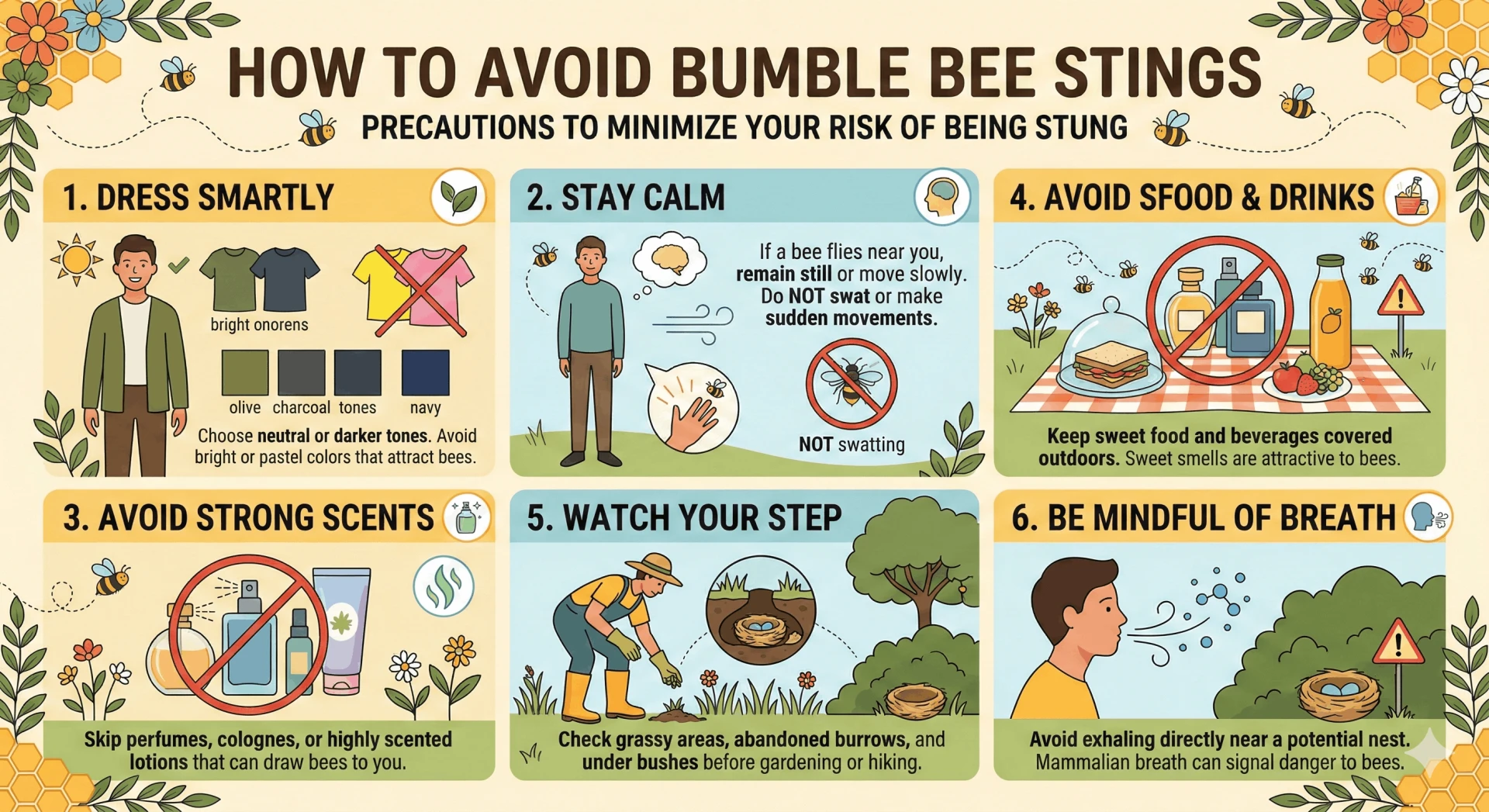
Bumble bees are incredibly docile. While a wasp might chase you away from a soda can, a bumble bee is usually only interested in pollen. They typically only sting if:
- Their nest is directly disturbed.
- They are stepped on or squeezed.
- They feel trapped (e.g., in your hair or clothing).
How to Tell if a Bumble Bee is Male or Female
It can be tough to tell at a glance, but here are two tricks:
- The Legs: Female bumble bees have "pollen baskets"—shiny, flat sections on their back legs where they store pollen. Males do not.
- The Face: Many male bumble bees have a "mustache" (extra yellow hair on their faces).
What to Do if You Get Stung
If you are one of the unlucky few to get stung, don't panic.
- Wash the area with soap and water.
- Apply a cold compress to reduce swelling.
- Use an antihistamine if the itching is bothersome.
- Watch for allergies: If you experience difficulty breathing, swelling of the throat, or dizziness, seek medical attention immediately.
Final Thoughts
Bumble bees are essential pollinators that generally want nothing to do with humans. As long as you give them space—especially near their nests—you can enjoy their presence in your garden without fear.




























Sign in to leave a comment.