
Search engines like Google help users find relevant information within seconds. But how do they actually decide which website appears first? Understanding the basics can help you improve your website’s visibility and attract more organic traffic.
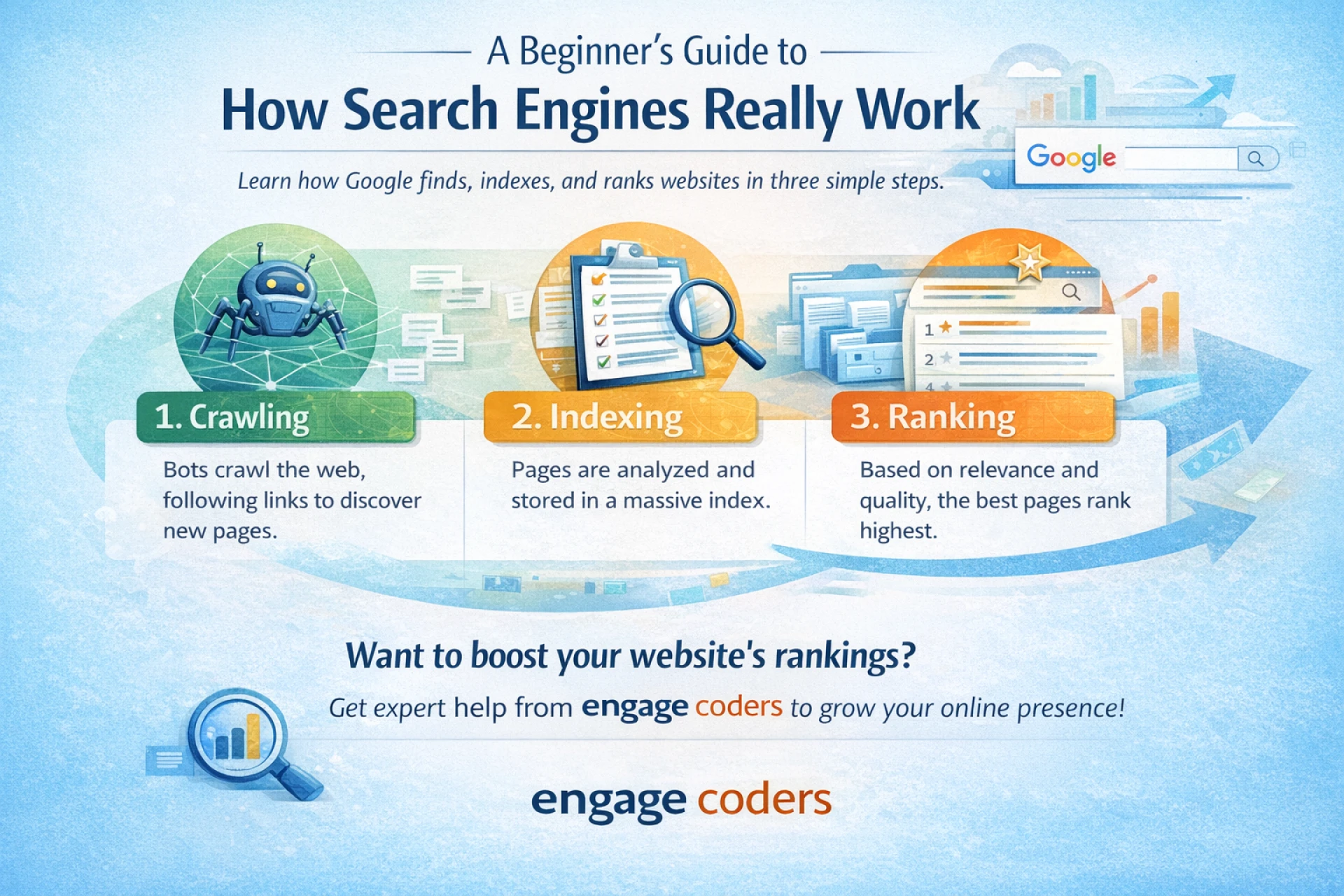
Search engines work in three main stages: crawling, indexing, and ranking.
1. Crawling
Search engines use automated bots, often called spiders, to scan the internet. These bots follow links from one page to another, discovering new and updated content. If your website has clear navigation and internal links, it becomes easier for these bots to explore your pages.
2. Indexing
Once a page is discovered, search engines analyze its content and store it in a massive database known as the index. During this stage, they evaluate keywords, headings, images, and overall structure to understand what the page is about. If your content is well-optimized and valuable, it has a better chance of being indexed properly.
3. Ranking
When someone types a query into Google, the search engine scans its index. It then ranks pages by relevance, quality, authority, and user experience. Factors such as mobile-friendliness, page speed, backlinks, and content clarity all influence rankings.
For beginners, the key takeaway is simple: create helpful, well-structured content. Answer user questions and follow SEO best practices.
If you want expert help to boost rankings and grow your online presence, connect with engage coders today. Build a smarter digital strategy.






























Sign in to leave a comment.