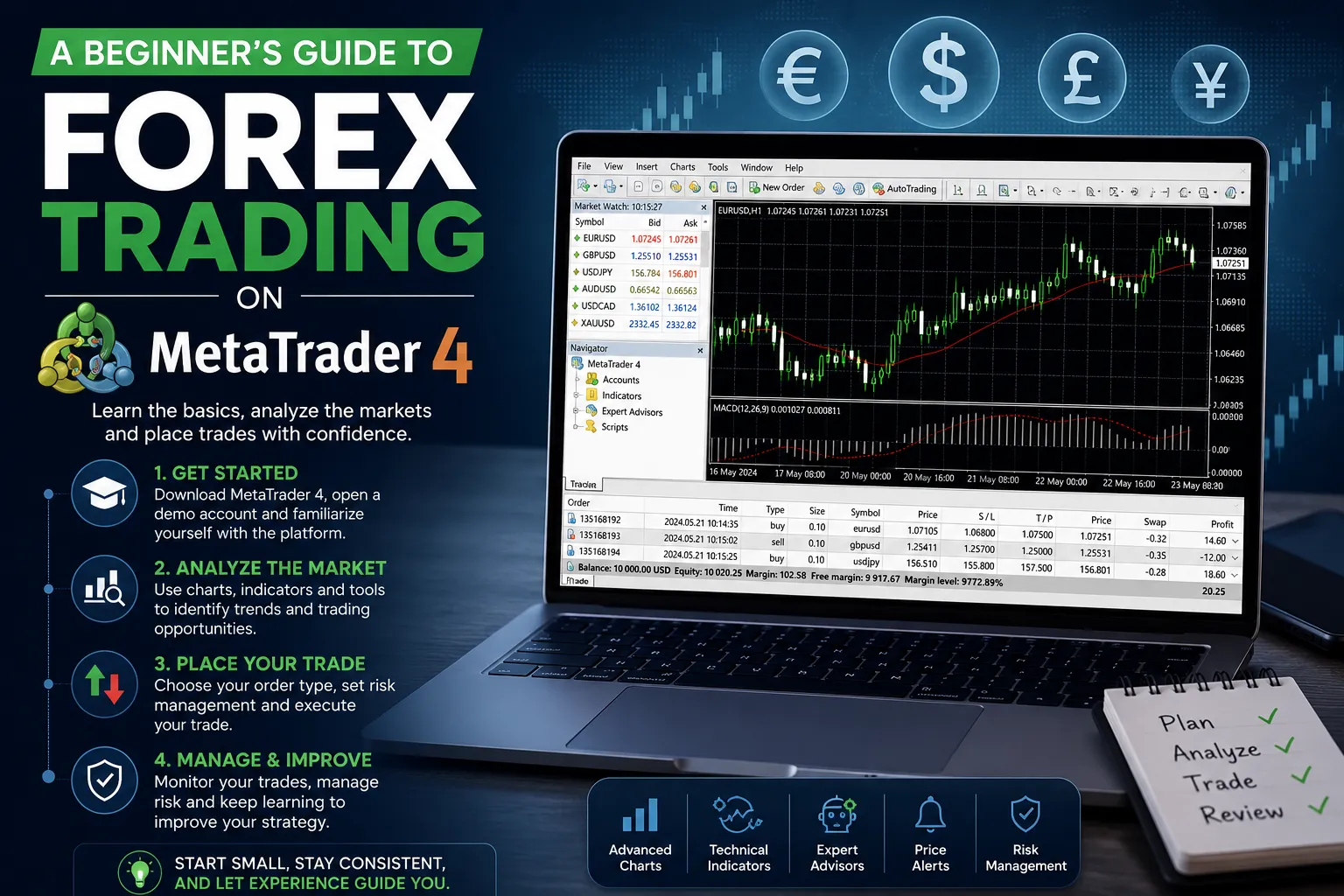

Forex trading can look intimidating at first — charts full of candlesticks, unfamiliar terms like "pips" and "lot size," and a market that never sleeps. But with the right platform and a clear starting point, getting into forex is far more approachable than it seems. That's where MetaTrader comes in.
What is Forex Trading?
Forex (foreign exchange) trading is the buying and selling of currency pairs, such as EUR/USD or GBP/INR, with the goal of profiting from changes in exchange rates. It's the largest financial market in the world, with trillions of dollars traded daily, and it's accessible 24 hours a day, five days a week.
Why MetaTrader is the Go-To Platform
MT4 and MT5 have become the industry standard for retail forex trading, and for good reason:
- Intuitive charting tools — customizable charts with dozens of built-in technical indicators
- One-click trading — execute buy/sell orders instantly without switching screens
- Expert Advisors (EAs) — automate your strategies so trades execute even when you're away from your desk
- Mobile and desktop access — monitor and manage positions from anywhere
- Demo accounts — practice with virtual funds before risking real capital
Getting Started: Step by Step
1. Open a trading account You'll need a Demat and trading account with a broker that supports MetaTrader. This is usually a quick, fully digital process requiring your PAN, Aadhaar, and bank details.
2. Download MT4 or MT5 Both are free to download on desktop, web, and mobile. MT5 is the newer platform with more asset classes and advanced order types, but MT4 remains hugely popular for its simplicity and vast library of custom indicators.
3. Start with a demo account Before trading real money, spend time on a demo account. Practice placing orders, reading charts, and understanding how leverage affects your position size.
4. Learn the basics of a currency pair Every pair has a base currency and a quote currency (e.g., in EUR/USD, EUR is the base). Understanding pip movement and how spread affects your entry and exit is essential before going live.
5. Set a risk management plan This is the step beginners skip most often — and regret it. Decide in advance how much of your capital you're willing to risk per trade (many traders use 1–2%), and always use a stop-loss order to protect against unexpected market moves.
Common Beginner Mistakes to Avoid
- Overleveraging — high leverage amplifies both gains and losses
- Trading without a plan — entering trades based on emotion rather than strategy
- Ignoring economic news — major announcements (interest rate decisions, employment data) can cause sharp volatility
- Skipping the demo phase — real money trading requires real discipline; build that on a demo account first
Final Thoughts
Forex trading on MetaTrader gives beginners a genuine edge: a stable, well-supported platform with the tools to learn, test, and grow as a trader. Start small, prioritize risk management over quick profits, and treat your first few months as an education rather than an income stream.
Ready to get started? Open your Demat and trading account today and download MT4 or MT5 to begin practicing on a demo account.





























Sign in to leave a comment.