
Choosing between composite decking and traditional wood involves more than aesthetics. Climate conditions—such as humidity, temperature swings, UV exposure, and precipitation—play a significant role in long-term performance. For residents and commercial property owners, evaluating both options through a climate-focused lens helps reduce maintenance issues and ensures durability. This article compares professional composite decking and wood across different climates, highlighting their strengths, weaknesses, and practical considerations. The content addresses real-world concerns such as moisture resistance, lifespan, heat retention, and maintenance needs.
Composite Decking Performance in Different Climates
Composite decking combines recycled wood fibers with plastics, creating a durable material engineered for outdoor exposure. Its climate performance often surpasses natural wood in consistency.
Moisture and Humidity Resistance
In humid regions, wood tends to swell, warp, and attract mold. Composite decking resists these issues because of its polymer content and protective cap. This makes it a practical choice for coastal or tropical areas.
Heat Retention in Hot Climates
Composite boards absorb more heat than many wood species, which can make surfaces uncomfortable in direct sunlight. Light-colored composite boards reduce this effect, but heat absorption remains a consideration for desert climates.
Longevity in Seasonal Climates
Where freeze-thaw cycles are common, composite decking offers stability. Its resistance to splitting and cracking ensures decks remain functional across multiple winters without structural compromise.
Traditional Wood Performance in Different Climates
Wood decking appeals to property owners who prefer a natural look and lower upfront cost. Its performance, however, varies widely depending on climate conditions and maintenance.
Response to Moisture
In rainy or coastal regions, wood requires regular sealing to prevent rot and decay. Cedar and redwood perform better than untreated pine, but none are completely immune without consistent upkeep.
Behavior in High Heat
Wood stays cooler than composite materials in hot climates, making it more comfortable under bare feet. However, UV exposure fades its color quickly unless protective stains are applied.
Durability in Seasonal Variations
Freezing temperatures cause wood to expand and contract, which often leads to surface cracks and splinters. Maintenance cycles shorten the lifespan if protective coatings are neglected.
Maintenance Requirements: Composite vs. Wood
Long-term care plays a decisive role in cost and usability. Composite and wood demand different approaches to upkeep.
Cleaning and Upkeep
- Composite decking requires simple washing with soap and water to remove dirt and mildew.
- Wood decking needs staining, sealing, and power washing at least once a year in harsh climates.
Cost Over Time
Composite comes with higher upfront expenses but lower ongoing maintenance. Wood starts cheaper but accumulates costs in staining, sealing, and potential replacement over the years.

Environmental Impact Considerations
Both materials raise environmental concerns that influence decision-making for eco-conscious property owners.
Composite Decking Sustainability
Composite boards often use recycled plastics and reclaimed wood fibers. This reduces landfill waste but limits recyclability at the end of their lifespan.
Wood Decking Sustainability
Wood is a renewable resource, and sustainably harvested lumber supports forest management practices. However, treatments, sealants, and shorter lifespans reduce its overall environmental efficiency.
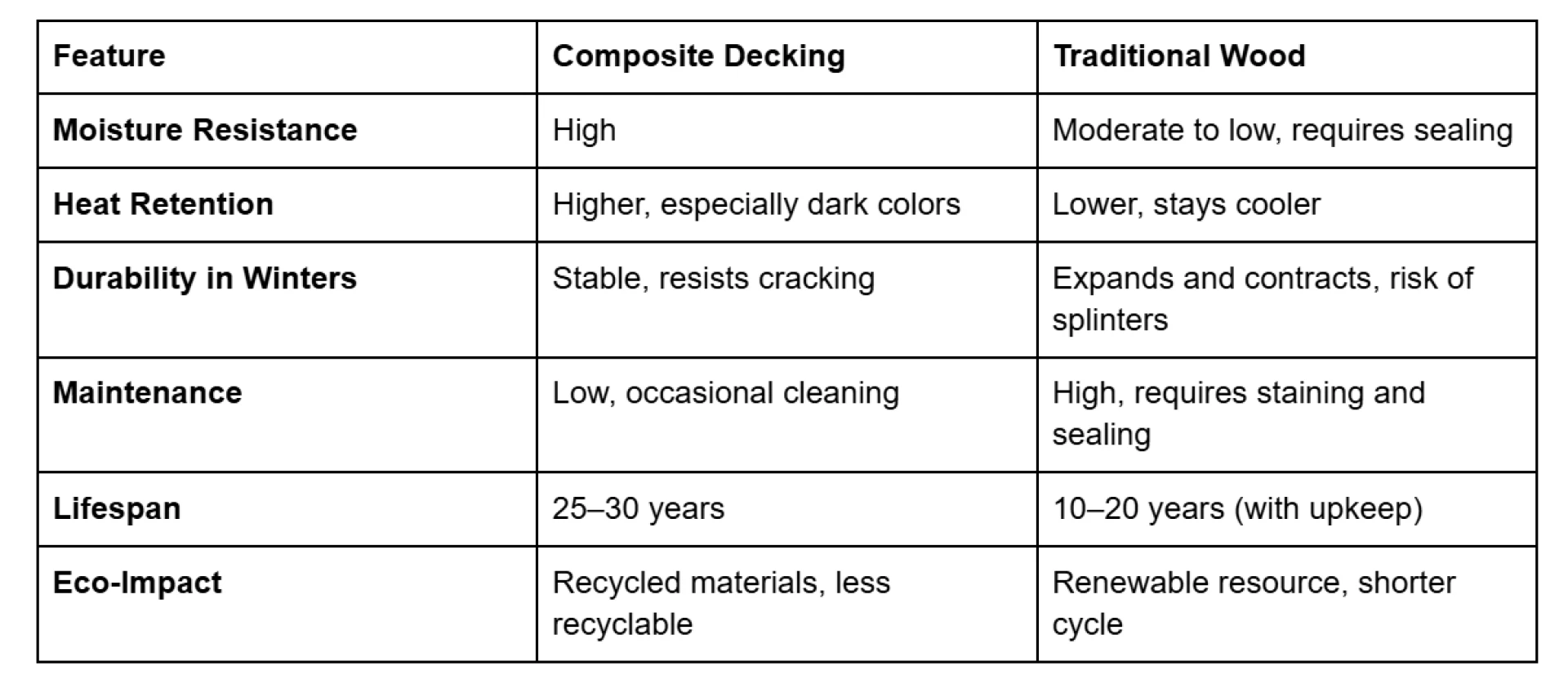
Comparison Table: Composite Decking vs. Wood Across Climates

Common Question: Which Material Lasts Longer in Extreme Climates?
Composite decking typically lasts longer in wet, cold, or highly variable climates. Its resistance to rot, warping, and splitting allows it to outperform wood in areas with heavy rainfall or harsh winters. Wood may still hold value in arid regions with minimal rainfall, provided owners commit to regular maintenance. Read more at: https://jpmhomeservice.com/?utm_source=backlink for complete details.
Conclusion
Composite decking and traditional wood each offer advantages, but climate determines which is more practical. In humid and cold-weather regions, composite decking reduces the risk of rot and structural failure. In hot, dry areas, wood remains cooler underfoot and may align with property owners who prefer natural materials. Maintenance expectations often become the deciding factor. Composite requires less attention, making it suitable for commercial properties or homeowners who want a long-term solution with fewer upkeep cycles. Wood, while offering lower initial costs, demands regular sealing and care to retain durability and appearance. By evaluating local climate conditions and balancing cost with maintenance commitments, property owners can choose a decking material that provides both comfort and longevity.
FAQs
Does composite decking fade in the sun?
Yes, composite decking can fade slightly over time, though capped boards resist UV damage better than uncapped versions.
Which decking type is safer in wet conditions?
Composite decking usually offers better slip resistance when wet, especially with textured finishes. Wood can become slippery unless treated or sanded regularly.
Can traditional wood decking be used in coastal areas?
Yes, but it requires frequent sealing and maintenance to protect against saltwater corrosion and moisture-driven decay.
How does snow and ice affect decking materials?
Composite decking withstands freeze-thaw cycles with fewer cracks. Wood often develops surface splits and requires seasonal resealing.
Is composite or wood more eco-friendly?
Wood is renewable and biodegradable, but requires chemicals for treatment. Composite reuses waste materials, offering sustainability benefits but limited recyclability after use.
Reviewer: Chloe Martinez brings 8 years of experience in home improvement. Feedback from Chloe helped shape this post to better support companies working to strengthen their reputation and expand their reach.




























Sign in to leave a comment.