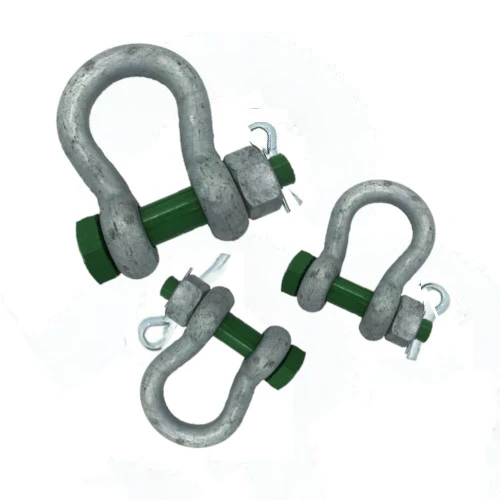

When it comes to lifting and rigging operations, the choice of equipment plays a critical role in ensuring safety and efficiency. Among the various tools available, lifting shackles stand out as essential components in a lifting system. These devices, designed to connect different pieces of rigging equipment, must be chosen with care to enhance safety and performance. This article delves into the intricacies of selecting the best lifting shackles, providing valuable insights for professionals in the industry.
Understanding Lifting Shackles
Lifting shackles are U-shaped devices with a pin or bolt across the open end, used to connect chains, ropes, and other lifting gear. They serve as a reliable link between the load and the lifting apparatus, ensuring that forces are distributed evenly during the lift. Shackles come in various shapes and sizes, with the most common being the bow shackle and the ** Dee shackle**. The bow shackle features a rounded shape, making it ideal for multi-directional loads, while the Dee shackle is more suitable for straight-line pulls.
Choosing the right type of shackle is crucial. For instance, bow shackles offer more versatility, allowing for the attachment of multiple lifting points. Conversely, Dee shackles are often favored for their compact design and ability to handle higher loads in a straight line. Understanding these differences is essential for any professional looking to optimize lifting operations.
Material Considerations
The material from which lifting shackles are made significantly influences their performance and durability. Most lifting shackles are constructed from high-grade steel, known for its strength and resilience. However, there are variations, including alloy steel and stainless steel, each offering distinct advantages.
Alloy steel shackles provide excellent strength-to-weight ratios and are often heat-treated for increased toughness. This makes them suitable for heavy-duty applications where reliability is paramount. On the other hand, stainless steel shackles are resistant to corrosion and are ideal for marine environments or applications where exposure to moisture is a concern. Choosing the right material is not merely a matter of preference; it can determine the shackle's lifespan and its ability to perform under specific conditions.
Load Capacity and Safety Factors
When selecting lifting shackles, understanding load capacity is vital. Each shackle comes with a Working Load Limit (WLL), which indicates the maximum load it can safely handle. It is essential to consider not only the weight of the load being lifted but also any additional forces that may be applied during the lift.
Moreover, safety factors are integral to lifting operations. These factors account for unexpected loads or conditions that may arise during lifting. It is common practice to choose shackles with a safety factor of at least five times the expected load. This means that if the anticipated weight is 1 ton, the chosen shackle should have a WLL of at least 5 tons. This precaution mitigates the risk of equipment failure, ensuring that lifting operations are conducted safely.
Types of Shackles and Their Applications
Different types of lifting shackles are suited for various applications. Bow shackles, for instance, are often used in rigging operations where a load may shift or change direction. Their design allows for flexibility in the lifting system, accommodating various angles. This makes them the go-to choice for construction sites, where loads can be unpredictable.
In contrast, Dee shackles excel in applications requiring a straight pull. Their design allows them to handle vertical loads effectively. They are commonly seen in heavy machinery applications, where the need for a secure connection is paramount. Understanding the intended application of the shackle is critical in making the best selection.
Inspection and Maintenance
Regular inspection and maintenance of lifting shackles are essential to ensure ongoing safety and reliability. Professionals should conduct thorough checks to look for signs of wear, corrosion, or deformation. Any shackle that shows significant damage should be immediately taken out of service and replaced.
Proper storage also plays a crucial role in maintaining the integrity of lifting shackles. It is advisable to keep them in a clean, dry environment to prevent corrosion and damage from external elements. Additionally, using protective coatings can further extend the lifespan of shackles, especially in harsh conditions.
Conclusion
Choosing the best lifting shackles is a complex process that requires careful consideration of various factors, including type, material, load capacity, and application. By understanding the nuances of lifting shackles, professionals can make informed decisions that enhance safety and efficiency in their operations. For those seeking high-quality lifting solutions, the UK Lifting Store offers a comprehensive range of lifting shackles designed to meet the diverse needs of the industry. By choosing the right shackles, operators can ensure that their lifting operations are both safe and effective, ultimately leading to improved productivity and peace of mind.




























Sign in to leave a comment.