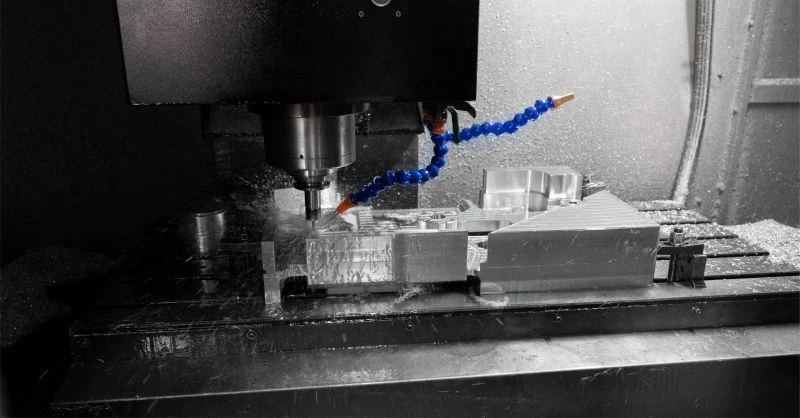

For procurement managers, engineers, and small manufacturers, the price of a custom metal part can feel like a puzzle. The good news is that pricing is built from transparent factors you can analyze. Typically, the total cost breaks down into material, manufacturing time, labor, tooling/setup, and finishing.
Below is a numbered list of the main contributors to pricing
Material Cost: The type and quantity of metal used. This often makes up a large portion of the price. Specialty materials (like aerospace-grade titanium or high-grade stainless) cost far more than common metals. Even within one category, different alloy grades have different prices, and metals are sold by weight.
Design & Complexity: How intricate the part is. Complex shapes with tight tolerances, deep pockets, or fine details take longer to machine or require special tools. Simplifying the design can significantly lower the hours on a CNC machine and reduce scrap rates. For example, removing unnecessary cutouts or using standard hole sizes speeds up production.
Manufacturing Process: The fabrication method (CNC machining, laser cutting, stamping, etc.) has its own cost structure. Processes with expensive tooling (stamping dies, injection molds) require high upfront costs but result in cheaper unit prices at high volumes. Flexible processes (CNC, 3D printing, laser) have lower setup cost but a higher cost per piece, which is often worthwhile for low-volume or highly-custom parts.
Labor & Machine Time: Skilled labor and machine runtime. Every hour a machinist programs or a machine cuts adds to the cost. Higher-skilled operators command higher wages, and multiple operator shifts may be needed for large jobs. Longer run times or multiple setups increase cost linearly. In practice, shops bill machine-hours and man-hours, so cutting the cycle time or automating operations can reduce the quote.
Setup & Tooling Fees: This includes custom fixtures, jigs, or machine programming. Setup fees are fixed per job and must be paid regardless of quantity. Once the machine is programmed or the fixture is made, additional parts mostly just require material and run-time. Thus, a larger batch of parts spreads these fixed fees, reducing the cost per part.
Order Quantity: Volume discounts via economies of scale. Bulk orders drive down per-unit cost because fixed expenses (tools, programming) are shared by many pieces. A prototype or short run might have a per-unit cost dozens of times higher than a large production run for the same part.
Finishing & Quality Control: Additional services like heat treatment, surface coatings (anodizing, plating, painting), and final inspections raise the final price. Parts requiring specialized certifications (ISO, AS9100, etc.) will have higher costs due to extra documentation, testing, and traceability procedures.
Consider this scenario: if material is 40% of the total and labor is 20%, choosing a cheaper metal can slash a large portion of the quote, whereas small efficiency tweaks on machining might yield only modest savings. Strategic choices like substituting aluminum for steel where possible can have big impacts without compromising performance.
Practical Examples
Material Comparison: A small stainless steel bracket might cost more than an aluminum one of the same dimensions, simply because steel is heavier and harder to machine. Titanium brackets, meanwhile, would be even more expensive due to both material cost and machining difficulty.
Quantity Effect: If you order 100 parts versus 1000 parts, the price per part may drop by half or more, especially if the tooling/setup costs are high. For example, an initial setup cost of $1,000 spread over 100 parts adds $10 per part, but only $1 per part when spread over 1000.
Complexity Impact: A part with multiple deep holes and intricate contours can cost 2-3 times more than a simpler block shape. Even adding small features (like a groove or chamfer) can add minutes of machine time, cumulatively increasing cost.
Manufacturing Location and Outsourcing
Location can affect pricing too. For example, partnering with a Sheet Metal Fabrication Companies in China shop often yields lower labor and overhead costs. Chinese factories may offer cheaper quotes due to economies of scale and lower wage rates. However, consider shipping costs, import duties, and longer lead times, which add to the overall expense. Quality standards and communication should be weighed alongside price when outsourcing internationally.
Evaluating and Negotiating Quotes
When you receive a quote, ask the supplier to break down costs by category (material, labor, overhead, etc.) if possible. This transparency helps identify savings opportunities. To negotiate:
Adjust Design: Ask if simplifying the design (or splitting it into multiple components) could lower costs. Manufacturers often suggest design tweaks for cheaper production.
Material Substitution: Inquire about alternate materials (like a different aluminum alloy) that meet requirements at lower cost.
Volume Discounts: Consider ordering slightly more to trigger a lower price bracket. Alternatively, commit to future orders in exchange for a discount.
Consolidate Suppliers: If possible, use one supplier for multiple components to increase total volume and leverage better pricing.
Engaging early with your manufacturing partner on these points can save time and money. For example, a skilled fabricator may have leftover material or modular tooling that could reduce the quote if you adjust your order to use them.
Conclusion
Accurately estimating the custom metal parts price means understanding all these cost drivers. With this knowledge, engineers, procurement managers, and business owners can collaborate on design and ordering strategies that balance cost and quality. By communicating requirements clearly and exploring options (materials, processes, quantities), you ensure a fair price for your parts and smooth project execution.









Sign in to leave a comment.