Fasteners may seem like small components, but they are the backbone of construction, manufacturing, automotive, electronics, and countless other industries. From holding furniture together to ensuring the stability of skyscrapers, fasteners play a critical role in everyday applications. Understanding the different types of fasteners, their uses, and advantages can help you choose the right one for your project.
What Are Fasteners?
Fasteners are hardware devices that mechanically join or secure two or more objects together. Unlike adhesives, fasteners can often be removed or reused without damaging the materials being joined.
Common Types of Fasteners
1. Bolts and Screws
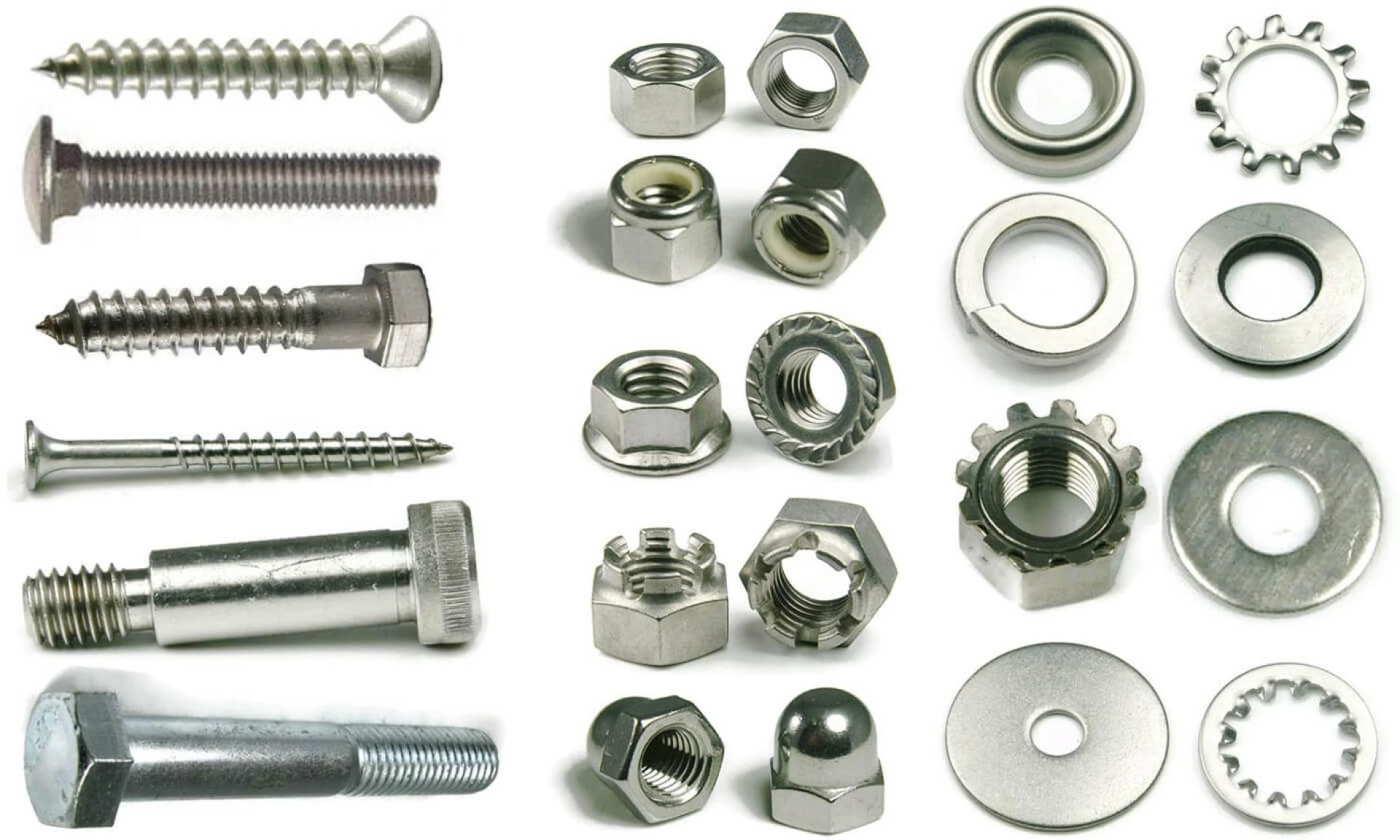
- Bolts: Require a nut to secure materials. They are often used in construction and heavy-duty applications.
- Screws: Designed to be driven directly into materials. They form their own thread and are widely used in woodworking, metalworking, and DIY projects.
Examples: Hex bolts, carriage bolts, lag bolts, wood screws, machine screws, self-tapping screws.
2. Nuts
Nuts are paired with bolts to secure joints. They come in many shapes and sizes depending on the application.
Common types:
- Hex nuts (standard, six-sided)
- Lock nuts (prevent loosening due to vibration)
- Wing nuts (hand-tightened, no tools needed)
- Cap nuts (protect exposed threads)
3. Washers
Washers are thin plates used under nuts or bolt heads to distribute load, reduce friction, and prevent loosening.
Types include:
- Flat washers
- Spring (lock) washers
- Fender washers (large diameter)
4. Rivets
Rivets are permanent mechanical fasteners. Once installed, they cannot be removed without being destroyed. They are ideal for applications that require durability, such as in aircraft, bridges, and sheet metal fabrication.
Types: Blind rivets, solid rivets, tubular rivets.
5. Anchors
Anchors are used when fastening into materials that are brittle or hollow, such as drywall, masonry, or concrete.
Examples:
- Plastic anchors
- Toggle bolts
- Expansion anchors
Choosing the Right Fastener
When selecting a fastener, consider:
- Material compatibility (steel, stainless steel, brass, nylon, etc.)
- Strength requirements
- Environmental factors (corrosion, temperature, vibration)
- Ease of installation & removal
Conclusion
Fasteners may appear simple, but they come in a wide range of types, each designed for a specific purpose. From everyday screws to heavy-duty bolts and permanent rivets, choosing the right fastener ensures safety, durability, and efficiency in your project.
Next time you pick up a screw or a bolt, remember—these small pieces of hardware hold our world together.

























Sign in to leave a comment.