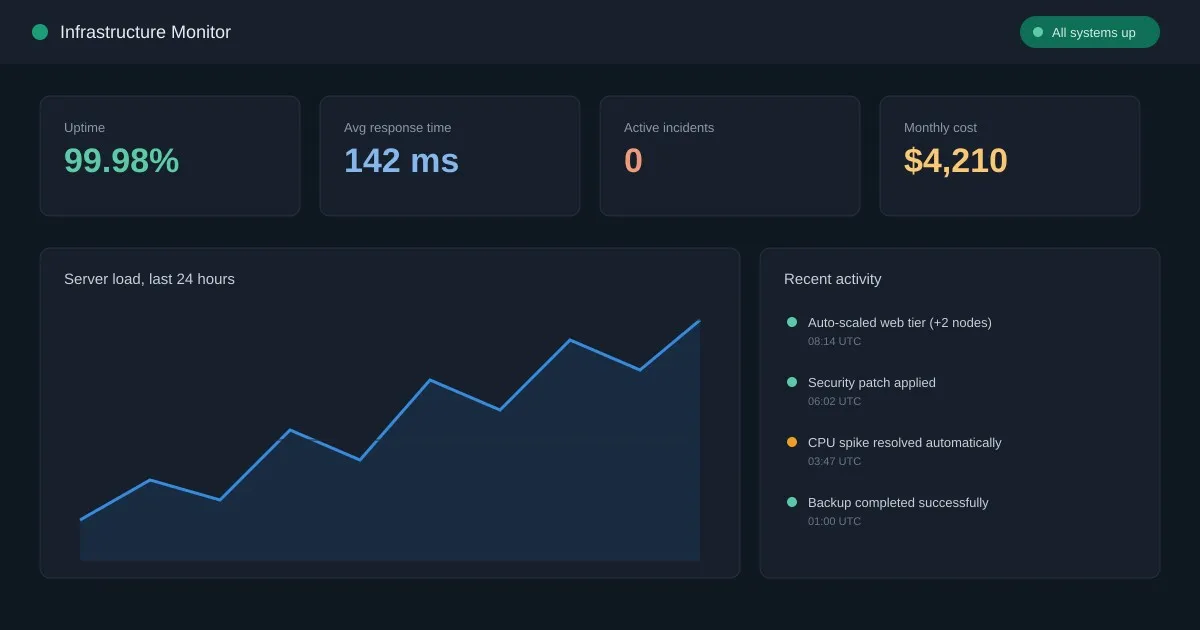

Modern businesses run on the cloud, but keeping infrastructure secure, fast, and always available is harder than it looks. This is where reliable cloud support services come in. Many growing companies face the same recurring problems: unexpected downtime, rising cloud costs, slow incident response, and compliance gaps that put sensitive data at risk.
The Real Problem: Reactive Cloud Management
Most in-house IT teams are stretched thin. They're focused on shipping product, not monitoring servers at 3 AM. This leads to a reactive support model, where problems get fixed only after customers notice something is broken. By then, the damage is already done: lost revenue, frustrated users, and a scramble to figure out what went wrong.
Common pain points businesses face include:
- Unplanned downtime that disrupts operations and damages customer trust
- Rising cloud spend with no clear visibility into where budget is going
- Slow incident resolution due to lack of dedicated monitoring
- Security and compliance risks, especially in regulated industries like healthcare and finance
- No proactive optimization, meaning performance issues pile up over time instead of being caught early
Why Proactive Cloud Support Services Beat Reactive Fixes
The solution lies in moving away from reactive firefighting and toward continuous, real-time monitoring paired with expert incident response, so problems are caught and resolved before they affect the business. This is the core idea behind good cloud support services: infrastructure health is managed proactively, not just patched after something breaks.
A strong cloud support model covers the full picture of infrastructure health:
- Real-time monitoring to catch issues before they escalate
- Expert problem-solving from certified AWS and Azure specialists
- Proactive performance and security enhancements rather than reactive fixes
- Cost control and reporting to keep cloud spend predictable and efficient
- Security and compliance monitoring, including HIPAA-ready support for healthcare and regulated industries
24/7 technical support, so infrastructure is never left unattended
Rather than treating cloud support as one-size-fits-all, the best providers tailor their approach by industry. Technology, retail, financial services, and healthcare all have different operational and compliance needs, and the support model should adapt accordingly.
Why This Matters for Growing Businesses
Startups and mid-sized companies often can't justify hiring a full internal DevOps or SRE team, but they still need enterprise-grade reliability. Partnering with a managed cloud support provider bridges that gap, giving businesses access to certified cloud experts, round-the-clock monitoring, and faster incident resolution without the overhead of building an internal team from scratch.
For companies tired of firefighting cloud issues instead of focusing on growth, shifting from reactive fixes to proactive, expert-managed support is often the difference between constant disruption and steady, reliable performance.























Sign in to leave a comment.