
Cotton is one of the most important and widely used natural fibers in the world, serving as a key raw material in the textile industry. Its production process involves several stages, starting from the planting of cotton seeds to the final harvesting of cotton bolls. This blog provides an overview of the cotton production process, details about the manufacturing report and process, an analysis of raw material costs, and insights into the latest news and trends in the cotton industry.
Cotton Planting and Growth
The journey of cotton begins with the planting of cotton seeds. Cotton is typically grown in warm climates with plenty of sunlight and moderate rainfall. The major cotton-producing countries include the United States, China, India, Pakistan, and Brazil. The planting season varies depending on the region, but it generally occurs in the spring.
Request For Sample: https://www.procurementresource.com/production-cost-report-store/cotton/request-sample
Once planted, cotton seeds germinate and grow into seedlings within a week or two. The plants require careful management to ensure healthy growth, including adequate water, nutrients, and protection from pests and diseases. Modern agricultural practices often involve the use of genetically modified cotton varieties that are resistant to pests and herbicides, improving yield and reducing the need for chemical inputs.
Flowering and Boll Development
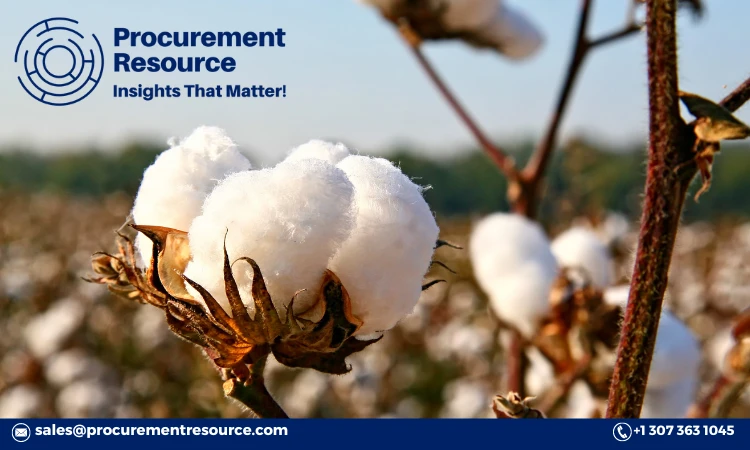
Cotton plants produce yellow or white flowers that bloom and are pollinated, leading to the development of cotton bolls. These bolls are protective capsules that contain the cotton fibers and seeds. The bolls mature over several weeks, turning from green to brown as they dry out. When fully mature, the bolls split open, revealing the fluffy white cotton fibers inside.
Harvesting
Harvesting cotton is a labor-intensive process that can be done manually or using mechanical harvesters. In many developing countries, cotton is still harvested by hand, which allows for careful selection of mature bolls but is time-consuming and labor-intensive. In contrast, mechanical harvesters are widely used in developed countries, enabling faster and more efficient harvesting. These machines use spindles or brushes to remove the cotton fibers from the plants, leaving the remaining plant material in the field.
Manufacturing Report and Process
The manufacturing process of cotton involves several steps, each critical to transforming raw cotton fibers into usable products. Here is a detailed overview of the key stages in cotton manufacturing:
Ginning
After harvesting, cotton bolls are transported to gins, where the ginning process takes place. Ginning involves separating the cotton fibers from the seeds and other impurities. Modern gins use advanced machinery to perform this task efficiently, producing clean, high-quality cotton fibers that are ready for further processing.
Spinning
The cleaned cotton fibers are then spun into yarn. Spinning is a complex process that involves drawing out and twisting the fibers to form a continuous strand of yarn. Various types of spinning techniques can be used, including ring spinning, rotor spinning, and air-jet spinning. The choice of spinning method depends on the desired characteristics of the final yarn.
Weaving and Knitting
Once spun into yarn, cotton can be woven or knitted into fabric. Weaving involves interlacing two sets of yarns, the warp and the weft, to create a fabric with a stable structure. Knitting, on the other hand, involves creating loops of yarn that are interconnected to form a flexible fabric. Both methods offer unique advantages and are used to produce a wide range of cotton textiles.
Dyeing and Finishing
After the fabric is woven or knitted, it undergoes dyeing and finishing processes to achieve the desired color and texture. Dyeing involves applying color to the fabric using various techniques such as vat dyeing, reactive dyeing, and pigment dyeing. Finishing processes may include treatments like softening, shrink resistance, and water repellency, enhancing the fabric\'s performance and appearance.
Quality Control
Throughout the manufacturing process, rigorous quality control measures are implemented to ensure that the final cotton products meet industry standards and consumer expectations. These measures include testing for fiber strength, uniformity, and colorfastness, among other parameters.
Raw Material Costs
The cost of raw materials is a significant factor in the overall production cost of cotton textiles. Several factors influence raw material costs, including:
Cotton Prices
The price of raw cotton fluctuates based on supply and demand dynamics in the global market. Factors such as weather conditions, pest infestations, and geopolitical events can impact cotton production and prices. For example, a drought in a major cotton-producing region can lead to reduced yields and higher prices.
Input Costs
The cost of inputs such as seeds, fertilizers, pesticides, and water also affects the overall cost of cotton production. Rising input costs can put pressure on farmers, leading to higher prices for raw cotton.
Labor Costs
Labor costs vary depending on the region and the method of harvesting. In countries where cotton is harvested manually, labor costs can be a significant component of the production cost. Mechanized harvesting can reduce labor costs but requires substantial investment in machinery and maintenance.
Transportation and Logistics
Transporting raw cotton from farms to gins and then to manufacturing facilities involves costs related to fuel, logistics, and storage. These costs can fluctuate based on fuel prices and logistical challenges.
Government Policies
Government policies and subsidies can also impact raw material costs. In some countries, governments provide subsidies to cotton farmers to support production and stabilize prices. Conversely, trade policies and tariffs can affect the cost of imported cotton.
Latest News
Staying updated with the latest news and trends in the cotton industry is crucial for stakeholders, including farmers, manufacturers, and investors. Here are some recent developments:
Sustainable Cotton Initiatives
There is a growing emphasis on sustainable cotton production practices. Organizations such as the Better Cotton Initiative (BCI) and Cotton Australia are promoting sustainable farming methods that reduce environmental impact and improve the livelihoods of cotton farmers.
Technological Advancements
Advancements in agricultural technology, including precision farming and biotechnology, are improving cotton yields and reducing the need for chemical inputs. These innovations are helping farmers produce more cotton with fewer resources.
Market Trends
The global cotton market is influenced by various trends, including changes in consumer preferences, fashion industry demands, and trade policies. For example, the increasing demand for organic and ethically produced cotton is shaping the market dynamics.
Climate Change Impact
Climate change poses significant challenges to cotton production, affecting weather patterns and increasing the risk of extreme weather events. Farmers and industry stakeholders are exploring adaptive strategies to mitigate the impact of climate change on cotton yields.
Conclusion
The cotton production process is intricate and multifaceted, involving numerous stages from planting to finished textiles. Understanding the manufacturing process, raw material costs, and staying informed about the latest news and trends is essential for navigating the complexities of the cotton industry. As the industry continues to evolve, sustainable practices and technological advancements will play a crucial role in shaping the future of cotton production.



























Sign in to leave a comment.