

Why Cybersecurity is important
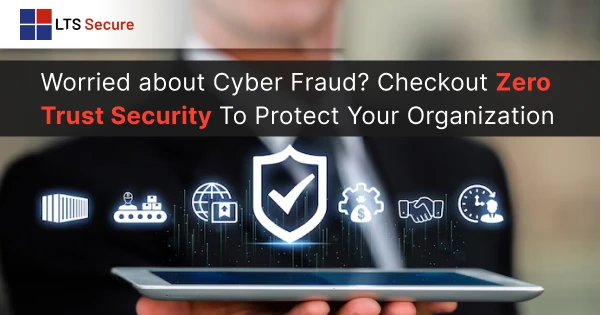
Living a life of complete distrust of everyone and everything is a sad existence. But, the so-called Zero Trust approach is the only viable option when it comes to cyber security. Its popularity is skyrocketing, which is not surprising.
The market for Zero Trust, which is projected to grow to around $52 billion by 2026, is founded on the maxim "never trust, always verify." This means that before granting access, all requests—even the most typical ones—must be confirmed. It is an ongoing process that never stops. Antivirus software and firewalls used to be sufficient. They no longer do. The future is in centralized monitoring and analytics.
According to Alper Kerman, a security engineer at the National Institute of Standards and Technology, "most of us conduct work remotely utilizing mobile devices" (NIST). "We use, exchange, and store digital information in a variety of cloud environments, including hybrid clouds, private clouds, and public clouds. As a result, a considerably greater footprint of applications and services may now be located and accessed from anywhere, despite the fact that the traditional boundaries have extended and become more muddled. Of course, with that growth have come increased cybersecurity vulnerabilities. We now have more potential targets and entry points. Also, we are particularly susceptible to the kinds of cybersecurity breaches that start within networks, or inside the perimeter.
Several authentication and authorization mechanisms are used in the continual verification at the heart of Zero Trust. They consist of single sign-on (SSO), identity and access management, and multi-factor authentication (MFA) (IAM). The objective is to ensure that only authorized users have access to information.
Here's a helpful approach to consider: A certain liquor store clerk always demands to check your ID, despite your greying hair and more obvious wrinkles. It doesn't matter if you find that bothersome or flattering; the policy is in place to lessen the danger to the store. The protection has already been shown to be valuable if it prevents that business from being penalized or shut down for selling alcohol to a minor posing as an elderly person.
It applies to all companies today that conduct business and communicate online, which is almost all of them. Cyberspace is filled with potential perils and evil actors, from virus and phishing attempts to password hacks and complex social engineering methods. So, it is far preferable to be safe than sorry. Because of this, firms of all sizes and types are adopting the Zero Trust model more frequently, especially in the age of remote work.
"With the most recent technologies at our disposal, we now have a duty to exercise caution. Hackers don't hold off till the budget is approved. Muhammad Khan
ZTNA (zero trust network access) is now the standard, whereas Virtual Private Networks (VPNs) used to be a prerequisite for off-site employees. It is a more advanced and efficient type of perimeter defense.
The following is a succinct summary of ZTNA provided by Gartner: For security engineers and personnel to oversee access methods, zero-trust network access centralizes and abstracts them. Based on the identities of the people and the devices they are using, as well as other factors like time and date, geolocation, previous usage patterns, and device posture, it allows the right access. The result is an environment that is more secure, resilient, flexible, and well-monitored.
The Zero Trust paradigm also emphasizes a notion known as "limiting the blast radius." You can understand this by comparing cyberattacks to actual explosives. The main goal is to lessen the effects of a breach. Because even the finest Zero Trust security measures aren't impenetrable.
There are seven main Zero Trust adoption techniques that enterprises should adhere to, according to Microsoft, which just issued an e-book titled "Examining Zero Trust: A Roundtable Conversation".
Use identities to limit access. Improve authentication techniques. Use password-free authentication.Create network segments within your company to assist defend against lateral attacks.Secure all work and personal electronics, including laptops, tablets, and smartphones.Split your applications to balance access and control better.Establish roles and access controls to prevent the spread of outdated, old accounts that are more susceptible to attacks.IOTAP offers Microsoft Office 365 Licensing, pricing in India, and Microsoft Intune licensing pricing in India for small-medium organizations and large firms.






Sign in to leave a comment.