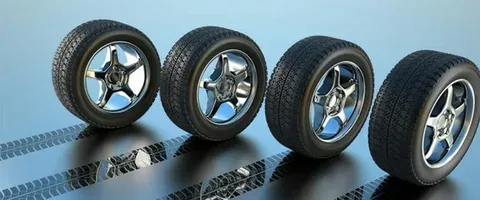


People check the tread; everyone knows that at least once in a while. They look with a coin or squint at the grooves, and that's fine. What gets missed way more often is what’s sitting under the rubber, though, in those layers a driver never really sees unless something’s already gone wrong. A tyre can still have plenty of tread and still be dangerously close to failing, which is not very helpful really. That’s the bit tread checks do not cover. So, tread depth isn’t the only number that matters. Structural failure isn’t the same as wear. Wear is slow and predictable, like when a tyre thins out over thousands of miles, and you get warnings along the way. Structural damage is different. It shows up in a single moment, usually after an impact, and the tyre can look normal after it. No visible cut, no clear dent, just a weakened point buried under the rubber waiting for its turn.
The Story of the Cords and Sidewall Bulges
Inside every tyre, there’s a ply cord layer, which consists of fine strands of steel or fabric that hold the whole thing together and allow it to carry air pressure without bulging outward. If you hit a kerb hard enough or drop into a pothole at the wrong angle, those cords can snap or stretch, and the outer rubber might not show much. The tyre may still hold air; it might even hold air for weeks, but the strength it was meant to have has disappeared. And it tends to fail exactly when you need it most, like at motorway speed, on a hot afternoon when pressure’s already rising, or during hard cornering, a bulge forms where broken cords can’t keep their shape against the internal pressure anymore. So, the rubber pushes outward instead. It can be small and easy to miss on a quick walk-round, especially if the light is poor or the wheel’s got grime on it. Reliable garages like HM Auto Centre see this all the time. A driver comes in for something random, like a bulb change or an oil change, and leaves being told a tyre needs replacing immediately because of a lump nobody at home had noticed.
Influence of Bad Roads
Bad roads don’t make things easier. Anyone driving regularly through a city, or out toward the outskirts on smaller B-roads, already knows the surfaces aren’t always what they should be. The numbers back it up too. Freedom of Information data obtained by BBC Scotland showed Scottish councils paid out £2,029,045 in pothole-related compensation between 2020/21 and 2024/25, and that’s only from 25 of Scotland’s 32 councils, so the real amount is higher still. One story that got picked up by the press involved a mobile hairdresser from Macduff. Her tyre was ripped open on a bend she couldn’t avoid, with a lorry coming the other way, leaving no safe room to swerve. She later said she watches that exact bit of road every time she drives it now, worried it’ll happen again.
It isn’t only a Scotland issue, though, because the coverage elsewhere has been there too. RAC figures show that pothole compensation claims across Britain jumped by 91% over three years, from 27,731 in 2021 to 53,015 in 2024. Guidance from ATS Euromaster, the RAC’s tyre partner, says hitting a pothole can buckle wheels, crack alloys, knock tracking out of alignment, and also leave lumps inside the tyre itself. Ideally, about a third of all recorded vehicle damage on UK roads can be traced back to potholes in one way or another.
Factor Causing Impact Damage
A few things make impact damage worse, especially when it happens. Cheaper car tyres Kent on big alloy wheels give basically no sidewall cushion to absorb the shock of the hit. It might look fine, but it’s less fine once on a road with potholes every few hundred yards. Also, underinflated tyres flex more on impact. That sounds like it might help, but it actually applies more force directly to the tyre structure. And speed matters more than most drivers think. Impact force shoots up fast as speed rises, so dropping speed through a bad section makes a huge difference. Halving speed cuts the force by about three-quarters, not merely half. And none of this shows up right away, which is the annoying part. A tyre can hold air perfectly well for a fortnight after a hard impact, then start leaking slowly later. There is a bulge showing up on a motorway journey as it appeared out of nowhere. Anything that’s recently taken a hard knock deserves a real inspection, not just a glance. Check the sidewall for lumps or cuts deep enough to expose the cords, verify pressure against what it was a few days earlier, and listen for any new steering vibration that wasn’t there before.
Conclusion
Tread depth is the easy one to check, which is probably why it gets all the attention. The numbers and layers hidden under the rubber are tougher to notice and far more likely to cause genuine trouble when they get ignored. A tyre that passed its last check with tread still to spare isn’t automatically safe, and especially not after a hard knock, unless someone actually looks.


























Sign in to leave a comment.