
Got the page details. Here's the guest post:
A Practical Guide to Orthodontic Services: What to Expect and How to Choose
Crooked teeth, crowded arches, and misaligned bites are more common than most people realise. Orthodontic treatment addresses all of these — not just for cosmetic reasons, but because misalignment affects how you chew, how you clean your teeth, and in some cases, how you breathe and speak.
If you are considering orthodontic services for yourself or a family member, this guide covers the key information: what orthodontics involves, the treatment options available, who benefits from it, and how to find the right provider.
What Orthodontics Actually Does
Orthodontics is the branch of dentistry that deals with the alignment of teeth and jaws. The goal is to move teeth into positions where they function properly and can be cleaned effectively.
Misaligned teeth are harder to brush and floss around, which increases the risk of decay and gum disease over time. A crowded arch creates overlapping surfaces where plaque builds up and stays. An incorrect bite — where upper and lower teeth do not meet as they should — places uneven pressure on certain teeth, which can cause wear, jaw discomfort, and headaches.
Orthodontic treatment resolves these structural issues. The cosmetic improvement is a byproduct of getting the alignment right.
Common Orthodontic Issues That Are Treated
Orthodontic services cover a range of alignment problems. The most common include:
Crowding — When teeth do not have enough room in the arch, they overlap or rotate out of position. Crowding makes proper brushing difficult and often gets worse without treatment.
Spacing — Gaps between teeth can result from teeth that are too small for the jaw, missing teeth, or habits formed in childhood. Beyond appearance, gaps can affect bite function and allow teeth to shift over time.
Overbite — The upper front teeth overlap too far over the lower teeth vertically. A significant overbite can cause the lower teeth to press into the roof of the mouth.
Underbite — The lower jaw sits forward of the upper jaw, causing the lower teeth to sit in front of the upper teeth when biting. This can affect chewing efficiency and jaw joint health.
Crossbite — Some upper teeth sit inside the lower teeth when biting, rather than outside. This can lead to uneven wear and jaw asymmetry if not corrected.
Open bite — The front teeth do not meet when the back teeth are closed. This is often linked to habits like thumb-sucking or tongue-thrusting in childhood.
Treatment Options in Orthodontic Services
The method used depends on the nature and severity of the alignment issue, the patient's age, and their preferences.
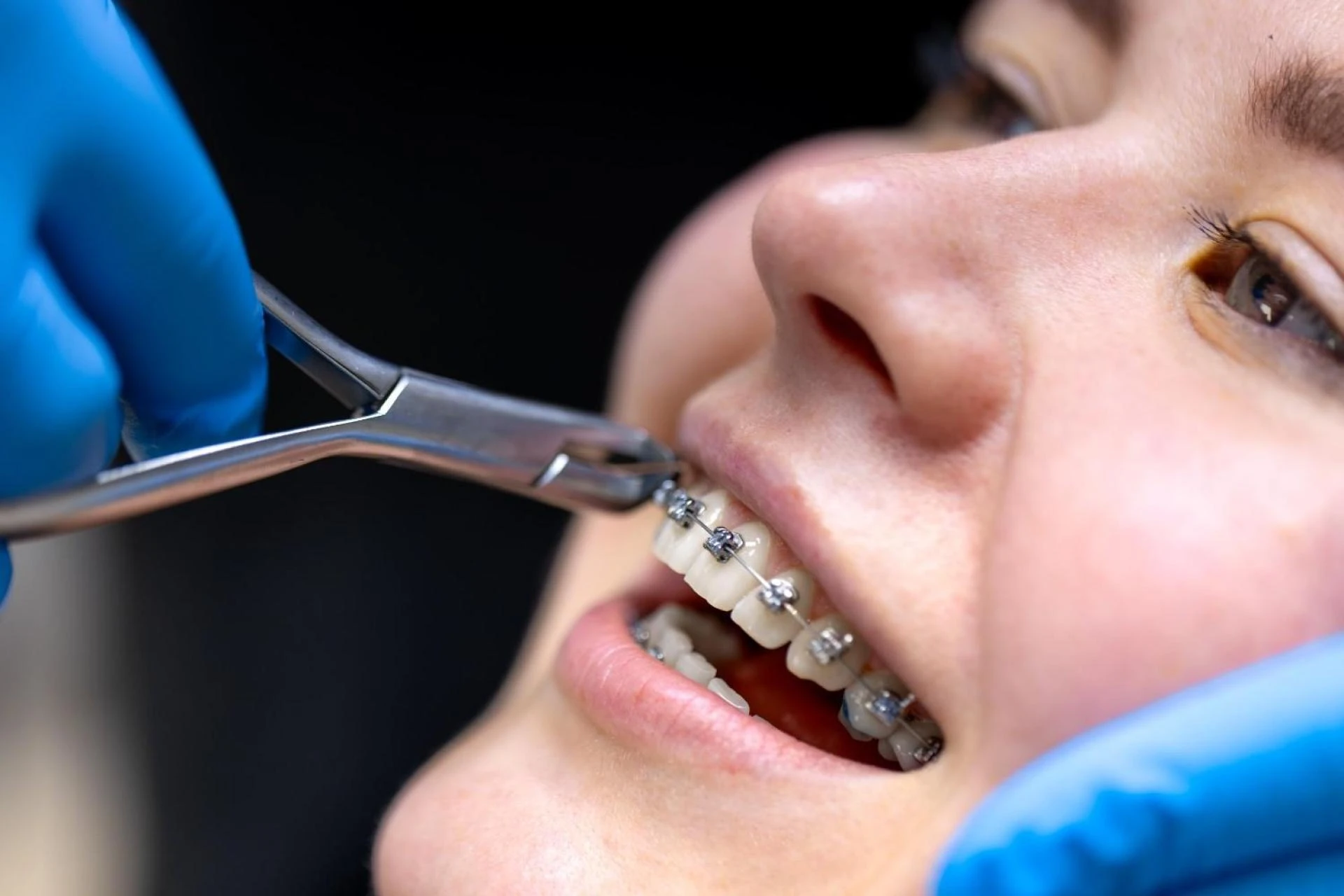
Traditional metal braces remain the most widely used option. They consist of metal brackets bonded to the teeth, connected by archwires that apply consistent pressure to move teeth gradually. Modern braces are smaller and more comfortable than older versions. They are effective for all types of alignment issues, including complex cases.
Ceramic braces work the same way as metal braces but use tooth-coloured brackets that are less visible. They suit patients who want the reliability of braces with a lower visual profile.
Clear aligners are a series of custom-made, removable trays that move teeth in incremental steps. Each tray is worn for a set period before being replaced with the next in the sequence. They are popular with adults and older teens because they are nearly invisible and can be removed for eating and cleaning. However, they require discipline — aligners need to be worn for 20 to 22 hours per day to be effective. They are best suited for mild to moderate alignment issues.
Retainers are used after active treatment to hold teeth in their new positions. Teeth have a natural tendency to drift back toward their original position, so retainer use — typically at night — is a long-term commitment after orthodontic treatment ends.
At What Age Should Orthodontic Treatment Begin?
Orthodontic issues can be treated at different life stages, and there is no single right age.
Children (ages 7–12) — The Canadian Association of Orthodontists recommends an initial orthodontic evaluation around age seven. At this stage, a mix of baby and permanent teeth is present, which allows a specialist to identify developing issues early. Not all children need treatment at this age, but early assessment can catch problems that are easier to address before the jaw finishes growing.
Adolescents (ages 12–17) — This is the most common time for orthodontic treatment. All permanent teeth are usually in by early adolescence, and the jaw is still developing, which makes tooth movement more responsive. Most brace and aligner treatments are done during these years.
Adults — There is no age limit on orthodontic treatment. Adults make up a growing proportion of orthodontic patients, and the biological process of tooth movement works the same regardless of age. Treatment may take slightly longer in adults because bone density is higher, but results are comparable. Clear aligners in particular have made adult orthodontics more accessible.
Orthodontic Services in Millwoods, Edmonton
For families and individuals in the Millwoods area of Edmonton, finding orthodontic services near you means looking for a clinic that handles both assessment and treatment under one roof.
Millwoods Mainstreet Dental Office offers orthodontic services as part of a broader range of dental care, which means your orthodontic treatment is connected to your overall oral health history. The same team that monitors your general dental health is also overseeing your alignment treatment — and that continuity matters when treatment spans months or years.
When evaluating orthodontics in Millwoods, Edmonton, it is worth considering how comfortable you are with the provider, how clearly they explain the treatment plan, and what the follow-up schedule looks like. Orthodontic treatment is not a one-visit process — the relationship with your provider is ongoing.
What to Expect During Treatment
Understanding the general timeline helps manage expectations.
Initial consultation — The provider reviews your teeth, jaw, and bite. X-rays and digital scans or impressions are typically taken. A treatment plan is discussed, including the recommended approach, estimated duration, and costs involved.
Active treatment — Depending on the method, you will attend appointments every four to eight weeks for adjustments or check-ins. Treatment duration ranges from several months for minor corrections to two years or more for complex cases.
Retention phase — Once active treatment ends, a retainer is provided. This phase is ongoing. Teeth that are not held in position will shift, and many orthodontic cases that appear to have relapsed are the result of retainer use being stopped too early.
Common Questions About Orthodontic Services
Does orthodontic treatment hurt?
Pressure and mild soreness are normal in the first few days after braces are placed or adjusted, and after switching to a new aligner tray. This discomfort is temporary and generally manageable without anything stronger than over-the-counter pain relief.
How long does treatment take?
This varies significantly by case. Minor spacing or crowding may be addressed in six to twelve months. More involved bite corrections can take eighteen months to two years. Your provider will give a specific estimate after assessment.
Is orthodontic treatment covered by insurance?
Many dental insurance plans include partial coverage for orthodontics, typically for patients under a certain age. Coverage for adults varies. It is worth confirming with your insurer before starting treatment.
Can I eat normally with braces?
With metal or ceramic braces, some foods need to be avoided — hard, sticky, or crunchy foods that can damage brackets or wires. With clear aligners, aligners are removed for eating, so there are no food restrictions.
Final Thoughts
Orthodontic services address problems that affect both dental health and daily function. Treatment options have expanded over the years, and there are effective approaches for children, teens, and adults alike.
If you have been putting off an assessment because you are unsure whether treatment is necessary or practical, the best starting point is a consultation. A qualified provider offering orthodontic services near you can evaluate your situation and lay out your options clearly — without any obligation to proceed.

























Sign in to leave a comment.