
Introduction
Artificial Intelligence is no longer a futuristic concept—it’s a strategic necessity. Enterprises across industries are rethinking workflows, decision-making, and customer engagement by integrating AI tools. Among these innovations, the AI Copilot stands out as a transformative enabler. Acting as an intelligent assistant, AI Copilot enhances productivity, augments human decision-making, and bridges the gap between automation and human judgment.
However, adopting AI Copilot is not just a matter of plugging in a tool. Success requires a structured approach that covers careful planning, comprehensive training, and seamless integration. Rushed deployments often lead to underutilization, employee resistance, or security gaps. By contrast, thoughtful adoption ensures that organizations maximize ROI while avoiding pitfalls.
This article outlines a structured framework for AI Copilot adoption. We will explore how businesses can strategically plan for implementation, prepare employees through targeted training, and integrate AI Copilot solutions into existing systems to achieve long-term success.
Why a Structured Approach Matters
Many organizations rush into AI adoption without a clear roadmap, only to discover later that the technology is underused or misaligned with business goals. A structured approach prevents these issues by:
- Aligning AI with Strategy: Ensuring that AI Copilot supports core business objectives.
- Managing Change: Addressing cultural resistance and building employee trust.
- Reducing Risks: Mitigating challenges such as data privacy, regulatory compliance, and model bias.
- Maximizing Value: Leveraging AI Copilot development services to fully unlock productivity and efficiency gains.
Ultimately, AI Copilot is not just a technology investment—it’s an organizational transformation. Structured adoption ensures that transformation delivers measurable results.
Step 1: Planning AI Copilot Adoption
Planning is the foundation of any successful AI initiative. Before organizations engage with an ai copilot development company or select tools, they must define objectives, assess readiness, and build a roadmap.
1. Defining Objectives and Use Cases
Businesses should begin by identifying high-value use cases. Examples include:
- Automating repetitive administrative tasks.
- Supporting customer service agents with real-time insights.
- Enhancing compliance monitoring in financial services.
- Accelerating software development with coding assistants.
Each use case should align with broader business strategy—whether that’s reducing costs, improving customer satisfaction, or accelerating innovation.
2. Conducting a Readiness Assessment
Not every organization is equally prepared for AI adoption. Readiness assessment involves:
- Data Infrastructure: Assessing data quality, availability, and accessibility.
- Technology Stack: Ensuring compatibility with existing systems.
- Culture and Skills: Gauging employee openness to AI tools and current technical expertise.
A readiness audit highlights gaps that must be addressed before deployment.
3. Selecting the Right Partner
Working with an ai copilot development company provides access to tailored ai copilot development solutions designed for industry-specific challenges. Such companies help:
- Customize copilots for unique workflows.
- Ensure compliance with relevant regulations.
- Provide ongoing support and updates.
Choosing the right partner reduces implementation risks and accelerates adoption.
Step 2: Training and Change Management
Technology alone does not drive transformation—people do. Without proper training and change management, even the best ai copilot solution will fail to deliver value.
1. Building Awareness and Trust
Employees must understand that AI Copilot is not a replacement but an assistant. Communication campaigns should:
- Emphasize the role of AI in augmenting human work.
- Showcase success stories from similar organizations.
- Provide forums for employees to ask questions and express concerns.
2. Tailored Training Programs
Different user groups require different training approaches:
- Executives: Focus on strategic applications and KPIs.
- Managers: Emphasize workflow integration and oversight.
- End-Users: Provide hands-on training in day-to-day tasks.
Workshops, simulations, and sandbox environments help employees gain confidence.
3. Encouraging Adoption through Incentives
Organizations can encourage adoption by:
- Recognizing employees who embrace AI-driven workflows.
- Offering certifications for AI proficiency.
- Demonstrating measurable benefits, such as reduced workload or improved performance.
4. Continuous Learning
AI evolves rapidly. Ongoing training ensures employees stay current with new features, compliance requirements, and best practices. Partnering with providers of ai copilot development services ensures access to updated training materials and expert guidance.
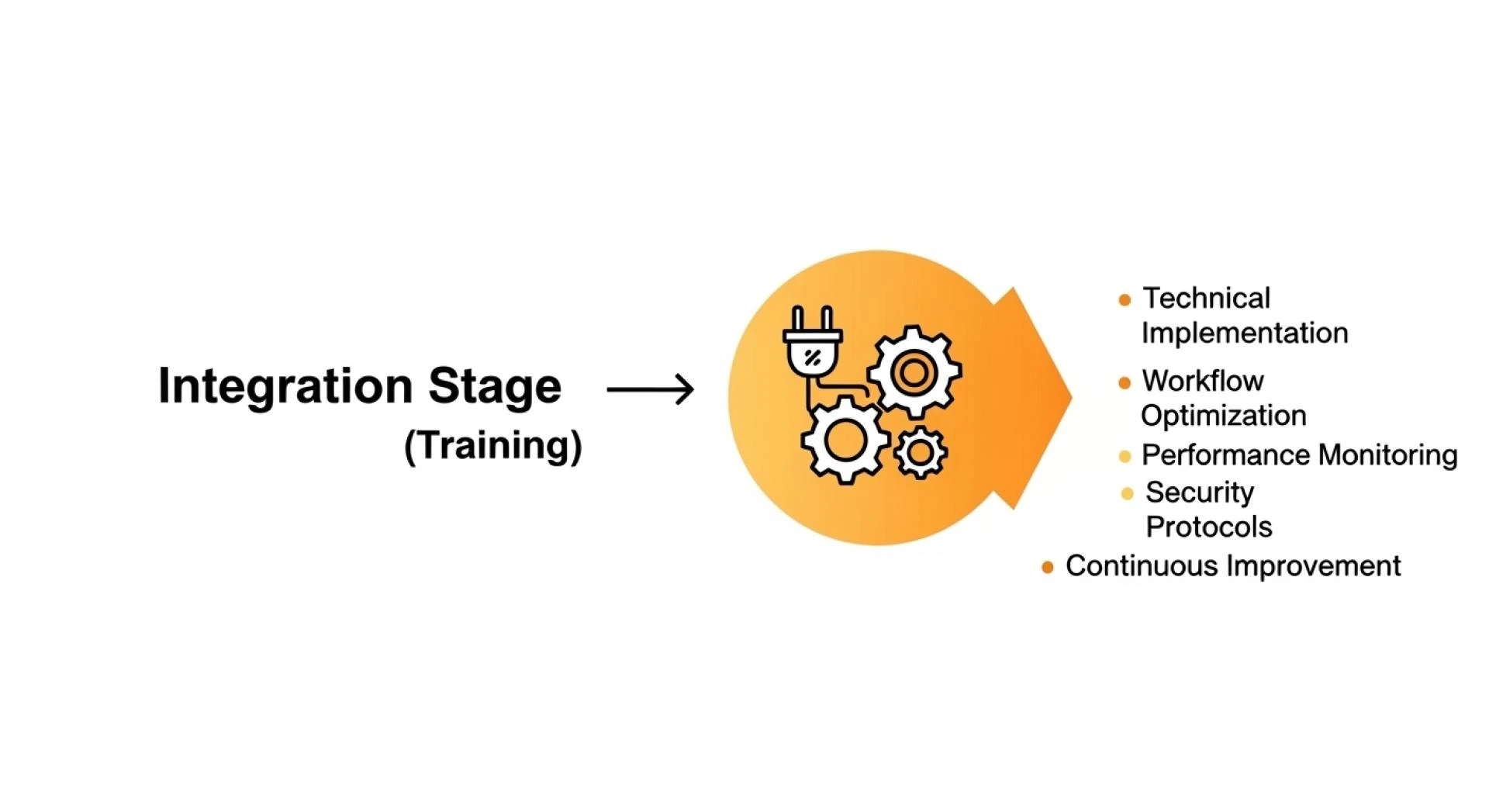
Step 3: Integration into Business Systems
Seamless integration is critical for maximizing the value of AI Copilot. Poorly integrated systems lead to inefficiencies and fragmented workflows.
1. System Compatibility
AI Copilot should integrate smoothly with:
- CRM systems for customer engagement.
- ERP systems for financial and operational processes.
- Collaboration tools like email, chat, and project management platforms.
- Industry-specific software (e.g., trading systems in finance or EMRs in healthcare).
This ensures that AI enhances existing workflows rather than disrupting them.
2. Data Management and Security
Financial and customer data are highly sensitive. Integration must include:
- Encryption to protect data in transit and at rest.
- Access Controls to restrict sensitive information.
- Compliance Protocols for GDPR, HIPAA, or industry regulations.
Robust governance frameworks build trust with regulators and customers.
3. Customization and Scalability
Every organization has unique workflows. Customization ensures AI Copilot fits seamlessly into operations. Scalability is equally critical—solutions must grow alongside the business, handling increased data volumes and user demand.
4. Monitoring and Feedback Loops
Integration does not end at deployment. Continuous monitoring ensures AI Copilot:
- Delivers accurate insights.
- Adapts to changing business needs.
- Avoids biases or unintended consequences.
Feedback loops, supported by ai copilot development solutions, ensure iterative improvement.
Overcoming Common Challenges
Adopting AI Copilot comes with hurdles that must be addressed strategically:
- Resistance to Change: Employees may fear job displacement. Transparent communication and training alleviate these concerns.
- Data Silos: Disparate systems hinder effective AI adoption. Data unification strategies are essential.
- Bias and Fairness: Poorly trained models risk biased recommendations. Diverse datasets and ethical oversight are critical.
- Cost Concerns: While initial investments may be high, long-term efficiency gains justify adoption.
Organizations that proactively address these challenges are more likely to succeed.
Case Studies
Case 1: AI Copilot in Financial Services
A multinational bank used AI Copilot to streamline compliance monitoring. The copilot flagged suspicious transactions in real time, reducing false positives by 40% and saving compliance officers thousands of hours annually.
Case 2: AI Copilot in Healthcare
A healthcare provider integrated an AI Copilot solution into its electronic medical record system. Doctors received real-time insights into patient histories, reducing diagnostic errors and improving patient satisfaction.
Case 3: AI Copilot in Manufacturing
A manufacturing firm adopted AI Copilot for predictive maintenance. The system analyzed machine data to predict breakdowns, cutting downtime by 30% and saving millions annually.
Future of AI Copilot Adoption
The next phase of AI Copilot adoption will be defined by:
- Explainable AI: Enhancing transparency in AI-driven recommendations.
- Voice-Enabled Copilots: Offering natural, hands-free interactions.
- Cross-Industry Standards: Developing governance models for responsible AI.
- Hyper-Personalization: Tailoring AI Copilot interactions to individual employee roles and customer profiles.
These trends will make AI Copilot solutions even more integral to organizational strategy.
Conclusion
AI Copilot represents more than a technological upgrade—it’s a paradigm shift in how organizations operate. With structured planning, robust training, and seamless integration, businesses can harness AI Copilot to optimize workflows, enhance decision-making, and maintain a competitive edge.
Partnering with an ai copilot development company ensures access to tailored ai copilot development services that address specific industry needs. With scalable ai copilot development solutions, enterprises can future-proof their operations and ensure that AI delivers sustained value.
The future belongs to organizations that not only adopt AI but do so strategically. By following a structured approach to AI Copilot adoption, companies can ensure that automation and intelligence empower people, strengthen performance, and unlock new possibilities.






























Sign in to leave a comment.