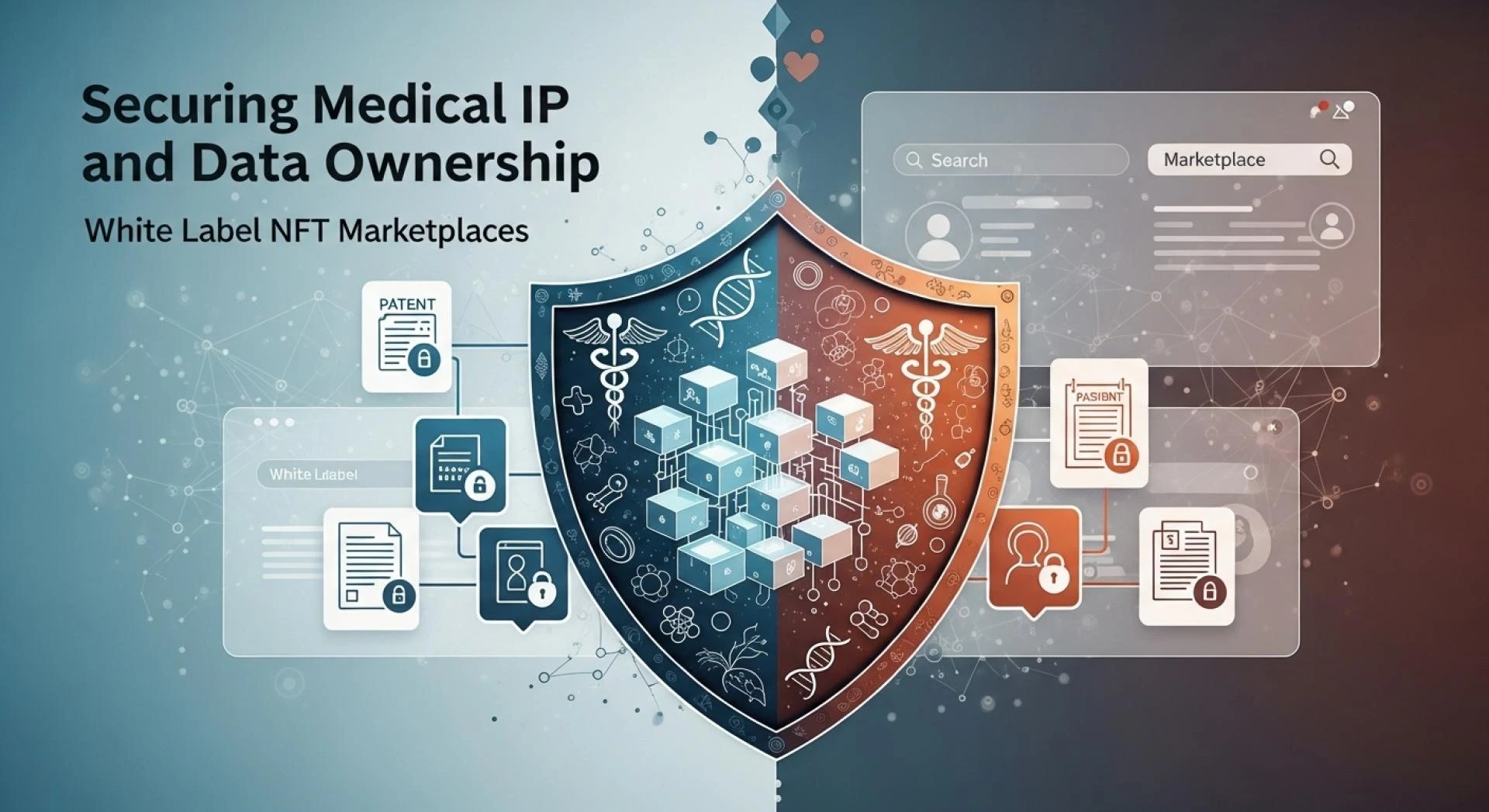

Why Medical IP and Data Ownership Are at Risk
Healthcare and life sciences are undergoing rapid digital transformation. From electronic health records and genomic data to AI-driven diagnostics and pharmaceutical research, medical data and intellectual property have become some of the most valuable digital assets in the world. At the same time, breaches, unauthorized data sharing, and unclear ownership rights continue to challenge healthcare providers, research institutions, biotech firms, and digital health platforms.
In the United States and the United Kingdom, stricter regulations such as HIPAA, GDPR, and evolving data governance frameworks have intensified the need for secure, auditable, and transparent data ownership models. Traditional centralized systems often fail to provide clear provenance, immutable records, and user-controlled access. This creates risks not only for compliance but also for innovation, collaboration, and trust.
White Label NFT Marketplaces are emerging as a powerful solution to these challenges. By tokenizing medical intellectual property and sensitive data access rights, organizations can establish verifiable ownership, controlled sharing, and traceable usage across complex healthcare ecosystems. Through White Label NFT Marketplace Development, medical institutions can deploy private, compliant platforms tailored specifically to healthcare use cases rather than relying on public NFT marketplaces designed for art or collectibles.
Key drivers behind this shift include:
- Rising value of medical research data and digital IP
- Increasing frequency and cost of healthcare data breaches
- Need for transparent ownership and licensing models
- Regulatory pressure in US and UK healthcare markets
Securing medical IP and data ownership is no longer a technical preference; it is a strategic necessity. White label NFT marketplaces provide a structured, future-ready foundation to address this need.
Understanding Medical Intellectual Property and Data Ownership Challenges
Medical IP extends far beyond patents. It includes clinical trial data, diagnostic algorithms, medical device designs, genomic datasets, treatment protocols, and even anonymized patient records used for research. Ownership disputes, unclear consent frameworks, and uncontrolled data duplication create serious legal and ethical issues.
Traditional systems face several structural limitations:
- Data stored in siloed databases with limited interoperability
- Difficulty proving original ownership or creation timelines
- Manual licensing and access control processes
- Limited visibility into how data is used after sharing
White Label NFT Marketplace Solutions address these gaps by introducing immutable records and programmable ownership logic. Each NFT can represent a specific dataset, research output, or access right, with clear metadata describing ownership, usage permissions, and licensing terms.
In the US and UK healthcare context, this approach supports:
- Traceability required for audits and regulatory reviews
- Clear attribution of IP for research collaborations
- Controlled data sharing aligned with patient consent
By leveraging White Label NFT Marketplace Development, healthcare organizations can redefine how medical IP is created, managed, and monetized while maintaining compliance and trust.
How White Label NFT Marketplaces Secure Medical Data
Security is the cornerstone of healthcare technology. White Label NFT Marketplaces are not about exposing sensitive data on public blockchains. Instead, they act as controlled access layers where NFTs represent ownership or permission, not the raw data itself.
Core security mechanisms include:
- Off-chain encrypted storage for sensitive medical data
- NFTs storing hashes or references rather than actual records
- Smart contracts enforcing access rules automatically
- Role-based permissions for different stakeholders
White Label NFT Marketplace Development companies design these systems so that only authorized parties can access data, and every interaction is recorded immutably. This significantly reduces risks associated with unauthorized access, tampering, or data misuse.
Security advantages include:
- Tamper-proof audit trails for every data transaction
- Reduced reliance on centralized administrators
- Faster breach detection through transparent logs
For healthcare providers and research institutions in the US and UK, this model aligns with regulatory expectations around data integrity and accountability.
Tokenizing Medical IP for Ownership and Licensing Control
One of the most impactful applications of White Label NFT Marketplaces in healthcare is the tokenization of medical IP. Tokenization transforms intangible assets into programmable digital tokens with embedded rights and restrictions.
Medical IP that can be tokenized includes:
- Clinical trial datasets
- Research publications and methodologies
- AI and machine learning models
- Medical device designs and software
Through White Label NFT Marketplace Development, organizations can define how these assets are licensed, shared, or monetized. Smart contracts automate royalty distribution, enforce usage limits, and ensure that original owners retain control.
Benefits of tokenized medical IP include:
- Faster and clearer licensing agreements
- Reduced legal ambiguity in collaborations
- Transparent revenue sharing among stakeholders
This approach is particularly valuable for cross-border research collaborations between US and UK institutions, where differing legal frameworks often complicate IP management.
Enhancing Patient Data Ownership and Consent Management
Patient data ownership is a growing ethical and regulatory concern. Patients increasingly expect transparency, control, and accountability over how their data is used.
White Label NFT Marketplaces enable patient-centric data models by allowing data access rights to be tokenized. Instead of transferring raw data, patients or institutions issue NFTs that grant specific permissions.
Key advantages include:
- Granular consent management controlled through smart contracts
- Time-bound or purpose-specific data access
- Revocation of access without data deletion
White Label NFT Marketplace Solutions support these models by integrating consent logic directly into the platform. This ensures compliance with regulations like GDPR in the UK and HIPAA-related data governance expectations in the US.
Patient-centric ownership builds trust while enabling responsible data-driven innovation.
Supporting Secure Collaboration in Medical Research
Medical innovation relies on collaboration among hospitals, universities, biotech firms, and pharmaceutical companies. However, data sharing often introduces risks related to IP leakage and compliance violations.
White Label NFT Marketplace Development enables secure collaboration by:
- Tokenizing shared datasets with defined usage rights
- Tracking every access and modification event
- Automating compliance reporting
Collaborators gain access only to what they are authorized to use, and all actions are transparently logged. This reduces disputes and simplifies governance.
For multinational research initiatives involving US and UK partners, white label marketplaces provide a neutral, auditable infrastructure that respects jurisdictional requirements.
Compliance and Regulatory Alignment in US and UK Healthcare
Healthcare regulations demand rigorous data protection and accountability. White Label NFT Marketplaces can be configured to support compliance rather than complicate it.
Compliance-supporting features include:
- Immutable audit trails for regulators
- Configurable data retention policies
- Integrated identity verification workflows
- Automated reporting capabilities
White Label NFT Marketplace Development companies work closely with healthcare organizations to align platform architecture with regulatory obligations in both the US and UK.
Rather than replacing existing compliance systems, white label marketplaces enhance them by adding transparency and automation.
Reducing Data Breach Risks and Operational Costs
Healthcare data breaches are costly, both financially and reputationally. Centralized systems present single points of failure that attackers often exploit.
White Label NFT Marketplaces reduce risk by:
- Minimizing centralized data exposure
- Limiting access through tokenized permissions
- Improving incident response through real-time logs
Operational efficiencies also emerge as smart contracts automate processes that previously required manual oversight.
Over time, these efficiencies can offset initial development costs and deliver measurable ROI.
Use Cases Across the Healthcare Ecosystem
White Label NFT Marketplaces support a wide range of medical and healthcare use cases:
- Hospitals managing clinical data access
- Biotech firms licensing research assets
- Digital health platforms securing AI models
- Universities protecting academic research
Each use case benefits from the flexibility and control inherent in White Label NFT Marketplace Solutions.
Long-Term Impact on Healthcare Innovation
By securing medical IP and data ownership, white label NFT marketplaces create an environment where innovation can flourish without sacrificing trust or compliance.
Long-term benefits include:
- Increased willingness to share data responsibly
- Faster commercialization of medical research
- Stronger patient engagement and trust
White Label NFT Marketplace Development is not just a technical upgrade; it is a strategic investment in the future of healthcare.
Conclusion: A New Standard for Medical Data and IP Security
Securing medical intellectual property and data ownership is one of the most pressing challenges facing modern healthcare systems. Traditional models struggle to provide the transparency, control, and accountability required in today’s regulatory and innovation-driven environment.
White Label NFT Marketplaces offer a powerful alternative. Through White Label NFT Marketplace Development, healthcare organizations can establish verifiable ownership, automate access control, and protect sensitive assets without compromising collaboration or compliance. With the support of experienced White Label NFT Marketplace Development companies and Service Providers, medical institutions in the US and UK can build secure, scalable platforms that align with both regulatory expectations and innovation goals.
As healthcare continues to digitize, white label NFT marketplaces are poised to become foundational infrastructure for protecting medical IP and data ownership in a connected, data-driven world.



























Sign in to leave a comment.