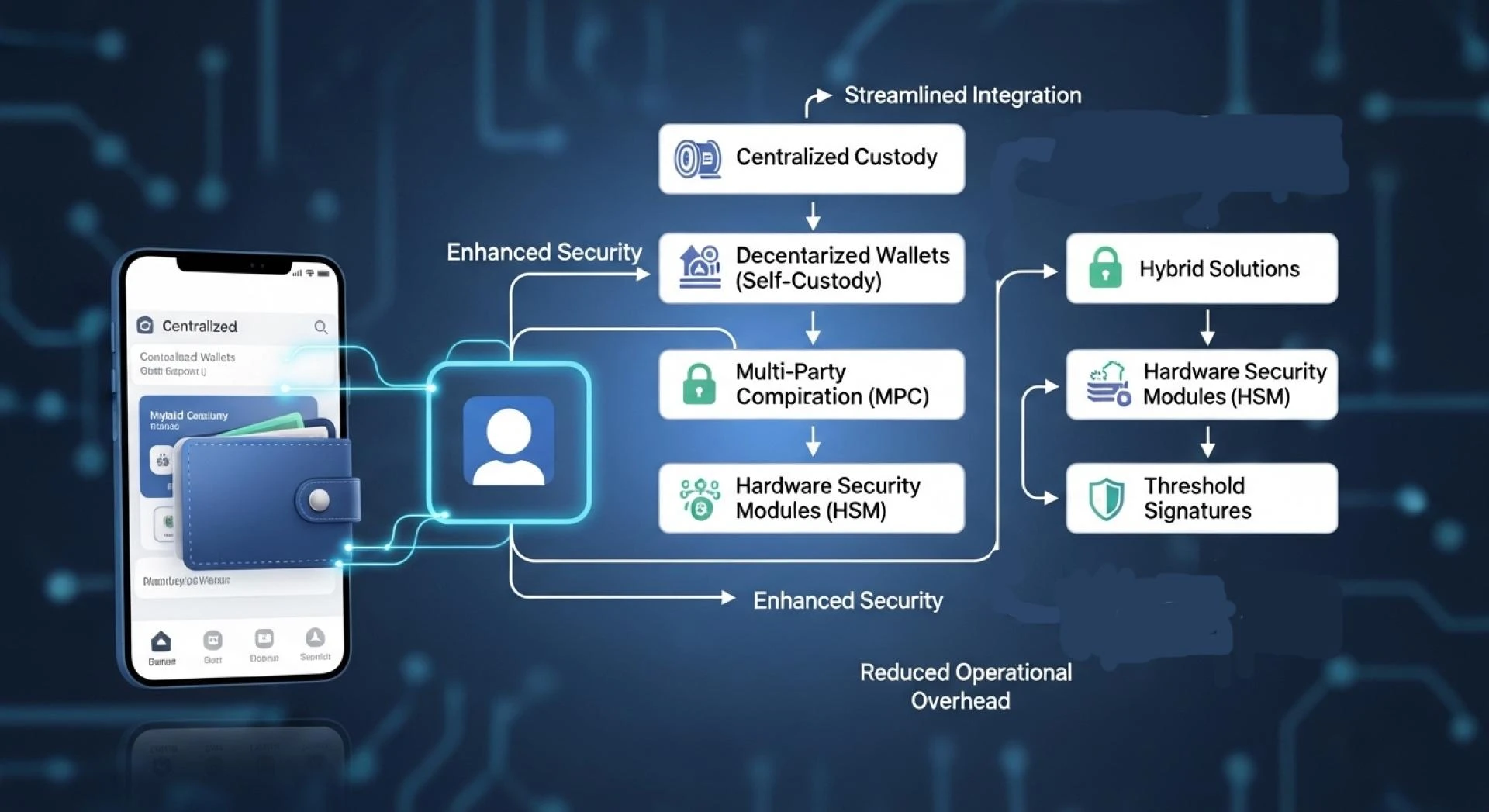

Wallet and custody management remains one of the most complex and risk-sensitive aspects of running a crypto exchange. As digital asset adoption grows across the United States and the United Kingdom, users, regulators, and institutional participants are placing greater scrutiny on how exchanges store, secure, and manage customer funds. Poor custody design has historically been a major contributor to asset loss, operational failures, and loss of user trust.
Modern crypto exchange development focuses on simplifying wallet and custody operations without compromising security or compliance. Rather than relying on fragmented or manually managed systems, exchanges are adopting structured custody architectures that reduce operational overhead, minimize risk exposure, and improve transparency. These approaches are especially important for exchanges serving multiple user segments, asset types, and jurisdictions.
Why Wallet and Custody Management Is a Core Challenge
Exchanges face custody complexity due to:
- Managing large volumes of digital assets securely
- Balancing accessibility with protection against theft
- Meeting regulatory expectations in the US and UK
How Development Strategy Makes a Difference
Well-planned crypto exchange development helps:
- Centralize custody operations
- Reduce human error and security gaps
- Improve user confidence in fund safety
Designing Clear Wallet Architecture for Operational Simplicity
One of the most effective ways to simplify custody management is through a well-defined wallet architecture. Early-stage or poorly planned exchanges often rely on ad hoc wallet setups that become difficult to manage as volumes scale.
Modern crypto exchange development adopts structured wallet hierarchies that clearly separate responsibilities and risk levels. This clarity allows operational teams to manage assets efficiently while reducing the chance of accidental exposure.
Common wallet architecture layers include:
- Hot wallets for active trading liquidity
- Warm wallets for controlled operational transfers
- Cold wallets for long-term asset storage
Crypto exchange platform development teams design these layers with strict access controls and automated transfer rules. For exchanges operating in the United States and the United Kingdom, such segmentation also supports internal audits and regulatory reviews by demonstrating clear custody controls.
A well-defined wallet architecture simplifies daily operations, reduces manual intervention, and creates a strong foundation for secure growth.
Automating Asset Flows Between Wallet Layers
Manual asset transfers are a frequent source of errors and delays in custody operations. User-centric crypto exchange development increasingly relies on automation to manage asset flows between hot, warm, and cold wallets.
Automation helps exchanges maintain optimal liquidity for trading while minimizing the exposure of funds to online environments. This balance is critical during periods of high trading activity or market volatility.
Automation strategies often include:
- Threshold-based wallet rebalancing
- Scheduled transfers during low-risk periods
- Automated alerts for abnormal balances
Crypto exchange software development teams implement these workflows with built-in safeguards, such as approval requirements for large transfers or anomaly detection. For regulated markets like the US and UK, automation also supports consistent execution of internal policies, reducing reliance on individual operators.
By automating routine custody tasks, exchanges can focus resources on monitoring and strategy rather than repetitive manual processes.
Strengthening Key Management and Access Controls
Key management is central to secure custody. Poorly handled private keys are one of the most common causes of asset loss in the crypto industry. Simplifying custody management requires removing unnecessary complexity from key handling while enforcing strong access controls.
Modern crypto exchange development emphasizes centralized key management systems supported by strict governance rules. This approach ensures that no single individual has unchecked control over critical assets.
Effective key management practices include:
- Multi-signature authorization models
- Role-based access control for operational staff
- Segregation of duties across teams
For exchanges serving users in the United States and the United Kingdom, these controls align with expectations around internal risk management and operational accountability. Crypto exchange development services design access frameworks that are auditable, enforceable, and scalable as organizations grow.
Supporting Multiple Assets Without Increasing Custody Complexity
As exchanges expand their asset offerings, custody complexity increases. Each new blockchain introduces different wallet standards, transaction models, and security considerations. Without a unified approach, managing multiple assets can become operationally overwhelming.
Advanced crypto exchange development adopts abstraction layers that standardize how different assets are handled internally. This allows operations teams to manage diverse assets through consistent processes.
Benefits of standardized custody handling include:
- Reduced training requirements for staff
- Lower risk of asset-specific errors
- Faster onboarding of new tokens
For exchanges in competitive markets like the US and UK, the ability to list and manage assets efficiently without compromising security is a significant advantage. Crypto exchange software development teams focus on creating flexible custody frameworks that can adapt to new assets without redesigning core systems.
Enhancing Transparency and User Trust Through Custody Design
Users are increasingly aware of custody risks and expect exchanges to demonstrate responsible fund management. Transparent custody practices are becoming a key differentiator in user retention and brand credibility.
User-centric crypto exchange development integrates transparency into the custody experience through clear communication and verifiable processes.
Transparency-enhancing practices include:
- Clear explanations of custody models
- Visible withdrawal processing stages
- Regular reconciliation and reporting
For users in the United States and the United Kingdom, where regulatory awareness is high, transparency reinforces trust and supports compliance expectations. Exchanges that clearly communicate how funds are stored and protected are more likely to retain long-term users.
Simplifying Compliance and Audit Readiness
Custody operations are closely scrutinized by regulators and auditors. Complex or poorly documented wallet systems make audits time-consuming and increase compliance risk.
Crypto exchange development that prioritizes simplicity includes built-in auditability. Clear logging, standardized workflows, and documented custody processes make it easier to demonstrate compliance during reviews.
Audit-friendly custody features include:
- Comprehensive transaction logs
- Clear wallet ownership records
- Automated reconciliation reports
For exchanges operating across the US and UK, these capabilities support alignment with evolving regulatory frameworks and reduce the operational burden of audits. Crypto exchange development services that embed compliance considerations from the start help exchanges scale confidently.
Preparing Custody Systems for Future Growth
Simplified custody management is not just about current operations; it is about preparing for future expansion. As exchanges grow in user base, asset variety, and geographic reach, custody systems must scale without becoming fragile.
Forward-looking crypto exchange development designs custody infrastructure that can evolve without major disruption. Modular components, configurable policies, and scalable security controls allow exchanges to adapt to new requirements over time.
This approach ensures that custody systems remain an enabler of growth rather than a bottleneck.
Conclusion
Wallet and custody management is one of the most critical and complex responsibilities of any crypto exchange. Poorly designed systems increase risk, strain operations, and erode user trust. In contrast, thoughtful crypto exchange development approaches can significantly simplify custody management while enhancing security, transparency, and compliance.
By implementing clear wallet architectures, automating asset flows, strengthening key management, and standardizing multi-asset handling, exchanges can reduce operational complexity and improve reliability. For platforms operating in the United States and the United Kingdom, these practices also support regulatory expectations and user confidence.
Simplified custody management is not achieved through shortcuts but through deliberate design choices made during crypto exchange platform development. When done correctly, it creates a strong foundation for sustainable growth, user retention, and long-term success.



























Sign in to leave a comment.